Threats all around
WE are among the few states that have to contend with threats on all fronts: India to the east, TTP in the north, Afghanistan to the west and BLA in the south. Everyone agrees on the basic aim: defuse the threats to transform from a security state to a welfare state. The divide persists on strategy: between a military one that wins battles and a holistic one that fixes root causes and respects rights and laws that can lead to sustainable peace.
A holistic approach is most vital in Balochistan, now in the third decade of its fifth and longest insurgency. Focusing only on the kinetic aspect to quell terrorism misses a key point. Force alone doesn’t end threats. Violence recurs over the decades and lasts longer each time when neglect and abuse keep inciting anger and new recruits. Balochistan’s economic neglect is stark: it is our poorest region despite its small numbers, natural wealth and proximity to the rich Gulf states. It’s rich below the ground but poor above it. The political neglect goes back to the British era. Unlike in the case of other provinces joining Pakistan, Balochistan had no assembly vote/referendum on its status in 1947; its future was determined through elite consensus. This was despite its mix of unique traits — historical autonomy, distinct ethnicity and vast area — that led to initial talks on provincial status much before 1947, unlike for the princely states merged with the other provinces.
A public vote creates a strong bond that chiefs or militants can’t deny later. Balochistan lacked provincial status until 1970. Bahawalpur and Khairpur got elected assemblies in the 1950s. Oddly, learning no lesson from the 1971 debacle that the denial of democracy led to, Zulfikar Ali Bhutto removed Balochistan’s first elected set-up just 14 months after that tragic split. Military action followed. Such acts occurred later too. So, even in a state marked by autocracy, Balochistan stands out. Disappearances feed anger as do the jailing of key peaceful activists. Balochistan urgently needs a fairly elected and empowered set-up to tackle its issues. This may thin terrorist ranks. Limited force may then easily defeat radical elements unmoved by political change.
We must go beyond narrow policies.
The threats from Afghanistan and TTP are linked. TTP violence reflects extremism. However, many root causes feed it indirectly: legacies of Afghan wars, a militarised state’s past jihadist support and prolonged exclusion of tribal areas. The TTP has caused more deaths than BLA; its extremism precludes talks too. Yet, we must fix the root causes and respect rights and laws. This means precise intelligence-backed use of force in close liaison with locals, economic uplift and strong border checks without total trade and travel bans. It could mean rethinking cross-border attacks that may not stop incursions but may raise complex issues under UN laws and risk civilian deaths. We must also see the Afghan people as our main allies against the Afghan Taliban as they harm both of us greatly; rethink Afghan expulsions and treat those leaving voluntarily well. This may cut the number of Afghans the TTP now recruits. Afghan Taliban rigidity can be tackled by organising targeted sanctions along with regional and global powers.
Root causes are hard to fix soon given their complex nature in the conflict with India. But even managing symptoms will reduce the risk of nuclear war. Our wars no longer focus on land disputes but start after a terrorist attack next door, as in the Pahalgam attack in India-occupied Kashmir last year. Given the risks of a war using non-conventional means and the high bar under UN law for justifying cross-border attacks, both countries must pursue diplomacy.
Their interests and those of the wider world will be best served if they agree to a neutral UN mechanism that can review their existing evidence against each other, monitor future trends and facilitate urgent communication after an incident. This may help curb terrorism and water wars. Both Pakistan and India must also address the root causes of terrorism. Such trust-building steps may create an enabling environment for resolving more basic issues later bilaterally.
These threats are only a few flames in a bigger socioeconomic inferno we face. We must go beyond narrow policies that have fuelled the cauldron for long and employ the full spectrum of creative solutions that have helped many states douse similar conflagrations on a more durable basis.
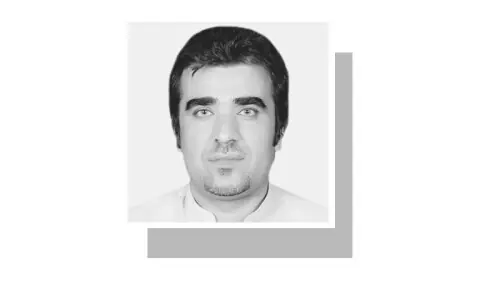
The writer holds a PhD in political economy from the University of California, Berkeley, and has 25 years of grassroots to senior-level experience across 50 countries.
Published in Dawn, August 4th, 2026