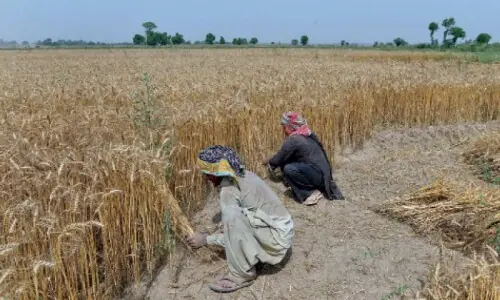
LOWER riparian areas across Sindh are facing an artificial shortage of water, threatening Kharif crops at a critical stage. In my hometown, Khairpur Mirs, where cotton — often called the silver fibre — is widely cultivated, this scarcity poses a serious threat to a crop that makes Pakistan one of the world’s leading cotton exporters. Ironically, the government appears reluctant to take meaningful action against this man-made shortage.
In Khairpur, the main canals continue to flow with adequate water, but smaller distributaries remain dry, starved of their due share. The ultimate beneficiaries of this skewed distribution are large feudal landholders, while small farmers bear the brunt of the loss.
Pakistan is fundamentally an agricul- tural country, with the majority of its population dependent on farming for their livelihood. It is, therefore, imperative that the irrigation system be regulated fairly and transparently — without discrimi-
nation based on class, status or influence. The relevant authorities must ensure equitable water distribution down to the tail-end watercourses, so that small land-holders are not perpetually sacrificed to protect the interests of the powerful few.
Kashif Nawaz Shar
Thari Mirwah
Published in Dawn, July 29th, 2026