Operation of Jalalpur Canal widely condemned in Sindh
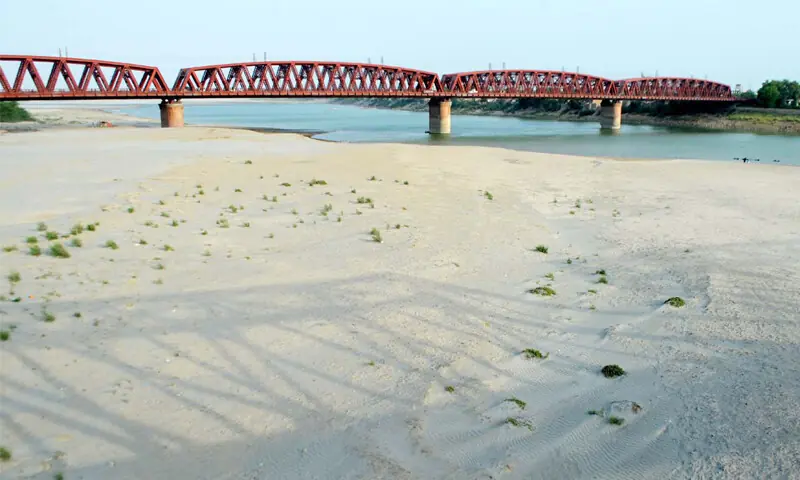


LARKANA: Nisar Ahmed Khuhro, president of the Pakistan Peoples Party (PPP) Sindh chapter, has demanded the strict implementation of water accords, deploring that Sindh is being denied its rightful allocation.
In a statement issued on Thursday, Khuhro condemned the release of water into the Jalalpur, Taunsa-Panjnad (TP) Link, and Chashma-Jhelum Link canals as unconstitutional, illegal and a direct violation of the 1991 Water Apportionment Accord. He argued that the diversions challenged the constitutional authority of the Council of Common Interests (CCI).
Khuhro stated that Sindh’s allocation is being unlawfully reduced to feed the TP and Chashma-Jhelum link flood canals, leaving the province facing severe shortages. He cited the Indus River System Authority’s (Irsa) failure to ensure transparent distribution as evidence of incompetence within both Irsa and the federal government.
He announced that province-wide protests will take place on Friday. “On one hand, India is unilaterally suspending the Indus Waters Treaty in an attempt to block the river’s flow,” Khuhro said. “On the other, Sindh’s share is being cut to fill flood canals — an assault on Indus waters that Sindh cannot accept.”
Khuhro terms release of water in link canals a challenge to CCI
As a lower riparian province, Khuhro emphasised, Sindh holds primary rights under international law. He noted that releasing water into the Jalalpur Canal under the guise of “testing” before a pending CCI decision breaches constitutional procedure. As a former Executive Committee of the National Economic Council (Ecnec) member, he recalled making the project conditional on the CCI approval, which had deferred the decision.
Highlighting Article 154(3) of the Constitution, which mandates quarterly CCI sessions, Khuhro criticised the federal government’s failure to convene meetings. He demanded an immediate CCI session to enforce the 1991 accord and halt unlawful flows into the link canals, warning that failure to address these grievances would expand the scale of protests.
Jalalpur Canal termed a conspiracy
Syed Zain Shah, President of the Sindh United Party (SUP), has warned that the people of the province will not remain silent against those plundering its water, land, resources, and constitutional rights.
Speaking at a Malir Bar Association event, Shah condemned the Jalalpur Canal as a conspiracy to divert Indus River water to irrigate land in Punjab at the expense of Sindh.
“Sindh’s water is being blocked, new canals are being built, land is being taken for corporate farming, and resources are being seized by federal and non-local interests,” he said, pledging strong resistance.
Shah highlighted the province’s severe water scarcity, noting that reduced flows at the Kotri Barrage are ruining farmers and destroying the Indus Delta, allowing the sea to engulf millions of acres.
He declared the Jalalpur project an unconstitutional attempt to seize resources, adding that water decisions would not be dictated from “closed rooms in Islamabad”.
Protests in Larkana
In Larkana, the Awami Tehreek held a protest rally in Taluka Nasirabad (Qambar-Shahdadkot) for the second consecutive day on Thursday, demonstrating against Punjab’s “predatory” canal projects, corporate farming and police violence against sit-in participants at Babarloi.
Farmers, growers and party workers marched from Comrade Riaz Ahmed Chowk to the Arthur Branch irrigation channel in the lead of Comrade Muhammad Rafi Laghari, Hamid Inqalabi, Ghulam Shabbir Budh, Muhammad Hashim Jatoi and Suraj Laghari.
Addressing the rally, the leaders alleged that conspiracies are underway to weaken Sindhi people by “raiding” the Indus River to dry up the province, alongside land seizures for corporate farming. They accused the Punjab government and the Pakistan Peoples Party (PPP) of collaborating to block Sindh’s water, creating artificial shortages that devastate local growers, agriculture and the economy.
Protesters further condemned rising fuel prices, inflation and an increase in violent crimes under PPP policies. They demanded the immediate closure of the Jalalpur, Taunsa-Panjnad Link and Chashma-Jhelum Link canals, full water rights under the 1945 Water Accord, and a halt to dam construction, including the Bhasha Dam. Additionally, they called for the release of activists arrested at Babarloi and the dismissal of responsible police officials.
Published in Dawn, July 24th, 2026