Danish fish fossil cliffs set to gain Unesco status


 0
0
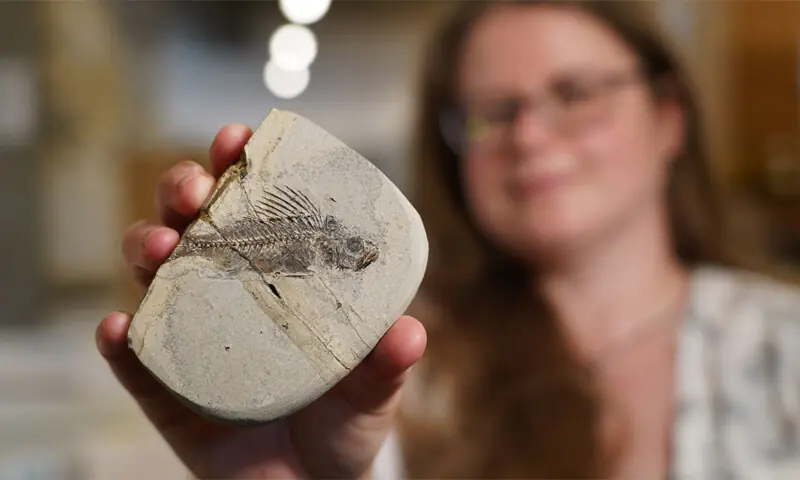

NYKBING MORS: Two Danish coastal cliffs where palaeontologists have uncovered 55-million-year-old fossils of prehistoric wildlife are likely to gain World Heritage status as Unesco’s committee meets in South Korea.
The two picturesque cliffs of Hanklit and Knudeklint, overlooking Denmark’s Limfjord, have for decades been known for what Unesco terms “exceedingly well-preserved” fossils of early insects, birdlife, and more than 80 different fish species, including ancient relatives of mackerel and herring.
“It’s very unique,” said Jan Audun Rasmussen, a researcher and curator from Museum Mors, who co-authored the Unesco bid.
“What we can show in these deposits is the first evolution of many of the fish lineages and bird lineages,” he said. Fifty-five million years ago, all of Denmark was covered by water and Limfjord’s low-oxygen clay seafloor provided a perfect time capsule for fish, birds and turtles that died and sank to the seabed.
There was no oxygen for small organisms that would eat the bodies of dead animals, explained Audun Rasmussen, standing below the towering 60-metre-high (200-foot) Hanklit. “That means that the preservation of the fossils... it’s excellent.” The cliffs are already on the Unesco’s tentative list and the International Union for Conservation of Nature (IUCN) has recommended they be included on the World Heritage list.
Beyond providing a glimpse into the distant past, Hanklit and Knudeklint might also offer some lessons on the impact of climate change that is warming our planet.
The cliffs’ rock layers capture a dramatic, 56-million-year-old global warming event — one of the largest climate catastrophes in Earth’s history — when a massive release of greenhouse gases sent global temperatures soaring by between five and eight degrees Celsius.
Published in Dawn, July 23rd, 2026