What is new Labour leader Andy Burnham's policy approach for Britain?
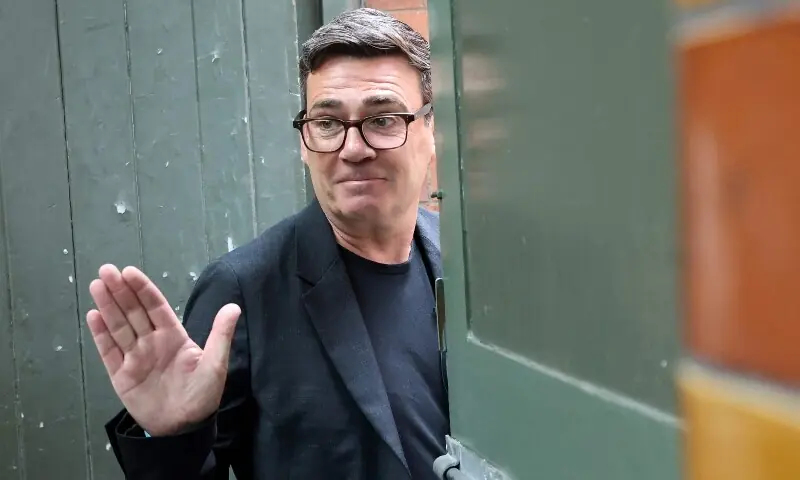
Former Greater Manchester mayor Andy Burnham was one step away from becoming Britain’s next prime minister on Friday after being appointed leader of the governing Labour Party.
Following are the policies he has spoken about since returning to parliament in June, which offer an insight into how he could govern Britain to try to overcome a cost-of-living crisis, revive anaemic economic growth and win back voters.
Decentralisation of power
Burnham has promised to “bring about the biggest rebalancing of power our country has seen”.
His focus is on Whitehall, a part of London dotted with government departments where public officials help elected ministers devise and implement policy, which he said had become overly powerful to the detriment of Britain’s regions.
“It is time for Whitehall to accept that growth cannot be ordered from the top down. Instead, it can only be nurtured from the bottom up,” he said in a speech on June 29.
While focusing initially on England, where 85 per cent of the United Kingdom’s population live, he has said that regional devolution should also be extended in Scotland, Wales and Northern Ireland, nations where semi-autonomous assemblies already legislate on most domestic issues, but lack tax-raising and borrowing powers.
He has promised to hand more powers over economic development, housing, transport, education and skills to the regions and to set up a “Number 10 North” in Manchester in northwestern England — a mirror of Number 10 Downing Street in London, the home and office of Britain’s prime ministers.
Number 10 North will drive a decentralisation of power and support the regions in reforming essential utilities, reindustrialisation and regeneration, he said, to oversee “good growth” in every postcode.
Burnham has also promised to hand the regions greater public control of essential services such as water, housing, energy and transport.
Reindustrialisation
Burnham has said he wants Britain to rebuild its industry, promising to support domestic manufacturing and production capability in critical sectors such as steel, defence, energy, food and farming.
Defence is a particular target.
He has promised to strengthen the armed forces, saying he wanted investment into defence to help reindustrialise struggling parts of Britain, and that the government should reduce its reliance on foreign suppliers.
Education and apprenticeships
Burnham has said he wants to see less of a focus on university education and a greater emphasis on technical and vocational qualifications, promising to build a system “based on parity between academic and technical”.
He has also urged businesses to offer more apprenticeships for younger people.
Housing
Burnham has pledged his government will oversee “the biggest council house (social housing) building programme since the post-war period” after 1945. He has pledged to use vacant public land to reduce costs.
He described it as adopting “a national Housing First philosophy, as has been pioneered so successfully in Finland”.
The Nordic country offers homeless people a home rather than temporary or transitional accommodation.
It sees a stable home as a secure environment from which to tackle other issues.
Tax
Burnham has promised to stick to the Labour government’s self-imposed fiscal rules, which require it to match day-to-day spending to revenue, and to the party’s manifesto commitment not to increase taxes on working people.
He has suggested some potential tax reforms, such as overhauling business rates to support pubs and high street businesses, and has expressed support for a land-value tax an annual tax on the market rental value of land rather than on the buildings sitting on it.
Such a tax could prompt the abolition of stamp duty, a tax on home sales, and possibly replace council tax, a tax paid by households for local services.
Social care
Burnham has said social care needs a major overhaul.
Foreign policy
Burnham has said less on foreign policy, but earned approval from some on the left of the Labour Party when he said the government should do more to put pressure on Israel.
He has said he will maintain Britain’s support for Ukraine to defend itself against Russia’s war and has pledged to build closer ties with other European countries, especially on defence and security.