‘Muharram procession licence can’t be inherited’

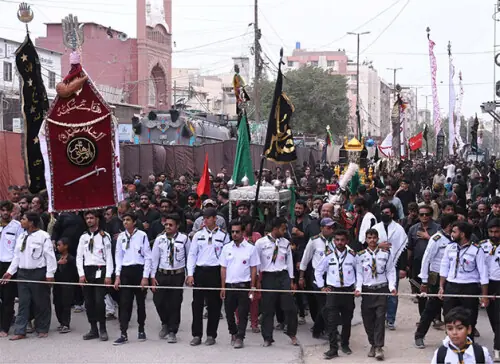
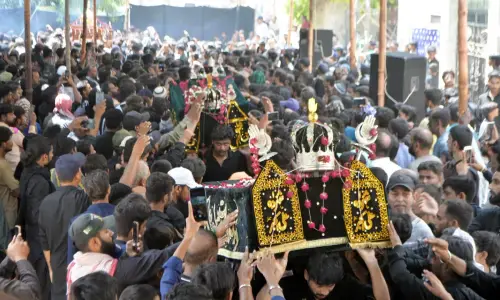
LAHORE: The Lahore High Court (LHC) has ruled that a licence issued for a Muharram procession is a personal regulatory permission and cannot be inherited or restored in the name of a deceased person.
However, Justice Anwaar Hussain observed that the constitutional right to observe religious processions does not lapse with the death of the original licence holder.
Allowing a petition, the judge set aside an order of additional chief secretary (Home) restoring a historical procession licence in the name of a person who had died in 2003.
The judge said this course was legally unsustainable because a deceased person could neither comply with statutory obligations, nor regulate a procession.
The judge held that a procession licence is intended solely to regulate public order, security and compliance with legal conditions. It does not create any proprietary or hereditary right capable of automatic succession by legal heirs, he added.
The judge noted that, following the death of the original licence holder, no valid licence existed in favour of any other individual, while disputes over subsequent entries in official records and claims based on inheritance or a will could not determine the issue.
Instead, the matter required a fresh administrative determination under the prevailing statutory framework, he asserted.
The judge ruled that executive guidelines issued in 2005, directing that no new Zuljinah procession licences be issued, could not be interpreted as imposing a perpetual prohibition on fresh applications.
Such an interpretation, he observed, would unlawfully fetter the statutory discretion vested in the competent authority and would be difficult to reconcile with the constitutional guarantee of religious freedom.
However, the judge clarified that no applicant acquires an automatic right to a licence, as each request must be assessed on its own merits in light of prevailing security conditions, local circumstances and public order considerations.
Setting aside the impugned order, the judge held that the issue of historical procession licences carries province-wide implications and cannot be resolved by treating such licences either as inheritable property or as permissions that automatically expire with the death of the original holder.
He directed that the matter be reconsidered in accordance with the applicable statutory framework and constitutional principles.
Published in Dawn, July 16th, 2026