Oil drifts down after Opec+ agrees to raise output targets


 0
0
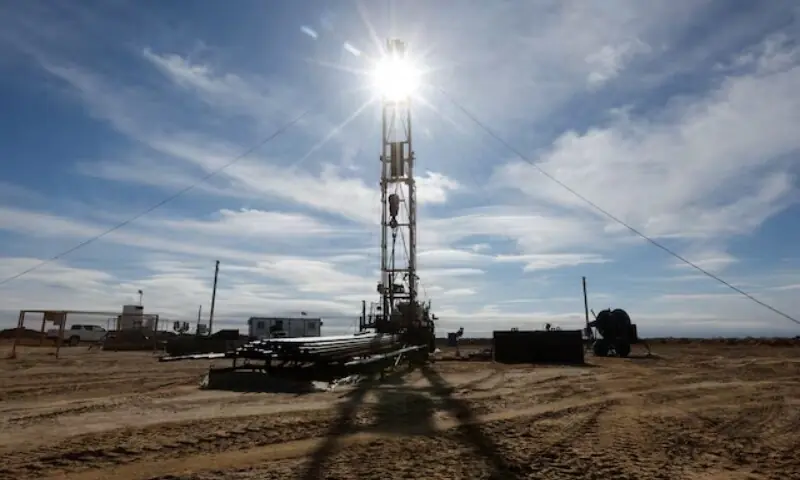

Oil prices inched lower on Monday after Opec+ agreed to further increase its output targets from August, while exports from key producers via the Strait of Hormuz are recovering, potentially adding to global supplies.
Brent crude futures fell 34 cents, or 0.47 per cent, to $71.78 a barrel by 0408 GMT after settling 0.45pc higher on Friday. US West Texas Intermediate crude was at $68.49 a barrel, down 20 cents, or 0.29pc.
There was no settlement for WTI on Friday as US markets were closed ahead of the Independence Day holiday on Saturday.
Both contracts were little changed last week, after mostly falling over the past few weeks, as investors kept a close eye on talks between the United States and Iran over the fate of shipping through the Strait of Hormuz while keeping tabs on the recovery in Gulf oil exports.
“Coming off the US long weekend, traders are sitting tight and waiting to see whether US-Iran relations will be cordial or volatile this week,” said Tim Waterer, chief market analyst at KCM Trade.
The Organisation of the Petroleum Exporting Countries and their allies, including Russia, agreed on Sunday to further increase output targets by 188,000 barrels per day from August, on top of similar increases for June and July.
However, the increase has remained largely on paper because of the US-Israeli war with Iran, which closed the Strait of Hormuz to tanker traffic for key Opec producers, including Saudi Arabia, Kuwait and Iraq, capping their output.
“The number was largely in line with expectation,” IG market analyst Tony Sycamore said.
“With the United Arab Emirates (UAE) leaving and when quotas are probably still not being met due to production still ramping up after the conflict — I’m not sure they mean much at the moment.”
The UAE quit Opec as of May 1. Gulf members have begun reviving supplies shut during the Iran war and are increasing exports.
Opec oil output in June rose by 3.3 million barrels per day month-on-month to 19.43m bpd, a Reuters survey found, recovering from its lowest in more than two decades.
Gulf oil exports in June jumped more than 3m barrels from May to exceed 10 million barrels per day, although the volume remained 40pc below pre-war levels, data showed.
In addition, oil shipments from Russia’s western ports hit a record high in June and are expected to maintain that level in July as its refineries have been damaged in drone attacks by Ukraine that have forced Moscow to boost crude exports, industry sources said.