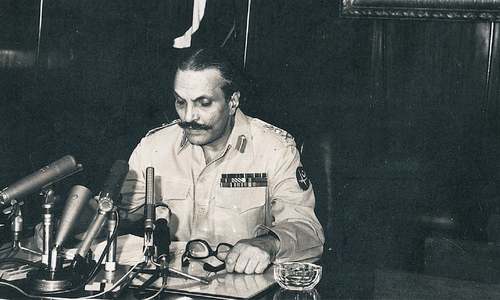
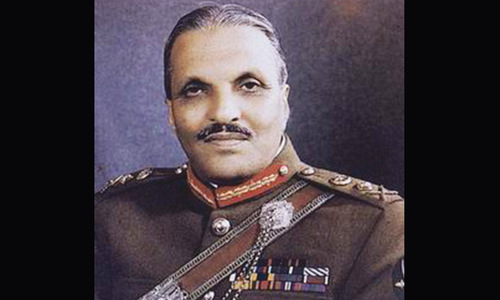
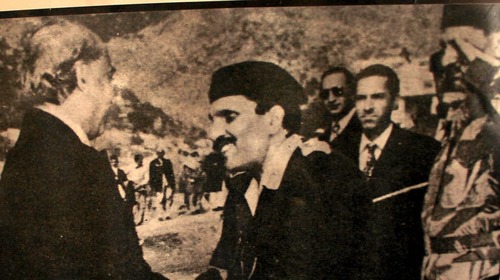
LAHORE: Speakers at a seminar held by the Pakistan Peoples Party (PPP) central Punjab chapter declared that the dark shadows of the July 5, 1977 martial law still haunt Pakistan’s socioeconomic fabric, with one of them claiming if the party founder, Zulfikar Ali Bhutto, had not been executed, Pakistan would have been a “global superpower today.”
The seminar titled “July 5 and Today’s Pakistan” was held on Sunday to mark the anniversary of the 1977 military coup in the country.
It brought together the PPP’s central and provincial leadership, including Shehzad Saeed Cheema, Mian Misbahur Rehman, Chaudhry Aslam Gill, Jahan Ara Wattoo, Samina Paganwala, Rana Ahmed Jawad, Mian Ayub and Dr Zarar Yusuf, among others.
Mr Cheema stated that the fundamental conflict in Pakistan has always been about the locus of power. He emphasised that the ZAB was hanged for promoting the ideology that power belongs to the people.
The speakers also shed light on the historical context of the 1977 coup.
Rana Ahmed Jawad said that despite a formal agreement being reached between the government and the opposition Pakistan National Alliance (PNA) on July 3, the country’s democratic setup was overthrown just two days later.
Arif Khan reminded the audience of ZAB’s speech on April 28, 1977, in the National Assembly where he said there were active plots to assassinate him. He added that Bhutto was threatened with dire consequences if he did not cancel a nuclear reprocessing plant agreement, but he refused to compromise on national sovereignty.
The speakers vehemently criticised the “toxic legacy” of Zia regime, stating that the July 5 martial law intentionally fractured Pakistani society. They argued that the Zia regime institutionalised sectarianism, religious hatred and intolerance, which ultimately destroyed the country’s intellectual foundation.
The speakers said the nation had been so deeply polarised that today every political party marks its “own version of a black day.”
Chaudhry Aslam Gill paid rich tributes to the workers who laid down their lives fighting alongside ZAB, emphasising that the party’s revival in Lahore is critical to its overall survival. Jahan Ara Wattoo and Samina Paganwala highlighted that PPP remains unique because its top leadership, including late Benazir Bhutto, sacrificed their lives alongside their workers, practicing the ultimate lesson of standing against tyranny.
Dr Zarar Yusuf remarked that ZAB was penalised by international powers for uniting the third-world countries and condemning Israel at the 1973 Islamic Summit.
Chaudhry Akhtar and Usman Malik urged PPP workers to renew their pledge to fight for the supremacy of the Constitution and the parliament, noting that ZAB chose the gallows over compromising on democratic principles.
Published in Dawn, July 6th, 2026