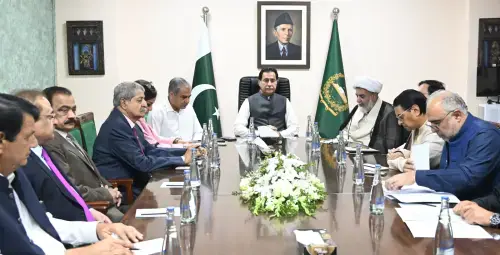
PESHAWAR: The elementary and secondary education department has planned to divide its directorate into primary and secondary education directorates to improve the education quality and lessen administrative workload.
The education department has also considered restructuring the education offices at the district level, according to officials in the education department.
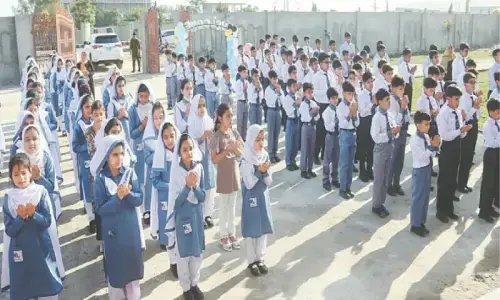
They told Dawn that currently, the directorate of elementary and secondary education oversees 34,789 public schools, 5.9 million students and over 211,000 teaching and non-teaching staff members.
An official of the education department told Dawn that it was next to impossible for a single administrative entity to manage this vast span of control, combined with expanded reforms in digital governance, teacher management, school-based assessment and increased accountability.
Department has also considered restructuring education offices at district level
“Dealing with such a large number of employees and fulfilling other responsibilities has led to administrative inefficiencies, delays in service delivery, weakened level-specific focus and oversight gaps in the teaching learning process,” he said.
The official said monitoring and supervising such a huge workforce with a persistent and longstanding demand for quality assurance had further strained that unified structure.
He also said at the district level, parallel male and female structures managing both primary and secondary education simultaneously resulted in duplication of functions, fragmented planning and limited focus on the distinct needs of each educational tier.
The official said that the current directorate administered two distinct levels of education (primary and secondary), each having different educational objectives, pedagogical approaches, assessment systems, administrative requirements and policy priorities.
He said the complexity of the education sector, the distinct functional requirements of primary and secondary education and the need to improve governance, accountability, service delivery and administrative efficiency necessitated the division of the directorate into two independent directorates for primary and secondary education.
When contacted, secretary of the elementary and secondary education department Mohammad Khalid said that the establishment of separate directorates for primary education and secondary education would ensure focused management, effective supervision and improved educational outcomes through level-specific planning and oversight, thereby strengthening governance and improving educational outcomes.
He said that the proposed bifurcation was in line with the administrative reforms adopted by Punjab and Sindh.
The secretary said Punjab had maintained separate directorates for elementary and secondary education, while Sindh had re-organised its educational administration into two distinct directorates for primary education and directorate of elementary, secondary and higher secondary education for effective governance.
He said the directorate would be split into two distinct provincial setups, each headed by a director (BPS-20) and that the directorate of primary education would be mandated with technical and administrative oversight of all public primary schools (early childhood education up to grade 5).
According to him, the areas to be focused include foundational literacy, numeracy, localised infrastructural needs (play areas and feeder schools) and primary teacher management.
The directorate of secondary education will be responsible for middle, high, and higher secondary schools (Grades 6 to 12) and its focus areas include subject-specific teacher specialisation, science and computer laboratories, career counseling and coordination with examination boards and middle, high and higher secondary teacher management.
The secretary said that the existing gender-specific parallel administrative offices (district education offices male and female) would be re-organised into two functionally separate, level-specific entities.
He said that the district education office (primary) to be headed by a district education officer (DEO) primary (BPS-19) would manage all primary schools up to grade 5. The existing DEO (female) will be re-designated as the DEO (primary).
“The district education office (secondary) headed by the DEO (secondary) (BPS-19) will oversee middle, high and higher secondary institutions (grades 6 to 12). The existing DEO (male) will be re-designated as DEO (secondary),” he said.
Mr Khalid said separate formations for primary and secondary education at district level would enable focused planning and targeted implementation of policies tailored to the specific needs of the teaching-learning process at each level.
He said that the bifurcation of directorate and re-organisation of district education offices into DEO (primary) and DEO (secondary) would minimise administrative delays by distributing the massive workforce management setup and allow education managers to specialise in tier-specific requirements.
Published in Dawn, July 4th, 2026