ISLAMABAD: As part of Pakistan’s efforts to help broker an end to the war in the Middle East, Prime Minister Shehbaz Sharif will pay official visits to Iran and Turkiye from July 3 to 6, sources in the PM Office told Dawn on Monday.
The US military said it carried out new strikes on early Sunday on multiple targets in Iran, in response to a fresh Iranian attack on a ship transiting the Strait of Hormuz. Tehran responded by launching strikes against US bases in Bahrain and Kuwait before both sides agreed to halt attacks.
Sources said that during his visit, the prime minister will meet the leadership of both Iran and Turkiye and call on Tehran and Washington to exercise restraint, particularly following the signing of the Islamabad Memorandum of Understanding (MoU) as part of the peace process.
The strikes underscored the fragility of the Pakistan-brokered interim peace deal aimed at ending a war launched by the United States and Israel on February 28, which disrupted shipping through the Strait of Hormuz and rattled global energy markets.
Yesterday, Iran’s top diplomat, Abbas Araghchi, said that “we should reach a new framework that includes all countries in the region and without the presence or interference of any country from outside the region”.
This echoed a proposal put forward by Iran’s President Masoud Pezeshkian earlier this week, who called for a new “regional security structure” among regional countries.
Pezeshkian floated the concept during a visit to Pakistan, where he expressed gratitude to PM Shehbaz and Chief of Defence Forces and Chief of Army Staff Field Marshal Asim Munir for their efforts to bring about an end to the war.
US-Iran talks in Switzerland
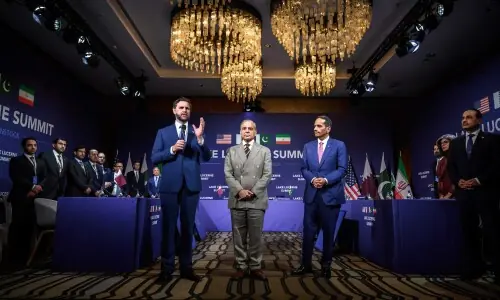
Pezeshkian’s visit came after key direct talks — dubbed the “Lake Lucerne Summit” — held between the United States and Iran in Switzerland, kicking off negotiations under the Islamabad MoU signed on June 18.
Under the 14-point accord, Washington and Tehran agreed on a framework to end the war, reopen the Strait of Hormuz and negotiate on key issues within 60 days of the signing.
The US-Iran talks in the Swiss resort of Burgenstock were mediated by Pakistan and Qatar, with Prime Minister Shehbaz Sharif and Chief of Defence Forces Field Marshal Asim Munir representing Pakistan.
The Lake Lucerne Summit created a mechanism for further technical talks and also set up communication lines to end the fighting in Lebanon and to keep the vital Strait of Hormuz open.
“Encouraging progress has been made,” the mediators said in their joint statement, including a contact channel set up to “avoid incidents and miscommunication” in the Strait of Hormuz.
A “de-confliction cell” between the parties and the Lebanese authorities was also been agreed upon to prevent fighting from erupting again.