The international order is entering a period of profound change. Long-standing assumptions about alliances, trade relationships and security guarantees are being reassessed. Countries that once viewed globalisation as an unqualified good are increasingly asking a different question: how much dependence is too much?
For Pakistan, sovereignty is therefore not primarily a military or diplomatic concept. It is an economic one. A country that depends on others to finance its budget, supply its energy, provide critical technologies or process its strategic resources inevitably finds its room for independent decision-making constrained. Pakistan’s greatest strategic challenge is reducing the vulnerabilities that limit its ability to make choices in the national interest.
The first pillar of sovereignty is external financial independence. For decades, Pakistan has relied on remittances, multilateral support, bilateral deposits and external borrowing to bridge recurring balance-of-payments gaps. These have helped avert crises, but they have not addressed the underlying weakness: the economy does not generate sufficient foreign exchange through exports and productive investment.
Countries with strong export sectors enjoy greater policy autonomy because they are less dependent on creditors. Sovereignty begins with earning rather than borrowing. Pakistan must therefore place export competitiveness at the centre of economic policy, not merely as an economic objective but as a strategic imperative.
Pakistan’s ability to make independent choices will depend less on diplomacy and more on economic resilience
This requires focusing on sectors where Pakistan possesses, or can develop, comparative advantage: agriculture and food processing, minerals, tourism, information technology, pharmaceuticals and selected areas of manufacturing.
Equally important is attracting the right kind of investment. Investments that generate exports, transfer technology, build local capabilities, and substitute imports efficiently strengthen sovereignty. Investments that primarily serve domestic consumption while creating future obligations to remit profits and royalties do not.
Fiscal sovereignty is equally important. A state that struggles to finance itself becomes vulnerable to external pressure and conditionality. Pakistan’s tax system remains narrow and inequitable, relying heavily on a relatively small segment of formal businesses and salaried individuals while large parts of agriculture, retail trade, real estate and services remain undertaxed. Broadening the tax base is therefore more than a revenue objective. It is a sovereignty objective.
Energy security represents another critical dimension of sovereignty. Pakistan remains highly exposed to imported fuel and global energy shocks. The answer is not self-sufficiency but resilience: greater use of domestic renewable resources, efficient utilisation of indigenous energy sources, improved transmission infrastructure, and lower energy intensity across the economy.
Food security deserves similar attention. Pakistan possesses fertile land, diverse climates and a large agricultural base, yet continues to import substantial quantities of edible oils and other food products. Improving agricultural productivity, reducing post-harvest losses and strengthening logistics would not only save foreign exchange but also reduce vulnerability to external disruptions.
A less discussed but increasingly important sovereignty lever lies beneath Pakistan’s soil. For much of the twentieth century, oil shaped geopolitical power. In the twenty-first century, critical minerals are emerging as strategic assets because they underpin electric vehicles, batteries, renewable energy systems, semiconductors, telecommunications, artificial intelligence and modern defence technologies.
Pakistan’s significant copper and gold resources, particularly at Reko Diq, therefore represent far more than a mining opportunity. They offer a chance to participate in the industrial supply chains likely to drive global growth for decades. However, extracting minerals alone will not strengthen sovereignty.
If Pakistan merely exports ore, concentrate or slurry for processing abroad, it will capture only a fraction of the value. Most of the economic benefit is created after extraction through smelting, refining, engineering and manufacturing. A country that exports copper concentrate and imports electrical equipment, motors, cables, batteries and electronics remains dependent on foreign industrial capabilities. Critical minerals should therefore be viewed not simply as a source of royalties, but as a foundation for industrial transformation.
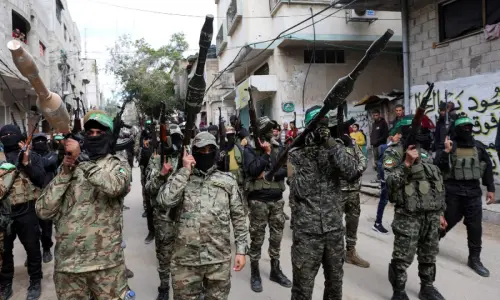
There are useful lessons to be drawn from Iran’s resilience. Despite decades of sanctions, Iran has maintained considerable strategic autonomy by investing in domestic capabilities in engineering, defence production, pharmaceuticals, and technology. The economic costs have been substantial, and Pakistan should not emulate Iran’s isolation. But the underlying lesson remains relevant: countries that develop domestic capabilities are harder to coerce than those dependent on imported know-how.
Technology represents another emerging sovereignty challenge. Increasingly, economic activity, government services, financial systems and national security depend on digital infrastructure. Countries that lack capabilities in cybersecurity, artificial intelligence, cloud computing and data management risk becoming dependent on foreign technologies and platforms.
Trade diversification also contributes to sovereignty. Excessive dependence on a small number of export markets creates vulnerability to policy changes and geopolitical tensions elsewhere. Expanding commercial ties with Africa, Central Asia, the Association of Southeast Asian Nations and the Middle East, including Iran, should therefore become a strategic priority.
Yet perhaps the most important sovereignty lever lies closer to home. Strong institutions are the ultimate guarantors of independence. Countries with competent bureaucracies, predictable regulations, effective planning and policy continuity are better able to withstand external pressures and exploit emerging opportunities. Weak institutions create vulnerabilities that no amount of diplomacy can offset.
Pakistan’s sovereignty challenge is therefore not primarily geopolitical. It is economic, technological and institutional. It needs to reduce the vulnerabilities that make such choices consequential in the first place.
In an increasingly uncertain world, sovereignty will belong to those who build the economic strength, industrial capability and institutional resilience that make independent choices possible. For Pakistan, that journey begins with exports, productivity, food and energy security, mineral value addition and stronger domestic capabilities — not rhetoric.
The author is a former CEO of Unilever Pakistan and of the Pakistan Business Council
Published in Dawn, The Business and Finance Weekly, June 29th, 2026