There are two common derivatives from the word bazaar (itself from old Persian meaning market) in Urdu — bazaari and bazaaru.
Bazaari generally pertains to something ordinary, common or cheap, easily available in the market; baazari aadmi means a common person. However, baazaru mostly means vulgar or improper and, when applied to women — as in baazaru aurat — it implies a woman of low morals, a prostitute.
The 18th-century Urdu poet Nazeer Akbarabadi (1735-1830) was excluded from the Urdu canon for being both baazari and baazaru, that is, he wrote about commonplace subjects and sexually explicit poetry, topics that were looked down upon in the elite circles of poetry.
It was Mustafa Khan Shefta (1806-69) who first wrinkled his nose at Nazeer, calling him a writer of popular poetry enjoyed by the vulgar people in the bazaars of northern India; others followed suit. Thus, Muhammad Husain Azad and Altaf Husain Hali, the early modern Urdu critics, paid no heed to Nazeer in their powerful histories of Urdu poetry.
Fortunately, Urdu literary historians such as Muhammad Sadiq, who wrote a highly influential history of Urdu literature (first published in1964), devoted an entire chapter to Nazeer, in which he praised the poet’s innovative style, exuberance and capacious range of subjects. Sadiq led the way to a closer examination of Nazeer Akbarabadi’s oeuvre. Aditya Behl did not flinch in pulling out Nazeer’s seamier poetry in his conference presentations and ultimately wrote a long article, ‘Poet of the Bazaars: Nazeer Akbarabadi’ (2005), where he provided an overview of Nazeer’s creativity.
Nazeer Akbarabadi was born in Delhi and lived in Agra, also known as Akbarabad, from 1749 until his death in 1830. In a poem that is a self-portrait, Nazeer, with traditional humility, describes himself as a teacher:
[Listen to the story of the one called Nazeer/ He was a teacher, poor, timid and faint-hearted
…
Leisurely, short-statured, dusky, and of Indian descent/ His body, too, was in keeping with his stature
On his forehead was a til — a small one, like a mole/ Between his two eyebrows, it had been positioned
He was light-hearted; he wore no beard/ He had a moustache; hair covered his ears like cotton
Except for teaching, would any other kind of work/ To require from him, did he have the capability?]
The self-portrait places Nazeer not among the social elite, but certainly among the respected sharif social class. He teaches students most likely of the elite class, but his economic status is that of a white-collared common man, a poet who enjoys observing the activities in the market, but also reflects on what it means to be human.
Recently, I have begun a project in collaboration with a junior colleague, Haris Qadeer, to translate Nazeer Akbarabadi into English. We propose to compile a representative selection, edition and translation of his poetry. This is not going to be easy, because editions of Nazeer’s work have been tampered with, and his language is also deceptively simple, occasionally peppered with regional, archaic vocabulary.
Nazeer’s divan comprises many outstanding poems but the Banjara Nama is iconic — its pulsating rhythm, array of vocabulary, and a deceptively light but ominous engagement with death as the ultimate reality mark the poem simultaneously as a chronicle, song and ballad. Beginning the translation, the first challenge was the title of the poem itself. Should banjara be translated as gypsy or nomad? Should Nama be chronicle, song or ballad? Should banjara be translated at all? Let us put this conundrum aside for a moment and focus on the poem itself.
Banjara Nama is composed of five-line stanzas with the fifth line as the repeater:
“Sab thaath parra reh javega jab laad chalay ga banjara”
[All comforts will be left behind when the nomad packs up and leaves]
In Urdu and classical Indo-Persian poetry, a khamsa (from the Arabic word for ‘five’) refers to a poetic form structured in five-line stanzas (known as a mukhammas). Usually, the first four lines share one rhyming scheme, while the fifth line introduces a new rhyme that ties the stanza together or provides a concluding thought.
In the poem the banjara plays a dual role; at one level it addresses humans as “banjaras”, that is wandering merchants who buy and sell for profit while, on another level, “banjara” symbolises Death as a bandit that loots everything, then packs up, and leaves.
“Qazzaaq ajal ka lootay hai din raat baja kar naqqara”
[Death’s bandit loots (your) day and night, beating his drum]
There is a subtle play in the line, depending on how you read it. Death’s bandit loots your days and nights or Death’s bandit loots day and night.
The poem outlines material goods that an itinerant merchant would be selling, then itemises luxury items that we aspire to have — exquisite muslins, brocades, embroidered cloths, gold jewellery and so on — until it gets to the penultimate stanzas, where it begins to hint that death follows wherever one goes.
Banjara Nama circles back to the opening stanza when the poet admonishes us to give up wandering from land to land searching for riches, because death as a bandit follows us wherever we go, waiting to loot us of our possessions. The last stanza is masterful in the way in which it speaks of death:
[When Death lashes its whip and drives the bullock of your body
Will someone collect your harvest, or stitch and embroider your saddlebags
Alone in the wilderness, lying dead, you will swallow the grave’s dust
Ah Nazeer, in that wilderness, not a twig will for a moment care
All comforts will be left behind when the nomad packs up and leaves]
Nazeer’s Banjara Nama reminds me of Ralph Hodgson’s classic poem, ‘Time You Old Gypsy Man’ that was published in 1917. Hodgson’s poem is remarkably similar to Nazeer’s in invoking the impermanence of life. Time is personified as a gypsy who never stops in one place and the poem’s narrator offers the gypsy all sorts of gifts to slow down and stay a little while longer:
“Time, you Old Gypsy Man
Will you not stay,
Put up your caravan
Just for one day?”
I wonder what Hodgson and Nazeer would think if they could have had the chance to read each other’s “gypsy poem.”
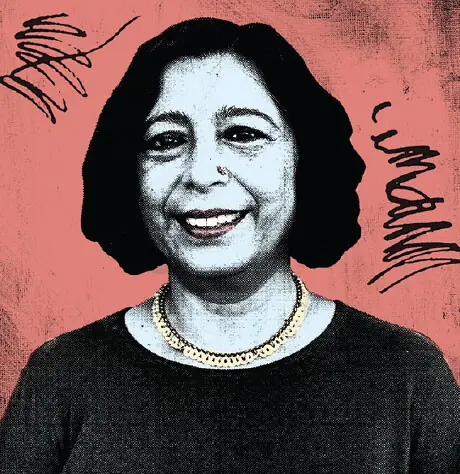
The columnist is Professor in the Department of Middle Eastern and South Asian Languages and Cultures at the University of Virginia in the US. X: @FarooqiMehr
Published in Dawn, Books & Authors, June 28th, 2026