Indian authorities arrest staff accused of theft from temple built on site of razed Babri mosque
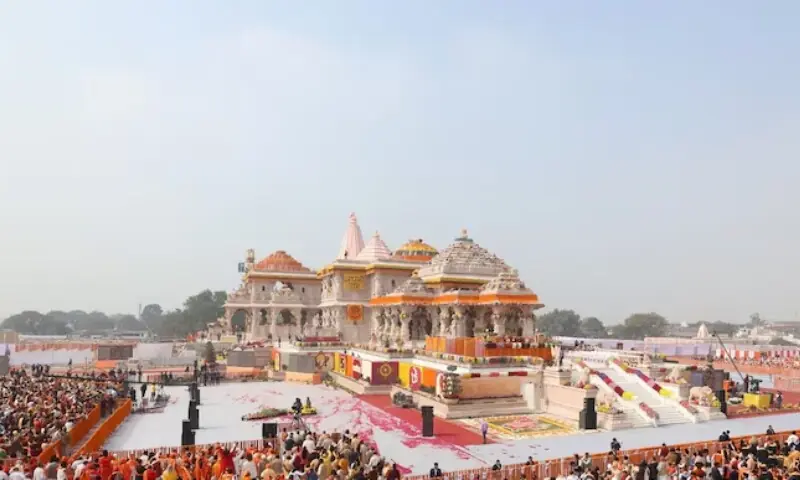

Indian police have arrested eight people over allegations of theft and misappropriation of offerings at a temple that has been at the centre of Prime Minister Narendra Modi’s Hindu-first politics, authorities said.
The Ram Mandir temple in northern Uttar Pradesh state, built on grounds where a mosque stood for centuries before being torn down by Hindu zealots, was inaugurated in 2024 with great fanfare by Modi himself.
Allegations regarding irregularities in the handling of donations led to a criminal case being registered on Thursday, with police arresting eight people, including temple employees, according to a government statement issued late on Thursday.
Most of them were involved in counting or handling cash and valuables donated by devotees, including gold and silver, media reports said.
The government has not disclosed the scale of the alleged embezzlement.
Opposition parties and media reports say it could amount to more than $20 million.
“It is so shameful that a shrine of such supreme importance is being discussed for all the wrong reasons,” said Viti Saxena, a 44-year-old homemaker who had donated to the temple.
“I now wonder if that actually went into the temple coffers or not. It is a matter of global shame now,” Saxena told AFP. “The faith of countless Hindu believers is shaken.”
The eight arrested face charges of criminal breach of trust, theft, criminal conspiracy and corruption, the government statement said.
Uttar Pradesh Chief Minister Yogi Adityanath, whose state government had established the special investigation team looking into the case, was quoted in the statement as having vowed that “no guilty person will be spared”.
The construction of the temple cost an estimated $240m, all of which was sourced entirely from public donations, according to the trust managing the site.
Devout Hindus believe that deity Ram was born in the town of Ayodhya — home to the temple — more than 7,000 years ago, but that the Babri mosque was built over his birthplace by a 16th-century Muslim emperor.
India’s ruling Bharatiya Janata Party (BJP) — then in the opposition — played an instrumental role in public campaigning that eventually led to the mosque’s demolition in 1992.
It helped propel Modi’s BJP as an unstoppable electoral juggernaut, eventually displacing the secularist Congress party that had governed India almost without interruption since independence from Britain.