Naveed Qamar says climate funds must not be consumed without projects
• Panel seeks stricter recovery of petroleum levies from OMCs
• Islamabad token tax hike approved despite middle-class concerns
ISLAMABAD: A parliamentary committee on Saturday raised concerns over the proposed carbon levy amid growing climate challenges, warned that reduced duties on scrap could create environmental risks and approved an increase in Islamabad’s token tax that is likely to affect middle-class vehicle owners.
The National Assembly Standing Committee on Finance and Revenue reviewed the National Tariff Policy 2025-30 in detail, focusing on the phased reduction in import duties. Lawmakers asked tax authorities to redraft the proposed climate levy, stressing that it must be backed by a clear and defined objective.
Commerce Secretary Jawad Paul briefed the committee, while Commerce Minister Jam Kamal remained absent.
Since last year, the committee, chaired by MNA Naveed Qamar, has undertaken a clause-by-clause review of the Finance Bill. Last year, it held 12 meetings to review the legislation.
The committee took up the petroleum levy and the newly introduced climate support levy amid concerns over Pakistan’s commitments under the IMF’s climate resilience framework. Members debated collection of the carbon support levy from citizens while criticising the absence of concrete climate projects.
Finance Secretary Imdad Ullah Bosal informed the committee that an agreement had been signed with the IMF on climate resilience.
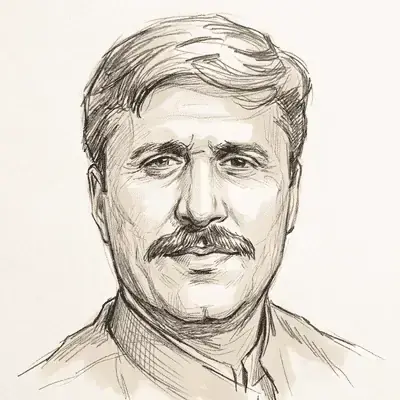
Committee chairman Mr Qamar, however, criticised the government for collecting levies without initiating any concrete projects, warning that such practices would damage Pakistan’s image. “You take money from the IMF, impose levies, but start no projects,” he remarked.
Officials briefed the committee on measures taken under the Resilience and Sustainability Facility programme. Mr Qamar countered that the government’s approach amounted to “lip service” on climate, with policies running contrary to stated commitments.
“It is not acceptable that money comes from the IMF and is simply consumed without projects. This is a complete failure,” he said, pressing officials to present at least one climate-related initiative.
PPP lawmaker Hina Rabbani Khar recalled that Pakistan was once recognised globally as a leader in climate support but had gradually lost that position. She urged the government to reclaim that standing, stressing that Pakistan remained among the countries most vulnerable to environmental impacts.
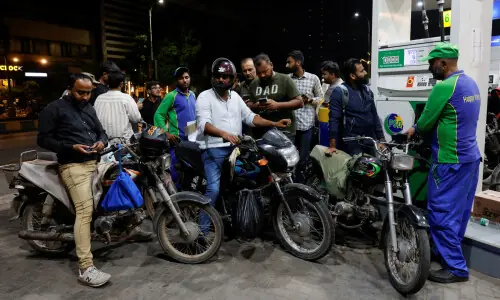
The committee further scrutinised the proposed amendments to the Petroleum Products (Petroleum Levy) Ordinance, 1961, with particular focus on strengthening enforcement against defaulting oil marketing companies.
Mr Qamar observed that oil marketing companies merely acted as collection agents for government levies and, therefore, could not be permitted to retain public funds.
Expressing serious concern over delays in the recovery of petroleum levies, he directed the government to introduce a strict inbuilt enforcement mechanism providing for suspension of product supplies to any defaulting oil marketing company after 30 days of non-payment, while eliminating discretionary extensions or instalment facilities that weakened compliance.
The chairman directed the Petroleum Division to redraft the proposed legislative amendments to explicitly eliminate instalment powers for defaulting oil marketing companies and institute immediate supply suspensions.
Duty on scrap, waste
The committee rejected a proposal to reduce customs duty on scrap and waste imports to 10pc. The duty will remain at 20pc.
Commerce Secretary Jawad Paul told the committee that certain industries imported waste to produce fuel, but PPP lawmaker Nafisa Shah questioned why Pakistan, already burdened with domestic waste, could not generate fuel locally.
MNA Arshad Abdullah Vohra noted that Karachi alone produced 25,000 tonnes of waste daily. The secretary responded that Pakistan lacked the machinery to convert waste into fuel, adding that most imported waste was used in furnaces.
The committee also strongly opposed tariff concessions on environmentally hazardous imports such as shredded tyres, observing that such measures contradicted Pakistan’s climate commitments and undermined domestic recycling efforts.
Islamabad token tax
After detailed deliberations, the committee approved an increase in token tax on vehicles registered in Islamabad.
Islamabad Deputy Commissioner Irfan Nawaz Memon briefed the committee that token tax had not been revised since 2019, while all provinces had already raised rates.
He said a one-time fixed tax of Rs10,000 applied to cars up to 1,000cc, while for models manufactured before 2010 the rate would now be Rs20,000.
For vehicles between 1,000cc and 1,300cc, token tax is currently 0.3pc of the invoice value, which will be adjusted to 0.25pc. This translates into Rs2,500 for pre-2010 models and Rs6,200 for post-2010 models, compared to Rs1,500 previously. For a car worth Rs2m, the tax will amount to Rs6,200.
Committee members raised concerns over the burden on the middle class. MNA Sharmila Faruqi opposed the increase, arguing that most vehicle owners belonged to the middle class.
Published in Dawn, June 21st, 2026