Dozens of deaths at Congo camp suggest Ebola could be spreading fast


At least 30 people have died since the start of May in one camp for displaced civilians in northeastern Congo, a death rate that camp officials said was unprecedented, with some confirmed to have died from Ebola in a sign the disease could be spreading fast there.
It was not possible to confirm the causes of all the deaths because patients or their relatives in Kigonze camp in Bunia — the epicentre of the Ebola outbreak in Democratic Republic of Congo (DRC) — had until Thursday refused testing, a camp spokesperson and aid organisation Caritas said.
However, all had symptoms including headaches, fever and vomiting, which are associated with Ebola, a camp spokesperson, a bereaved father, three aid sources and a civil society leader told Reuters.
People didn’t just die like this before, camp spokesperson Desire Grodya Bapi told Reuters.
The deaths in Kigonze, which has more than 15,000 residents, raise fears that Ebola may be circulating undetected among eastern Congo’s over five million displaced people, with resistance to testing compounding the challenge posed by severely limited sanitation measures.
Bodies covered in sheets
Camp President Dz’djo Ndrutsi Etienne said 10 people were buried this week alone. Grodya said the camp typically recorded between one and three deaths per month.
Justin Zanamuzi, director of Catholic aid organisation Caritas, which helps Kigonzes residents, said his team on Wednesday saw several bodies covered in sheets, including a pregnant woman and children.
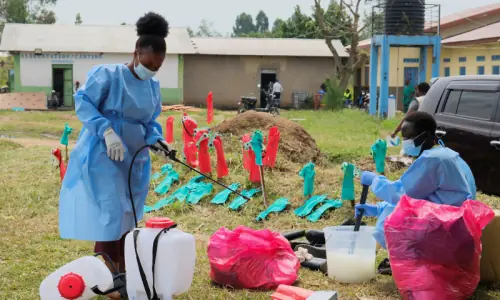
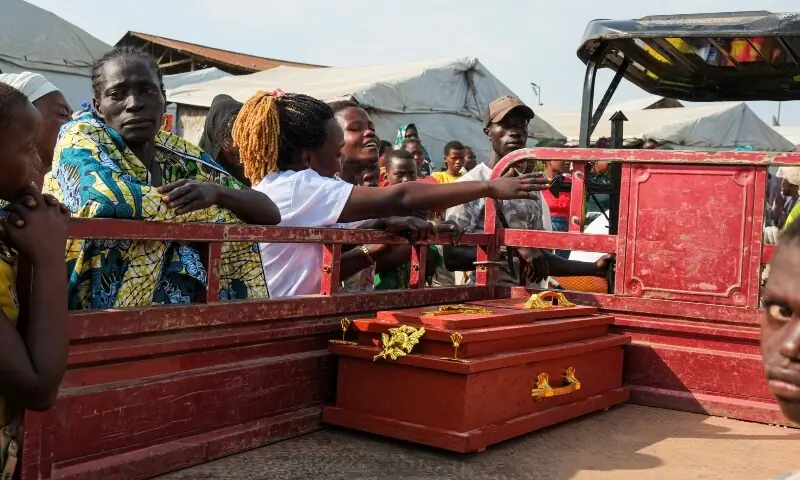
Footage from Thursday shared by the civil society leader and verified by Reuters showed health teams in hazmat suits disinfecting more bodies and preparing tiny coffins next to a crucifix as mourners wailed.
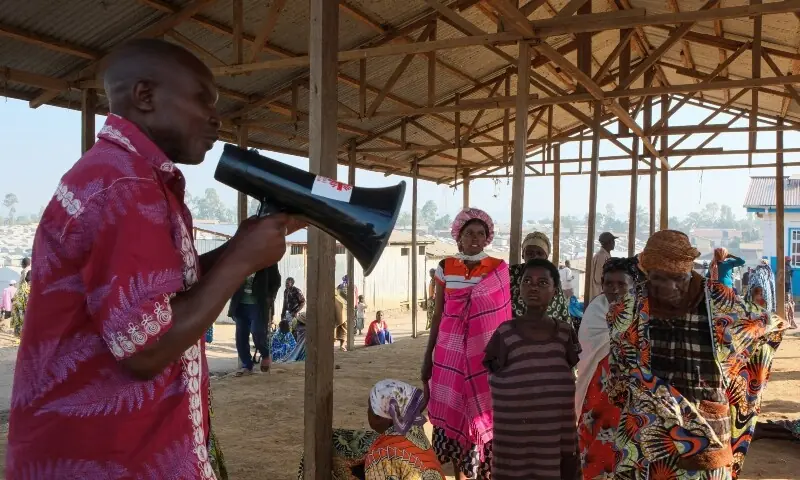
Our team tried to persuade people to accept doctors to inspect the bodies. They completely refused, Zanamuzi said.
The outbreak in the country was first declared by Congolese officials on May 15, but the officials said the deaths had begun earlier in the month.
Grodya, the camp spokesperson, said health workers had taken samples from five victims, some of which had come back positive for Ebola.
Three aid sources also confirmed that the test samples on some of this week’s victims had come back positive for Ebola, without specifying the number.
Camp resident Kato Lonu, 47, lost two children, including a six-month-old.
“These are conditions that no human being should have to live in. If you look around, people are dying one after another,” he said.
Overflowing toilets among challenges
Four aid workers said the spike in deaths highlighted how communities were now more exposed to diseases such as Ebola as donors — including key contributor United States, under President Donald Trump — have cut funding for water, sanitation and hygiene (WASH), which is essential in fighting a disease that spreads through bodily fluids such as human waste.
Data compiled by the United Nations showed that funding for toilets and handwashing stations in Congo more than halved between 2024 and 2025, to around $38 million, and this year’s $80 million appeal is only 21 per cent funded.
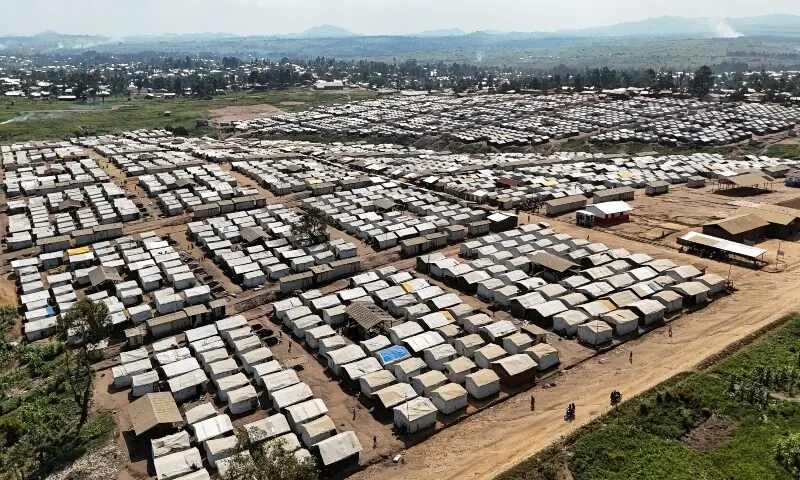
Congo has hundreds of camps for civilians fleeing war, some home to 100,000 people.
Ebola deaths have already been recorded in another camp in the same province of Ituri, which has over 90pc of nearly 900 confirmed cases.
In Kigonze, large families share the same plastic tents spaced less than a meter apart and children wander its dirt alleyways barefoot.
There are toilets marked USAID — Washington’s international aid agency dismantled by Trump — and an aid source said the agency helped fund the toilets’ construction.
However, Grodya and the aid source said there were not enough toilets and they often overflowed.
“The latrines, they fill up very quickly, and people have to empty them themselves, with their bare hands,” Grodya said.
US aid to fight Ebola
Washington has been the top supporter of WASH services in Congo, and provided over $60 million in WASH services in 2024 to reduce the spread of diseases, a summary shared by a former USAID official showed.
The Trump administration has defended the cuts, saying it wants to focus on hyper-prioritised life-saving humanitarian assistance. Washington has committed more than $375 million in direct Ebola funding.
There was no immediate comment from the US State Department.
Reuters could not establish exactly how much, if anything, Washington now gives to Kigonze.
But four aid groups — Mercy Corps, Danish Refugee Council, CARE International and Oxfam — said their US-funded WASH projects for displaced people in the three Ebola-affected provinces were scaled back or dropped since last year’s cuts.
Mercy Corps built 82 taps and more than 400 public toilets serving over 125,000 displaced people in 2024.
This year, funding cuts mean that fewer than 19,000 people are being served by six taps and no public toilets, the aid group said.