AJK puts 147 JAAC activists, supporters on Fourth Schedule


MUZAFFARABAD: Azad Jammu and Kashmir (AJK) has placed 147 activists and supporters of the proscribed Joint Awami Action Committee (JAAC) on the Fourth Schedule of the Anti-Terrorism Act, even as a standoff between the group’s protesters and law enforcement personnel in Rawalakot continued on Friday and a region-wide strike entered its 11th day.
According to official notifications issued by the AJK Home Department, those placed on the Fourth Schedule included 33 activists from Poonch, 31 from Sudhnoti, 15 each from Kotli and Bagh, 14 from Mirpur, 10 from Bhimber, eight each from Neelum and Haveli, and four from Muzaffarabad.
The notifications said the decision had been taken at the 41st meeting of the AJK cabinet on June 5.
Strike enters its 11th day; life remains disrupted across much of Poonch, Muzaffarabad divisions
Official sources said more names could be added to the Fourth Schedule on the basis of intelligence reports and ongoing investigations. One official claimed that the properties of those placed on the list could also be attached and sealed.
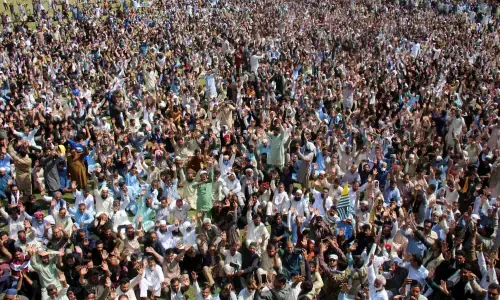
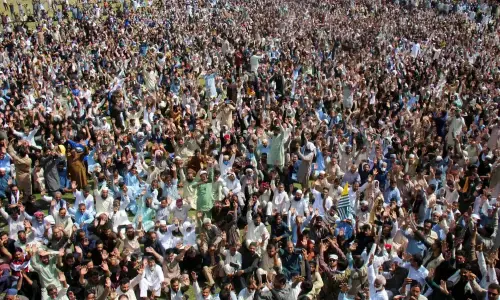
Though there was no official statement on the situation in Rawalakot, sources said protesters continued to assemble daily at Eidgah Ground, with their numbers fluctuating from day to day.
A senior official, speaking to Dawn on condition of anonymity, claimed that some JAAC leaders had been delivering inflammatory speeches to keep protesters mobilised. He said the authorities had adopted a strategy aimed at ending the sit-in without resorting to force, including disrupting the supply of food reaching protesters through different routes.
The official further claimed that lists were being compiled of government employees allegedly supporting or facilitating the protesters — either through participation in demonstrations or by providing accommodation and meals — for strict disciplinary action.
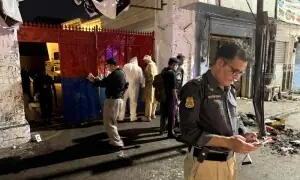
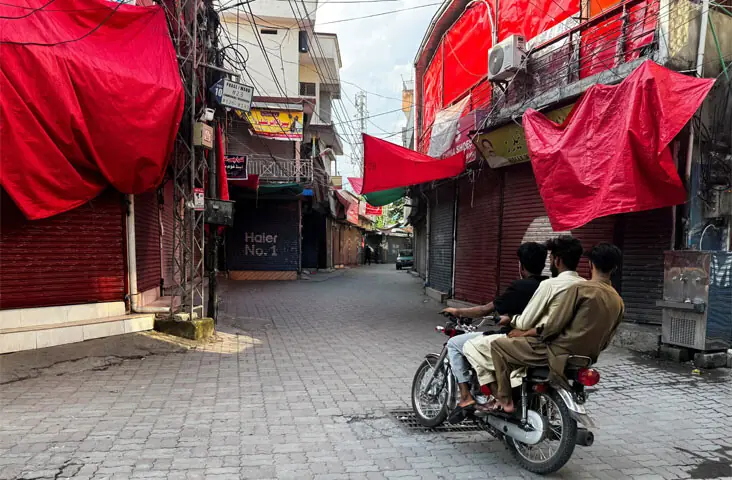
Meanwhile, life remained disrupted across much of Poonch and Muzaffarabad divisions, where businesses along major roads and in markets remained closed for the 11th consecutive day on Friday. Public transport also stayed off the roads, though private vehicles continued to operate.
Witnesses said the strike was only partially observed in Mirpur division.
In Muzaffarabad, however, some signs of normality began to emerge. Street vendors selling fruit and vegetables returned to several localities, while some medical stores and grocery shops opened for limited hours. Most businesses dealing in clothing, cosmetics, electronics and other non-essential items remained closed.
Residents continued to face difficulties due to the suspension of internet services, which has also disrupted banking operations. Notices displayed outside several banks informed customers that ATM and other banking services would remain unavailable until communication links were restored.
The disruption has also affected Kashmiri students studying in Pakistani cities, whose families have been unable to transfer money to them.
Many residents have been travelling to Garhi Habibullah in Khyber Pakhtunkhwa, around 20 kilometres from Muzaffarabad, to purchase essential commodities and refuel their vehicles.
For small traders, the partial reopening of businesses has provided some relief.
“This is my only source of livelihood. The strike hit me hard and left me penniless,” said Muhammad Shiraz, a pushcart vendor in Upper Adda. “I have small children to support.”
Nearby, grocery shop owner Muhammad Niaz said he had reopened his business out of necessity.
“The stock I purchased before the strike is still lying unsold. Let us hope life returns to normal at the earliest,” he said.
Fuel shortages, meanwhile, continued to cause hardship. All petrol pumps remained closed, with entrances blocked by tents or other barriers.
Several motorists complained they were unable to obtain fuel, while others alleged that petrol was being sold unofficially in bottles at inflated prices.
“I had brought my wife to hospital when my motorcycle ran out of fuel,” said Fazian Rehman, 40, holding an empty bottle outside a petrol station. “This is the third pump I have visited, but I still haven’t been able to get any petrol.”
He urged the authorities and protest leaders to resolve the crisis through dialogue.
“Those in authority should negotiate and accept at least those demands that are reasonable and legitimate so that normal life can resume,” he said.
Published in Dawn, June 20th, 2026