LHC terms stone-crushing sector public health emergency

LAHORE: In a scathing rebuke of bureaucratic inaction, the Lahore High Court (LHC) has characterised the rampant and unregulated stone-crushing industry in Punjab as a public-health and labour-rights emergency, noting 95 per cent fatality rate among workers exposed to crystalline silica dust.
In an order of a recent hearing on a decade-old public interest petition by Public Lawyer Front and others, Justice Khalid Ishaq painted a grim picture of state negligence.
The judge observed that poor labourers are dying in miserable conditions without access to basic medical facilities, while administrative departments have failed to show any improvement despite years of litigation.
The judge noted that Chak Nangar, a single village in D.G. Khan, recorded approximately 113 deaths from 2005 onwards and 150 living patients who are currently awaiting death without urgent medical or palliative support.
Flays state inaction as Silicosis claims scores of lives; four petitioners, eight members of a family died during litigation
In Nutt Kallar (Tehsil Kamoki, Gujranwala), eight members of the immediate Hanjra family died during the pendency of this petition alone. All were workers at a single factory.
The petitioners identified one factory owner in Gujranwala as responsible for the deaths of approximately 36 labourers.
Justice Ishaq pointed out that four of the original petitioners have also succumbed to Silicosis disease while waiting for justice.
Most recently, a petitioner, Muhammad Riaz, passed away on May 20, 2026, he added.
“Considering the unimaginable hardships being faced, miseries and pain being inflicted upon persons facing Silicosis disease caused by rampant, unchecked and unregulated stone-crushing industry, there is no progress in sight which may arrest the miseries of this under privileged segment of the society,” the judge observed.
The judge also highlighted that the vast majority of stone-crushing and mining labourers remain completely unregistered with labour authorities.
He regretted that the total lack of documentation leaves workers entirely outside the protective ambit of labour laws.
Consequently, there is no employer accountability, no systematic medical surveillance, and no pathway for families to claim social security or medical benefits, he added.
The judge warned that even a brief exposure of one to two months is enough to trigger a fatal case of Silicosis.
The judge also expressed displeasure over the provincial government’s failure to enforce safety standards, despite explicit directions issued by the Supreme Court of Pakistan back in 2018 (H.R.C. No. 16143-P of 2014).
While the Punjab Occupational Safety and Health Act was passed in 2019, the judge noted that it was never implemented because the government failed to frame the necessary rules or operationalise the OSH Council.
Recently, that law was replaced by the Punjab Labour Code 2026, which, a law officer said, is currently awaiting provincial cabinet approval.
Justice Ishaq ordered a series of sweeping measures including the constitution of a high-powered committee headed by the chief secretary of Punjab to coordinate combined departmental efforts.
The judge directed the committee to seek assistance from Advocate Usama Khawar, the counsel for the petitioners, and Assistant Advocate General Imran Khan, as they have witnessed the proceedings of the case.
The judge said a province-wide digital worker registration system must be launched aggressively by labour authorities to track hazardous sector workers.
He directed that the state must evolve a mechanism to hold stone-crushing factory owners financially accountable to compensate victims and bereaved families.
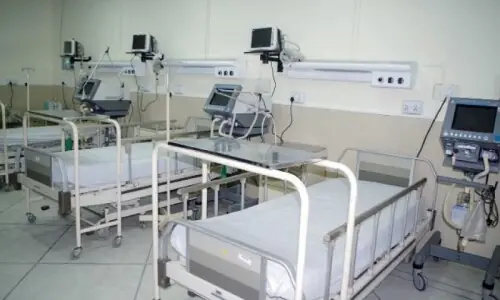
The judge said the state must step in immediately to provide diagnosis, treatment support, oxygen and structured palliative care to ease suffering where death is inevitable.
The judge granted a final opportunity to the deputy commissioners of Sheikhupura, Gujranwala and Lahore to submit comprehensive reports regarding compensation distribution to the victims and their legal heirs.
The judge warned that if tangible steps are not reflected in the reports, the DCs must appear in person before the court.
Published in Dawn, June 18th, 2026