Commercial use of assets: Body formed to assess proposals of public universities in Punjab to meet expenses
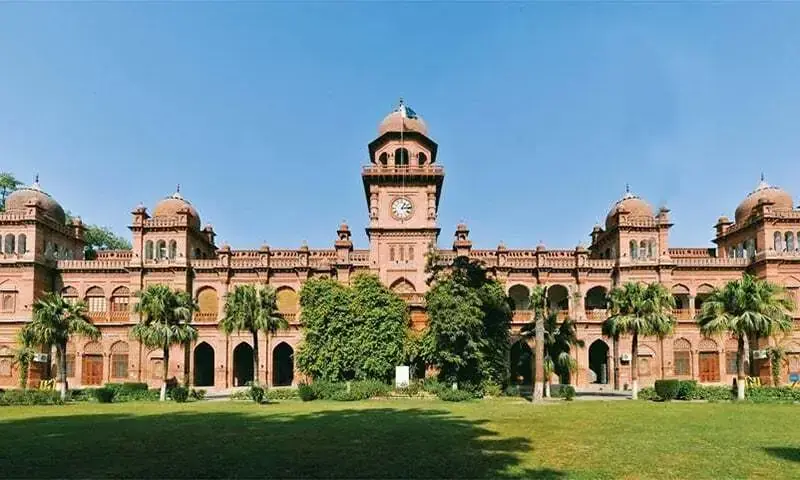
LAHORE: The Punjab government has constituted a 13-member committee to assess proposals from public sector universities regarding commercialisation of assets and public-private partnership (PPP) projects to generate revenue.
The exercise is meant to devise a policy framework for implementing such initiatives in higher education institutions under the Punjab Public Private Partnership Act, 2025.
According to a Higher Education Department notification available with Dawn, the committee will review legal and financial requirements for commercialisation and PPP initiatives. The panel has been tasked with examining proposals submitted by public sector universities and recommending a framework for their implementation.
The notification has been circulated among registrars of all public sector universities in Punjab, indicating that the government is exploring greater private-sector participation in the management and utilisation of university assets while seeking to improve financial sustainability of higher education institutions.
The committee will be headed by the provincial finance minister as convener, while the provincial ministers for law and parliamentary affairs and higher education will serve as co-conveners. Its members include the chairman of the planning and development board, senior member of board of revenue, secretaries of the higher education, finance, school education and law departments, chief executive officer of the Punjab Public Private Partnership Authority, managing director of the Punjab Procurement Regulatory Authority, chairperson and chief operating officer of the Punjab Higher Education Commission.
Under its terms of reference, the committee will conduct a comprehensive review of university proposals related to commercialisation of assets and PPP projects, prepare a standardised policy for commercialisation of land and assets owned by public sector universities and evaluate the existing 2016 policy framework in light of the Punjab Public Private Partnership Act, 2025.
The panel has also been directed to formulate a policy framework to ensure that university-led PPP projects remain aligned with the academic mandate and institutional priorities of higher education institutions. It will submit its recommendations to the provincial cabinet for consideration.
The vice chancellor of a public sector university, on condition of anonymity, told Dawn that under the respective university acts, university assets are vested in and controlled by the syndicates, which are the principal governing bodies of the institutions.
He said that if the government intends to utilise university assets under a PPP model, the relevant assets have to be advertised for commercial use and the syndicate needs to approve and allot them in accordance with the procedure laid down in the law.
“The committee may vet or oversee such proposals, but there is already a legal procedure provided in the university acts and it cannot be bypassed,” he said.
He said no serving vice chancellor or faculty representative has been included in the committee despite the fact that universities will be directly affected by its recommendations.
He further pointed out that government representatives already hold significant influence in university governance through syndicates, which include officials such as the secretaries of finance and higher education departments as well as elected lawmakers. According to him, the minister for higher education serves as chancellor or chairman of universities established under various provincial laws, while senior government officials and members of the Punjab Assembly are also represented on syndicates. He said successive policy decisions have already reduced the administrative autonomy of vice chancellors.
Former HEC chairman Dr Tariq Banuri also expressed reservations over the move. He told Dawn the autonomy of universities and other autonomous public institutions should not be curtailed and that any such exercise should remain advisory in nature.
“Government should not undermine the autonomy of universities. Such committees can provide advice, but decisions regarding autonomous institutions should remain within the framework established by law,” he said.
Prof Dr Amjad Abbas Khan Magsi, president of the Academic Staff Association (ASA) at Punjab University, described the notification as an attempt to infringe upon the autonomous status of universities.
In a statement issued on Sunday, he said the autonomy granted to universities through legislation is being gradually withdrawn and noted that no faculty representative has been included in the committee. Referring to the 18th Constitutional Amendment, Prof Magsi said provincial governments were responsible for funding public sector universities. He alleged that the notification reflected an attempt by the government to shift that responsibility by encouraging greater private-sector involvement in higher education.
He expressed concern over provisions of the Punjab Public Private Partnership Act, 2025, saying they granted extensive powers to the PPP authority regarding assets and properties linked to projects.
Published in Dawn, June 15th, 2026