PESHAWAR: Amid the hustle and bustle of Peshawar’s historical Namak Mandi Bazaar, where tradition and commerce have coexisted for centuries, a handicraft shop is drawing the attention of domestic and foreign tourists eager to explore the region’s rich cultural heritage.
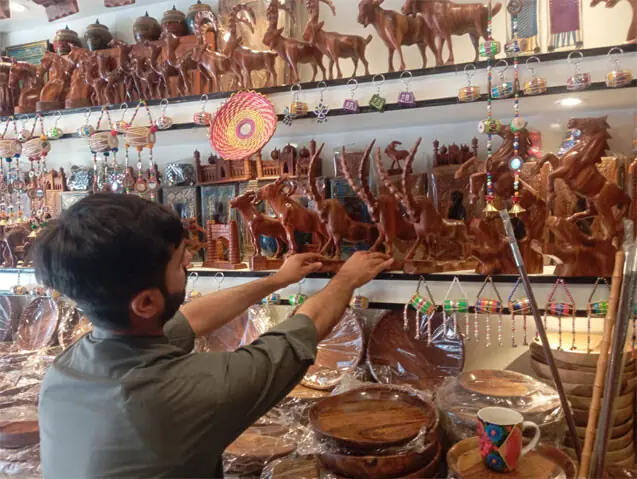
Owned by Fahad Khan, a young artisan carrying forward a family legacy, the shop has become a treasure trove of traditional craftsmanship. More than 500 decorative items are displayed on its shelves, offering visitors a glimpse into the artistic traditions of Khyber Pakhtunkhwa and the former tribal districts.
The collection includes intricately crafted wooden ornaments, household accessories, wall hangings and cultural souvenirs, many of which are produced by skilled women artisans from Swat, Waziristan, Kurram, Malakand and Chitral districts. Each piece reflects the unique identity of its place of origin while preserving techniques that have been handed down through generations.
Fahad told Dawn that his family had been associated with the handicraft trade for the last four decades. He noted that the business represented not only a source of livelihood but also a commitment to preserving traditional arts in an era increasingly dominated by machine-made products.
Fahad Khan displays over 500 items at his shop in Peshawar’s Namak Mandi
“I learned the craft from my father, Niaz Ali, a noted artisan who received several national awards for his contribution to traditional handicrafts,” he said. “From an early age, I watched him transform ordinary materials into objects of beauty. He taught me that craftsmanship is a form of storytelling that connects people with their history and culture.”
The shop owner, who is an artisan himself, continues to create decorative pieces by hand. According to him, the handicraft prices range from Rs2,000 to Rs20,000 depending on the quality of materials used, the complexity of the design and the amount of labour involved in producing each item.
“Every handcrafted piece is unique,” he said.
“The value lies not only in the material but also in the skill, patience and creativity invested in its making.”
Recalling family traditions, Fahad said his grandfather often spoke about the Central Asian and Kashmiri settlers who made Peshawar their home generations ago.
According to family history, those settlers brought with them artistic skills and design traditions that gradually became part of the city’s cultural fabric.
Visitors, both Pakistanis and foreigners, admired the originality and authenticity of the handicrafts on display. Many said the handmade items offered a deeper connection to local culture than mass-produced souvenirs.
Cultural experts believe that traditional handicrafts play a vital role in preserving intangible heritage while generating income for artisans, particularly women working from their homes in remote areas. They insist that the growing interest in cultural tourism has created new opportunities for craftsmen and women to showcase their talents.
As tourists continue to flock to Peshawar in search of authentic cultural experiences, Fahad’s shop stands as a living repository of artistic heritage, preserving stories, skills and traditions that have endured across generations.
Published in Dawn, June 15th, 2026