Budget 2026-27: Govt institutionalises budget for disaster management
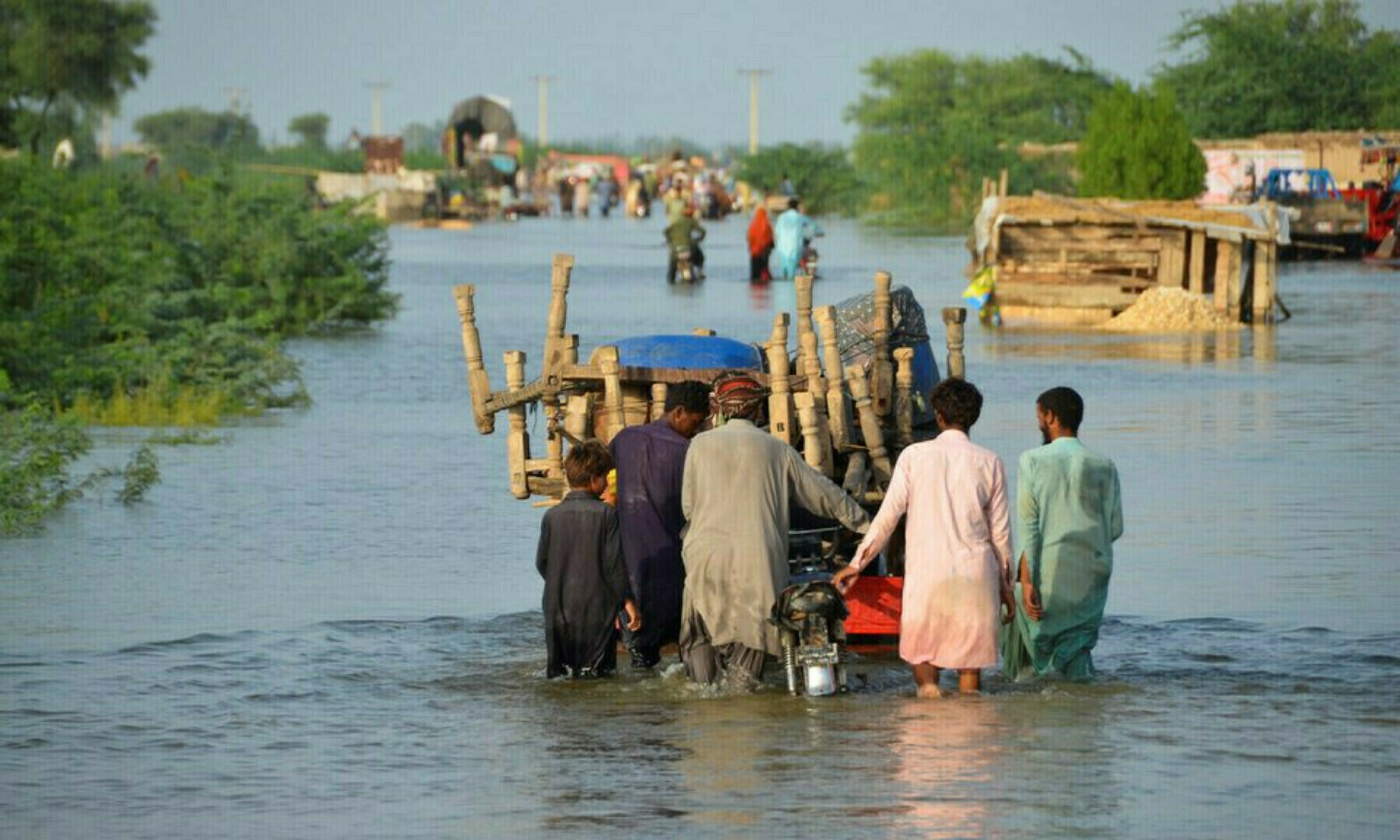
ISLAMABAD: Recognising the need for improved fiscal transparency and evidence-based policy making, the government has institutionalised budget for disaster management tagging as part of public financial management reforms.
According to the Annual Budget Statement 2026-27, this initiative enables systematic identification, classification and tracking of disaster-related expenditures across federal ministries, divisions and departments. More than 5, 000 cost centres have been mapped under four major disaster classifications, namely disaster preparedness, disaster response, recovery & rehabilitation and reconstruction.
Building upon this framework, the Budget Call Circular for 2026-27, has further strengthened disaster-responsive budgeting through the introduction of a structured classification system.
According to the statement, this enhanced framework improves consistency in reporting, strengthens inter-agency coordination and enables better alignment of public spending with disaster risk management priorities. It also supports improved monitoring and evaluation of fiscal resources allocated for disaster resilience and recovery.
Initiative helps identify, classify and track disaster-related expenditures
For FY2026-27, disaster-responsive allocations constitute 4 per cent of the current and 0.04 per cent of the development budget.
In the climate budget statement, the government announced that to further advance these reforms, the Finance Division had developed an AI-enabled digital infrastructure for climate budgeting comprising climate budget tracking, AI-assisted climate budget tagging and digitised reporting mechanisms.
An integrated dashboard, linked with the Sustainable Development Goals Achievement Programme, will enable ministries, divisions and departments to submit climate related information through AI-supported digital forms and access analytical reports. This would improve the quality, consistency, transparency, and accessibility of climate budget information.
Meanwhile, the federal government has allocated Rs2.478 billion for four ongoing projects of the Climate Change and Environmental Coordination Division under the Public Sector Development Programme (PSDP) 2026-27 aimed at strengthening climate resilience, green entrepreneurship, institutional capacity and sustainable urban planning.
According to the PSDP 2026-27 released on Friday, the largest allocation of Rs2.336 billion has been earmarked for the upscaling of the Green Pakistan Programme against the total approved cost of Rs122.147 billion. The project, approved by the Executive Committee of the National Economic Council (Ecnec) on August 7, 2025, has an estimated expenditure of Rs34.964 billion up to June 30, 2026, while its throw-forward liability stands at Rs41.358 billion.
The government has also allocated Rs40.661 million for the Strengthening Technical Capacities of Ministry of Climate Change and Environmental Coordination (STC-MoCC&EC) (Revised) project.
The project, approved by the Departmental Development Working Party (DDWP) on June 13, 2025, carries a total cost of Rs916.028 million. An estimated Rs58.605 million is expected to be spent by June 30, 2026, leaving a throw-forward of Rs857.423 million. Similarly, Rs51.600 million has been allocated for the project titled Green Skills for Sustainable Development: Promoting Green Entrepreneurship and Innovation in Pakistan.
The DDWP-approved initiative has a total cost of Rs450 million. The project has no expenditure up to June 30, 2026, while its entire cost remains as a throw-forward liability.
Meanwhile, the government has earmarked Rs50 million for the Formulation of the National Urban Strategy and Guidelines to Reduce Impacts of Urban Flooding, Droughts, Climate Disasters, and National Guidelines for Spatial Planning Considering Climate Change and Disaster Risks in Pakistan.
The project, approved by the Central Development Working Party (CDWP) in April 2025, has a total approved cost of Rs106.401 million. An estimated expenditure of Rs106.401 million is expected by June 30, 2026.
Overall, the Climate Change and Environmental Coordination Division’s ongoing development portfolio carries a total approved cost of Rs123.619 billion.
Published in Dawn, June 13th, 2026