Manufacturing grows 6.6pc

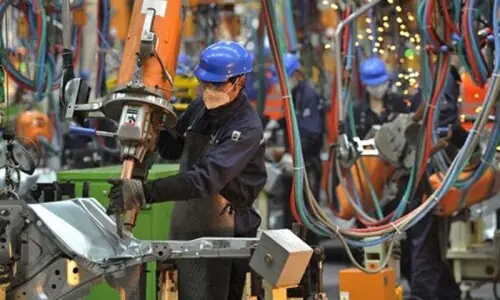
ISLAMABAD: The manufacturing sector performed strongly, posting an expansion of 6.6 per cent in 2025-26 compared with 2pc in the preceding year.
This improvement was primarily driven by a 6.5pc rebound in Large-Scale Manufacturing (LSM), 8.5pc surge in Small-Scale Manufacturing (SSM), and 6.2pc growth in slaughtering.
The manufacturing and mining sectors are critical to Pakistan’s industrial base and jointly contribute 13.5pc to GDP. Within manufacturing, LSM plays a dominant role, accounting for 67.4pc of the sector and 8.2pc of GDP, followed by SSM and slaughtering, which contribute 2.5pc and 1.4pc to GDP, respectively.
However, the mining and quarrying sector posted a modest growth of 0.4pc in FY26, indicating a gradual recovery in extraction activities.
The survey has highlighted that LSM grew by 6.5pc during July-March 2025-26, indicating a broad-based revival in industrial activity, compared to a 1.9pc contraction in the same period last year, which was primarily a continuation of the contraction that began in FY23 due to import restrictions.
In March alone, LSM expanded by 11.1pc, compared with a contraction of 2.4pc a year ago.
Automobile sector
The survey said that the auto industry showed growth across all sectors during July-March FY26, except for farm tractor sector, where production and sales were down by 8pc and 13pc, respectively. Additionally, wartime conditions have significantly increased costs for local tractor OEMs.
The survey highlighted that the auto sector had seen rising investment and was adopting new technologies, and that the industry was well-positioned to maintain its growth trajectory.
Passenger car production and sales increased by 51.3pc and 45.5pc, respectively, during July-March FY26.
The local production and sales of electric cars during the period were reported as 240 and 263 units, while 150 units and 132 were produced and sold during the corresponding period last year.
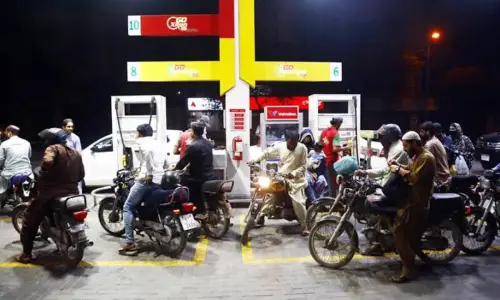
New technology cars are rapidly penetrating the market, driven by strong consumer demand due to rising fuel prices.
Whereas, the production of heavy commercial vehicles — trucks and buses — registered robust growth of 87.8pc and 28.9pc, respectively, during the outgoing fiscal year.
Truck production reached 5,301 units in July-March, up from 2,822 units in the same period last year.
Similarly, bus production rose to 704 units from 546 units over the corresponding period. The survey said that despite this growth, the overall volume of locally produced trucks and buses remained modest relative to the size of the domestic market.
Textile sector
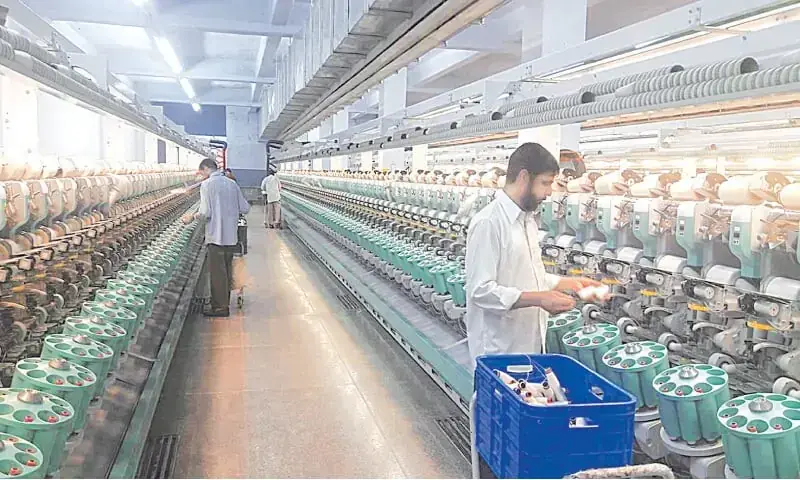
The textile and apparel sector is the largest manufacturing and employment-generation industry, contributing 59.7pc to the country’s exports and 24.2pc to industrial value addition during July-March FY26.
The sector uniquely connects agriculture with industry and exports, creating strong backward and forward linkages across the economy.
Pakistan’s textile and apparel sector exports reflected a marginal overall decline of 0.5pc year-on-year to $13.58bn during July-March 2025-26.
While fertiliser is a critical input in crop production, it accounts for 10-15pc of the cost of major crops and contributes 30-50pc to crop yield enhancement.
Published in Dawn, June 12th, 2026