Kenyan export levy may raise tea prices


 0
0
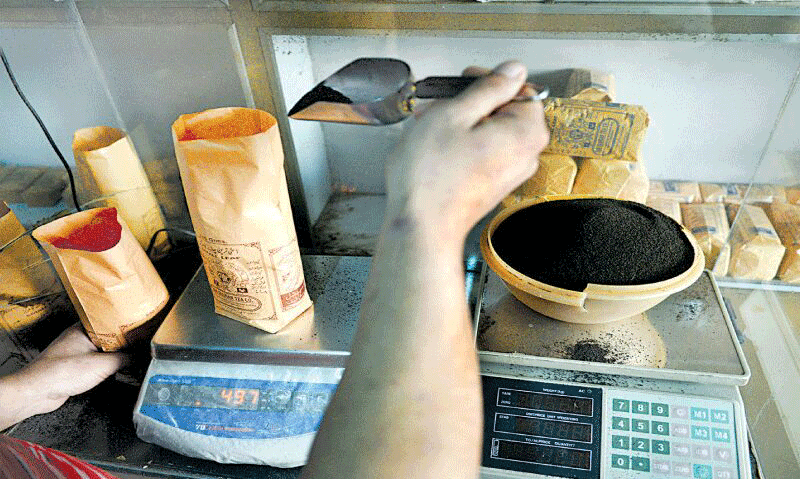

KARACHI: Tea prices in Pakistan may rise if the Kenyan government proceeds with a 0.8 per cent levy on tea exports announced in May, traders warned, adding that importers may be compelled to explore alternative markets.
A meeting was held at the Kenya High Commission in the last week of May, attended by members of the Pakistan Tea Association (PTA), officials of the Tea Board of Kenya and representatives of Kenya’s Ministry of Investment, Trade and Industry. Participants urged the Kenyan authorities to withdraw the levy.
PTA Chairman Muhammad Altaf said Pakistan was one of the most important markets for Kenyan tea, importing around 36pc of Kenya’s annual tea production of an estimated 550 million kilogrammes, in addition to volumes routed indirectly through regional trading hubs.
He said the levy could have significant commercial repercussions at a time when Pakistan was already facing economic challenges stemming from regional geopolitical developments, rising freight charges, higher packaging costs and import-related pressures.
According to Mr Altaf, the additional levy would increase costs for consumers and contribute to food inflation, as tea is a staple commodity in Pakistan. He added that higher prices could reduce overall consumption and adversely affect volumes across the supply chain.
He warned that the continuation of such measures could encourage importers to seek alternative sources, including Sri Lanka, Indonesia and Bangladesh, as well as other African tea-producing countries.
The association had conveyed to the Kenyan High Commission that the levy should not be applied to exports destined for Pakistan.
Published in Dawn, June 10th, 2026