0
0

LAHORE: The Pakistan Association of Alternative Medicine (PAAM) has submitted a proposal to the federal government for the establishment of an independent and autonomous ‘ministry for alternative medicines’ on the pattern of the India, which formed it in 2014 and raised a multi-billion dollar economy through ‘medical tourism’.
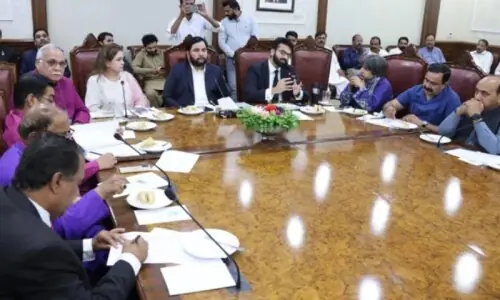
A proposed draft to the effect was presented to Federal Minister for Health Syed Mustafa Kamal at a meeting of senior representatives of the PAAM here on Tuesday.
The association, in the draft, has highlighted the significance of the alternative system of medicines in the sub-continent, raising serious concerns that Pakistan has not been supporting the development of natural medicines while the respective ministry in India is rapidly expanding global footprint and the sector in-question is projected to reach $200 billion by 2030.
Submitting the proposal, PAAM president Kashif Malik stressed upon the federal minister that it is time to promote homeopathy, tibb-i-unani, and other alternative modes of treatment to ensure quality scientific research in Pakistan.
“In 2014, India established a dedicated Ministry of AYUSH (Ayurveda, Yoga & Naturopathy, Unani, Siddha and Homoeopathy) and according to the Indian government’s figures, the sector’s value rose from $2.85bn in 2014 to $43.4bn in 2023 - a near 15-fold increase - while exports of AYUSH and herbal products roughly doubled over the same period,” reads the draft. (a copy is also available with Dawn).
It stated that this growth was driven by several factors, including rising global demand for natural products.
The proposal highlights that the available studies place the use of traditional and complementary medicine at roughly 50-80 per cent of the population, with the highest reliance in rural areas where it is often the first or the only option.
“Pakistan already possesses the building blocks of a TCAM (Traditional, Complementary, and Alternative Medicine) framework, but they are fragmented,” the document says.
During the session, the PAAM president also informed the minister that the association has submitted the request not as a criticism of the regulatory authorities, but as a willing and proactive partner.
“We represent an inclusive community of practitioners and manufacturers across homeopathy, Unani/Tibb, acupuncture, naturopathy and herbal medicine. Our single request is straightforward: that PAAM be formally recognised as a stakeholder and consulted in the design of policy and regulation affecting the TCAM sector, including a seat in the bodies that shape it,” he says.
The case for doing so rests on three points: a large and established domestic base, a proven regional precedent in India, and a reform process already underway in Pakistan that makes this the right moment to act.
Kashif Malik adds the building blocks and the workforce already exist while reform is underway.”We stand ready to contribute data, technical input and on-ground reach,” Mr Kashif says, adding that PAAM looks forward to the opportunity to collaborate with the concerned authorities in building a TCAM ecosystem worthy of Pakistan’s heritage and its people.
“What is missing is a regulatory home designed for these systems. At present, alternative-medicine products are administered largely through frameworks built primarily for conventional pharmaceuticals - a misalignment that holds the sector back rather than helping it grow safely,” the PAAM president says.
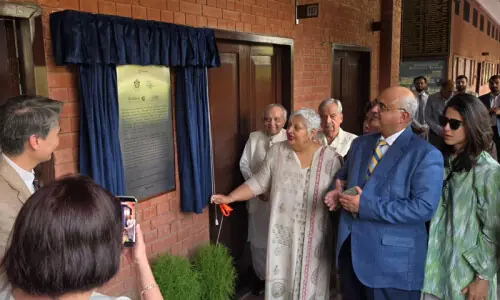
Earlier to the meeting, the first day of a two-day exhibition and seminar on “Research, processing, and product development of natural medicines: Integrating traditional healing practices into national healthcare systems,” was held at COMSTECH, Lahore.
The central theme of the seminar was “From field to formulation: Advancing research, quality, and processing technologies.” Federal Minister for Health Syed Mustafa Kamal also participated as the chief guest.In his address, Mustafa Kamal assured that he would convey to the federal government to respond to the proposal positively.
Published in Dawn, June 10th, 2026