Business leaders seek restoration of Final Tax Regime
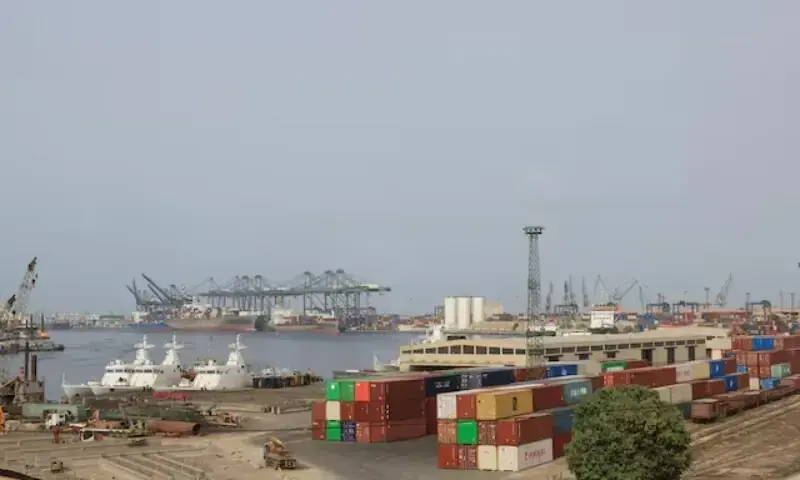


KARACHI: Business leaders have called upon the federal government to avoid repeating policy mistakes that have damaged economic activity, weakened exports, discouraged investment, and undermined industrial competitiveness.
Businessmen Group (BMG) Chairman Zubair Motiwala and Karachi Chamber of Commerce and Industry (KCCI) President Rehan Hanif urged policymakers to incorporate the business community’s recommendations in the budget 2026-27.
In a joint statement, they said that the disappointing outcomes of several fiscal measures introduced over the past two years should serve as a cautionary lesson for policymakers.
They emphasised that many of these measures had been strongly opposed by KCCI well before their implementation. Unfortunately, those concerns were ignored, resulting in adverse consequences for businesses, exports, investment, employment, and revenues.
On the shift of exporters from the Final Tax Regime (FTR) to the Normal Tax Regime (NTR) under the Finance Act 2024, they said the government adopted a short-term revenue approach without considering its long-term impact on exports and economic growth.
They demanded the immediate restoration of the FTR at a one per cent rate for all exporters. They expressed serious concern over the removal of the Export Facilitation Scheme benefits on yarn and fabric, as the scheme had played a critical role in enhancing the competitiveness of the export sector.
Lasbela Chamber
Lasbela Chamber of Commerce and Industry (LCCI) has urged the federal government to introduce comprehensive reforms to taxation, energy, trade, and investment policies in the upcoming budget to stimulate industrial growth, attract investment, and strengthen business confidence.
The chamber said Pakistan’s economic revival depended on creating a competitive and predictable business environment, adding that its recommendations were aligned with the government’s stated objective of promoting industrialisation and generating employment opportunities.
The LCCI called for a multi-year macroeconomic stabilisation framework with clearly defined targets for inflation and fiscal deficit reduction, coupled with a transparent foreign exchange policy to ensure policy consistency and investor confidence.
Published in Dawn, June 9th, 2026