ISLAMABAD: The ceramic tiles and glass industries have expressed concern over proposed duty cuts on imports of ceramic tiles and glass products.
Talking to a selected group of journalists on Saturday, Atif Iqbal, Secretary General of the All Pakistan Ceramic Tiles Manufacturers Association (APCTMA), said that as the Federal Budget 2026-27 approaches, stakeholders of Pakistan’s ceramic tiles industry have urged policymakers to protect domestic manufacturing from premature tariff reductions under the National Tariff Policy (NTP) 2025-30.
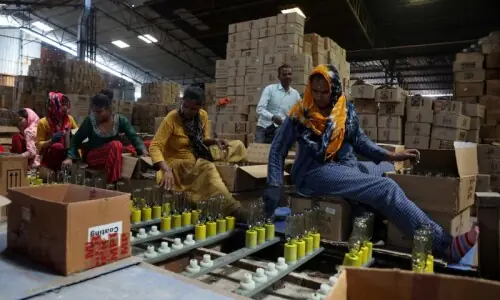
Similarly, the Pakistan Glass Manufacturers Association (PGMA) has raised serious concerns over the deteriorating condition of the domestic glass manufacturing sector, warning that any reduction in import duties on finished glass products could push the industry towards complete closure.
In a communication addressed to the Ministry of Industries and Production, the PGMA stated that the glass sector is already operating at only 50pc of its installed capacity, while the remaining production lines have been shut down due to prevailing economic challenges and adverse business conditions.
The PGMA has therefore urged the government to maintain the existing tariff structure on imported finished glass products and adopt policies aimed at industrial revival, higher capacity utilisation and investment retention.
In this regard, domestic tiles industry has made representations to the prime minister, finance minister and commerce minister to save the ceramic tiles industry from total closure.
The APCTMA has warned that the sector is already facing severe challenges and that any further reduction in customs duties on imported ceramic tiles could jeopardise the survival of local manufacturers.
Stakeholders believe that maintaining the current tariff regime on imported finished ceramic tiles is necessary to prevent further erosion of domestic manufacturing capacity and to enable the industry to recover from existing economic challenges.
According to the APCTMA, Pakistan’s ceramic tiles sector is currently operating at nearly 50pc of its installed production capacity, with a significant number of production lines remaining shut down due to high energy costs, elevated financing rates, excessive taxation, declining purchasing power and a prolonged economic slowdown.
Industry stakeholders maintain that domestic manufacturers are already operating under substantial cost disadvantages compared to foreign competitors, who benefit from lower energy tariffs, cheaper financing, supportive industrial policies and better infrastructure.
Experts believe that reducing tariffs without first addressing these structural disadvantages would expose local manufacturers to unfair competition and may accelerate the decline of domestic industry.
Published in Dawn, June 7th, 2026