US Congress moves to tighten oversight of military affairs
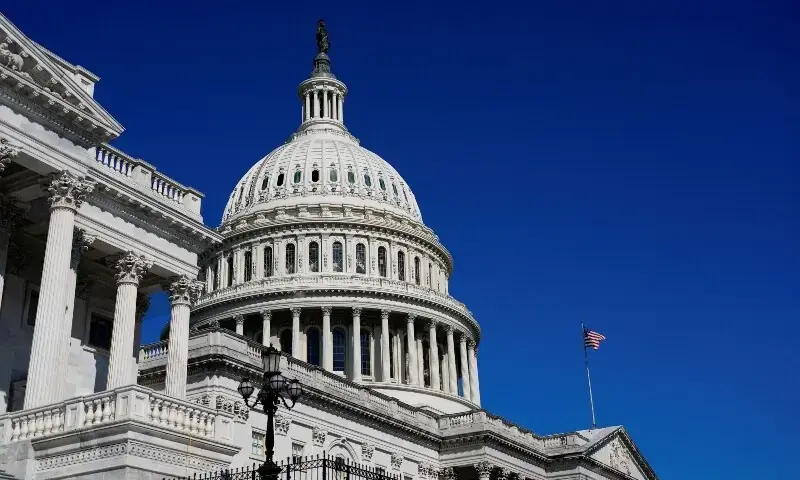
WASHINGTON: The US Congress is moving to tighten oversight of Pentagon leadership decisions and limit unilateral military action against Iran, in a rare bipartisan effort that underscores renewed tensions over presidential war powers and civilian control of the military.
On Thursday, the House Armed Services Committee adopted a bipartisan provision that would require the Pentagon to notify Congress within five days whenever a senior military officer is dismissed, along with a written explanation for the decision.
Lawmakers say the measure is intended to improve transparency over personnel changes at the top levels of the armed forces, where congressional visibility has traditionally been limited.
The move comes amid broader scrutiny on Capitol Hill of the Trump administration’s handling of military operations against Iran and recent changes in senior defence leadership.
While Congress frequently debates executive war powers, bipartisan agreement on measures that directly constrain presidential military authority is uncommon in a sharply divided Washington.
On Wednesday, the House of Representatives also adopted a War Powers resolution aimed at limiting the president’s ability to continue military operations against Iran without congressional authorisation.
The measure reflects growing interest among lawmakers in reasserting legislative authority over sustained military action under the 1973 War Powers framework, which requires congressional consultation when operations extend beyond defined time limits.
The latest resolution, introduced by Democratic Representative Pat Ryan, passed on Thursday by voice vote without objection, signalling unusual bipartisan consensus on an issue that has historically divided Congress along party lines.
The push for greater oversight has been fuelled in part by reports that US War Secretary Pete Hegseth has dismissed roughly two dozen senior military officers since taking office.
Some lawmakers in both parties have questioned both the scale of the removals and the absence of public explanations for the decisions.
Scrutiny intensified further after the removal of Army Chief of Staff General Randy George, a highly regarded officer with more than four decades of service.
Republican Congressman Steve Womack described Gen George as a “patriotic American,” reflecting unease within parts of the Republican caucus over the decision.
While civilian control of the military is a core principle of US governance, lawmakers have raised concerns in hearings about whether recent personnel changes have been accompanied by sufficient transparency to Congress, particularly at a time of heightened military activity in the Middle East.
The new reporting requirement still faces a long legislative path, needing approval by both chambers of Congress and the president’s signature. But its advancement at the committee level, alongside the War Powers resolution, signals a cautious but notable shift in congressional willingness to assert oversight over both military operations and senior Pentagon personnel decisions.
Even so, Republican lawmakers remain broadly supportive of the administration’s defence posture, suggesting that the emerging push for oversight is more focused on process and transparency than on a fundamental break with the White House’s military policy.