Nasa reverses evacuation alert order for astronauts aboard International Space Station
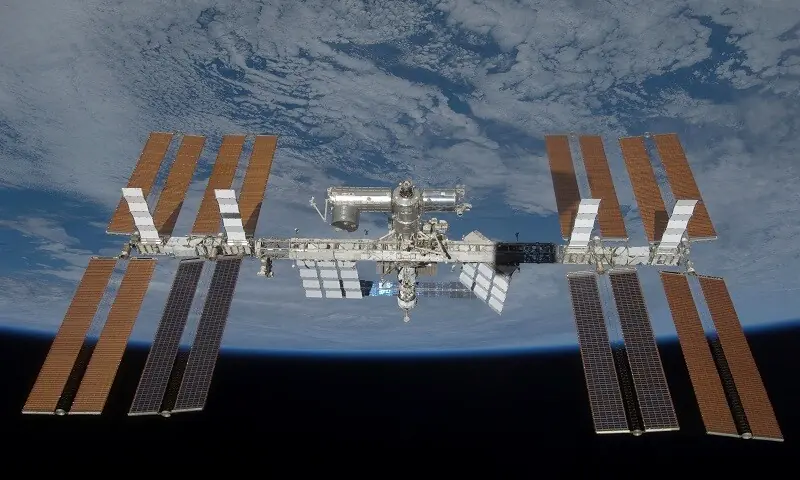
A worsening air leak aboard the International Space Station (ISS) prompted five astronauts to take shelter and prepare for evacuation for roughly two hours on Friday as Russia attempted to fix a crack on its portion of the orbital laboratory, Nasa said.
The four astronauts of Nasa’s Crew-12 mission aboard the station two Americans, a French astronaut and a Russian cosmonaut along with another US astronaut were ordered by Nasa mission control at 9:04am ET (1304 GMT) on Friday to enter their SpaceX-built Crew Dragon spacecraft docked to the station, Nasa spokesperson Bethany Stevens said.
Nasa reversed that order roughly two hours later and told the astronauts they could return to the station as the agency and its Russian counterparts examined the rate of leaking air.
Nasa and Russia’s space agency Roscosmos, the station’s two primary operators, have debated for months over the cause and potential fixes of small air leaks aboard Russia’s Zvezda service module, a key structure of the ISS, a football field-size orbital laboratory where astronauts live and work in space.
Roscosmos said on Friday that its experts had detected two leaks aboard the ISS but that there was no immediate threat to the crew.
The first leak was quickly sealed, and preparations were underway to seal the second one, Roscosmos said, adding that there was no threat to the spacecraft’s systems.
The air leaks have been relatively minor in recent months but escalated on Friday from a pound of air per day to two pounds, according to a senior Nasa official who asked not to be named.
The ISS is currently home to seven astronauts from two missions, including the Crew-12 team Nasa astronauts Jessica Meir and Jack Hathaway, European Space Agency astronaut Sophie Adenot, and Roscosmos cosmonaut Andrey Fedyaev who arrived in February.
The other crew of one US astronaut, Christopher Williams, and two cosmonauts, Sergey Kud-Sverchkov and Sergei Mikayev, arrived in November.
Kud-Sverchkov and Mikayev, who did not execute evacuation procedures, were planning to use a saw to break into an area where they believe they can access the crack leaking air, the Nasa official said.
Nasa officials disagreed with this method, the Nasa official said, prompting mission control in Houston to order safe-haven procedures.
Stevens said Nasa reversed the safe-haven order and told astronauts they could return the space station once Roscosmos paused its efforts to repair the crack.
“We look forward to working with Roscosmos on a collaborative approach to address the leaks,” she said.
Safe-haven orders are rare on the ISS, though pieces of space debris that risk colliding with the ISS and smaller changes in air leak rates have triggered the process in recent years. Astronauts have never had to evacuate the ISS in its 27-year history.