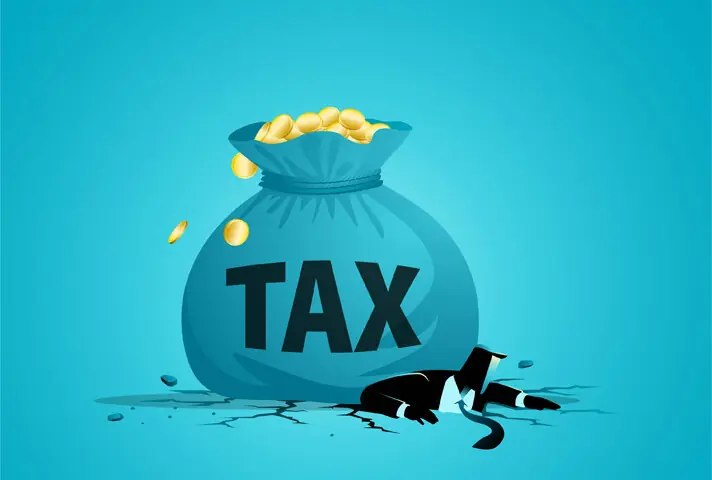
The government must stop shifting the cost of weak revenue mobilisation onto households and the corporate sector and instead offer targeted tax relief to offset the burden imposed in recent years, including a reduction in the petroleum levy. While support for the most vulnerable remains necessary given high poverty levels, sustained job-creating growth is vital.
It is unreasonable to tax a monthly income of Rs50,000, which falls below the amount required for a family’s subsistence. To make the tax regime more logical and equitable, the income tax threshold should be raised to Rs1.5 million per annum (Rs125,000 per month) from the current Rs600,000. The tax slabs and rates should then be recalibrated accordingly to preserve progressivity while providing meaningful relief to low-income earners.
At the same time, there is little justification for imposing a super tax on the already compliant corporate sector while large segments of the economy — including many services, retail and wholesale trade, real estate, and farm landowners — continue to remain undertaxed or effectively enjoy a tax holiday.
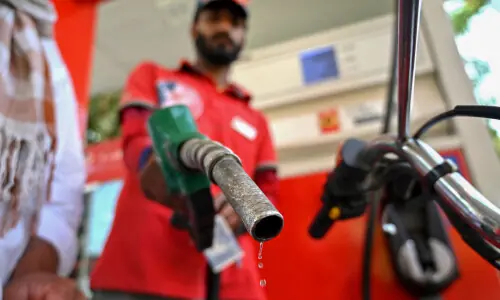
With inflation once again edging upward, the persistently high petroleum levy is adding to the cost pressures across the economy. The levy needs to be rationalised and gradually reduced to levels comparable with regional averages to provide much-needed relief to consumers and businesses alike.
‘Attempting to extract more taxes from an already stressed private sector is likely to generate frustration and resentment rather than meaningful additional revenues’
Measures to broaden the tax base by effectively bringing big property owners and traders into the federal tax net, while ensuring that provinces adequately tax agricultural income and other undertaxed service providers, could not only offset the revenue loss from providing relief to overburdened taxpayers but also generate substantial additional revenues.
“A wider and more equitable tax base would improve compliance, reduce distortions, and strengthen fiscal sustainability without placing further pressure on already heavily taxed segments of society,” said a retired Federal Board of Revenue officer.
Meanwhile, revenue targets should be set realistically, considering the near-stagnant state of the economy, where economic growth is barely keeping pace with population growth. Under these circumstances, greater emphasis should be placed on reducing wasteful administrative spending and rationalising the costs of an oversized and inefficient state apparatus.
“Sizeable increase in tax revenues is rarely achieved in a low-growth environment,” observed a tax expert who requested anonymity. “Attempting to extract more taxes from an already stressed private sector is likely to generate frustration and resentment rather than meaningful additional revenues. It could further undermine business confidence, discourage investment, and deepen the economic slowdown at a time when the country can least afford it.”
The government will need to use the budget to convince the public that it is not only cognisant of the mounting economic pressures on households and businesses but is also committed to addressing rising poverty and inequality, while facilitating the private sector for accelerating GDP growth.
More importantly, it must demonstrate a credible strategy to lift growth to the levels capable of generating sufficient productive employment for the country’s expanding workforce and improving living standards on a sustained basis.
The spending patterns witnessed during Eid, where a small segment of society reportedly spent millions on sacrificial animals, in a country where half the population remain below or near the poverty line, underscored the widening gap between the affluent and the struggling majority.
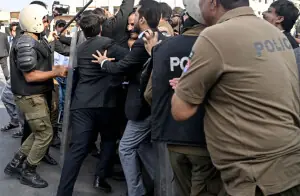
Growing frustration among the youth over limited economic opportunities, coupled with widening income and wealth disparities, is increasingly viewed as a source of political and social risk not only for the government of the day but also for the country’s fragile democratic order and broader institutional framework.
Some observers caution that unless the upcoming budget sends a clear signal that the government is committed to expanding opportunities, reducing barriers to upward social mobility, and addressing economic exclusion, public discontent could intensify. Failure to tackle these underlying grievances may further erode trust in institutions and increase the risk of social unrest.
“We dread a Bangladesh-like situation if mounting economic grievances remain unaddressed. Our platforms are not merely advocating the interests of businesses; we are also urging the government to safeguard the economic rights of citizens and provide tax relief to the middle class,” remarked a leading Karachi-based business leader while explaining the budget proposals submitted to the government.
The reference was to the 2024 turmoil in Bangladesh, widely referred to as the “July Uprising”, a massive, student-led movement that toppled Prime Minister Sheikh Hasina’s government. Many analysts view it as a reminder of how economic pressures, perceptions of nepotism and inequality, and limited opportunities can amplify public discontent and trigger wider political instability.
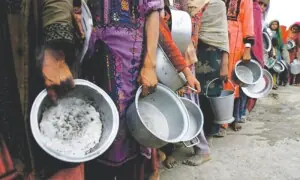
Official estimates place Pakistan’s poverty rate at 28.9 per cent of the population. However, a recently released report by the Social Policy and Development Centre paints a bleak picture, suggesting poverty incidence at 43.5pc in 2024-25, with urban poverty rising at a faster rate.
The report also points to a widening income gap. According to its findings, inequality increased by 12pc between 2018-19 and 2024-25, with deterioration more pronounced in urban centres.
Members of Prime Minister Shehbaz Sharif’s economic team were approached for their views on the concerns raised in this report. While some chose not to comment ahead of the budget, the responses of others had not been received by the filing deadline.
Published in Dawn, The Business and Finance Weekly, June 1st, 2026