Pentagon chief sounds 'alarm' over China's buildup, urges allies to boost defence spending


 2
2
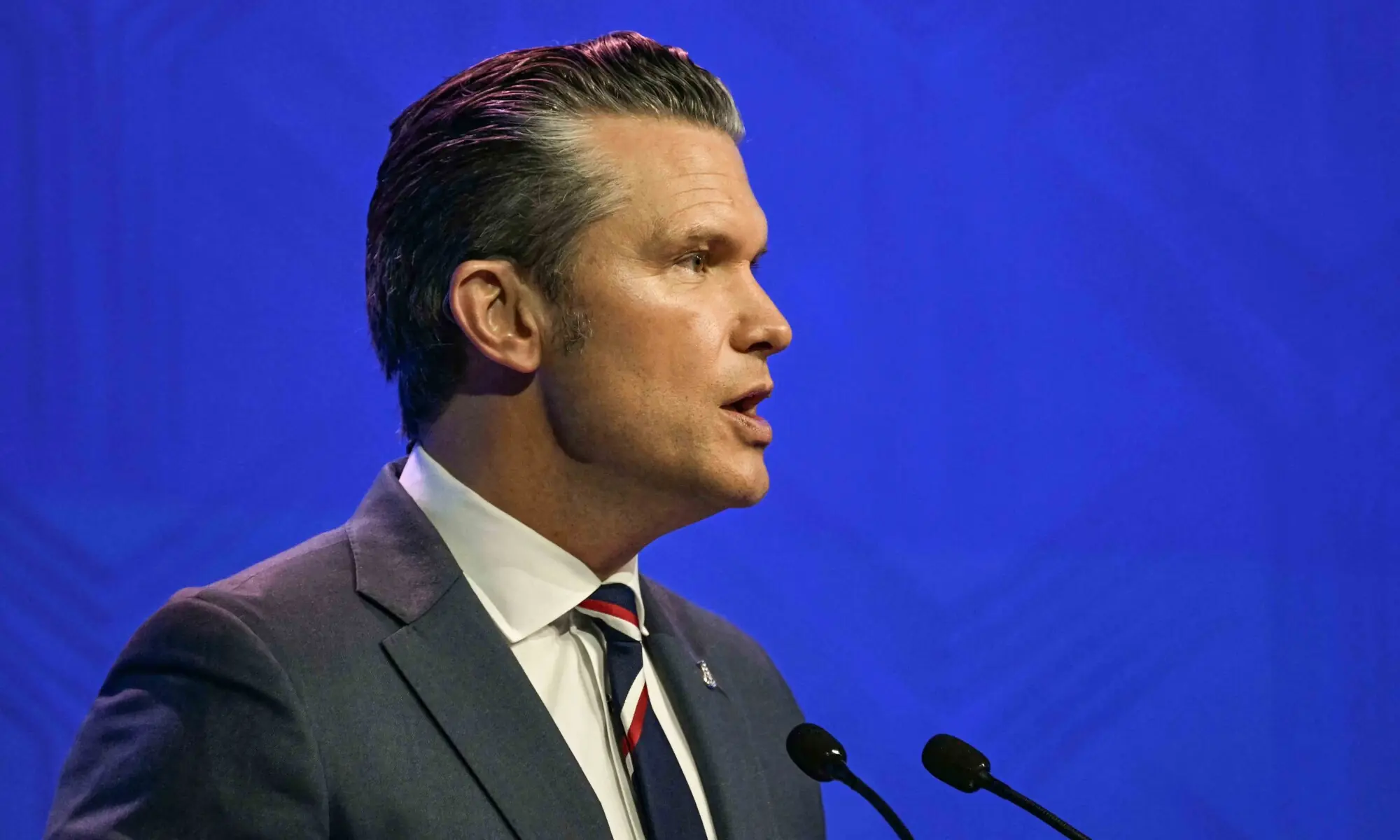

US Defence Secretary Pete Hegseth on Saturday urged Asian allies to ramp up military spending to counter China’s growing power and prevent its dominance in the region, warning of “rightful alarm” over its rapid military buildup.
Hegseth, speaking at the Shangri-La Dialogue in Singapore, Asia’s premier forum for defence leaders, militaries and diplomats, said a stronger, more self-reliant network of allies is essential to deter aggression and preserve the balance of power.
“There is rightful alarm regarding China’s historic military buildup and the expansion of its military activities in the region and beyond,” he said.
“A Pacific dominated by any hegemon would unravel the regional balance of power,” Hegseth said. “No state, including China, can impose its hegemony and hold the security or prosperity of our nation and our allies in question.”
The US expects its Asian allies and partners to increase defence spending to 3.5 per cent of GDP as it pledged a $1.5 trillion investment in its military, the Pentagon chief said.
Hegseth stressed allies want stability, not escalation.
“What they want, and what the United States delivers, is strength that is disciplined, resolve that is steady, and leadership that is confident enough to speak and walk softly while carrying a big stick.”
Hegseth also struck a measured tone on US-China ties, saying relations are “better than they have been in many years,” with more frequent military-to-military engagement helping to manage tensions.
“We are meeting more frequently with our Chinese counterparts by maintaining open lines of military-to-military communication.”
‘No freeloading’
Hegseth echoed President Donald Trump’s long-standing demand that allies shoulder more of their own defence costs. Trump has pointedly said European and Nato partners should reduce reliance on Washington.
“The era of the United States subsidising the defence of wealthy nations is over,” Hegseth said. “We need partners, not protectorates,” he added.
“We don’t have a strong alliance unless everyone has skin in the game. No freeloading.”
Hegseth praised contributions from allies including South Korea, the Philippines, Australia, Singapore, Malaysia and Thailand, and said Japan was taking concrete steps to bolster its defences.
Tokyo and Washington “must each pull our weight to strengthen the US-Japan alliance,” he said.
Ready to restart strikes on Iran
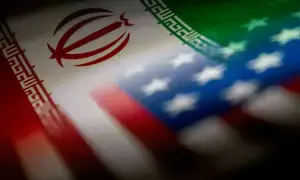
On the Middle East conflict, Hegseth said the US stands ready to resume strikes on Iran if diplomacy fails, as negotiators from Washington and Tehran work to bridge major differences blocking a deal.
“Our ability to recommence if necessary … we are more than capable,” Hegseth said. He added that Trump remains “patient” and is seeking a “strong deal” to ensure Iran does not obtain a nuclear weapon.
Hegseth also pushed back on concerns that the conflict would distract from Asia-Pacific priorities.
“We can do two things at one time.”
Arms sales decision to Taiwan is Trump’s call
Asked about arms sales to Taiwan, Hegseth downplayed concerns that a multi-billion-dollar package could be affected as the US draws down its weapons stockpiles amid the Middle East conflict. “We feel very good about our stockpiles and how we use them,” he said.
Taiwan, which China views as its own territory, has been waiting for the US to approve an arms sale that could be worth up to $14 billion.
Trump sowed uncertainty in Taipei by saying, after meeting China’s President Xi Jinping this month, that he was undecided on whether to approve the package.
Any decision on future arms sales would rest with President Trump, Hegseth said, signalling no shift in Washington’s longstanding approach despite recent engagement with Beijing.
“Those decisions will depend on the president and the nature of that relationship,” Hegseth said. “There’s been no change in our status.”