Last nail?

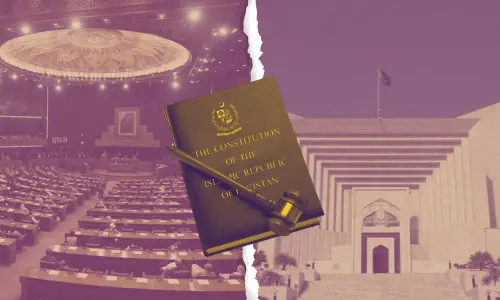
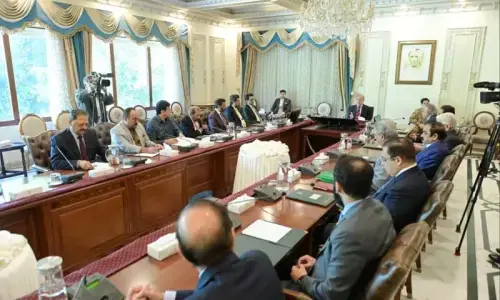
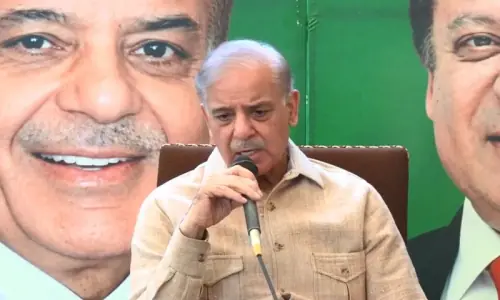
THE hybrid set-up may be evasive, but pro-regime gurus say a constitutional amendment is on the cards. Before the last two controversial amendments were passed, they had given out similar information. So, we must review the dubious ideas presented as panaceas, because this set-up has again preferred covert feelers over open debate and may pass the amendment in a non-transparent way, as it has done earlier. Most of our past 27 amendments benefited elites and were enacted under similar set-ups.
One idea is to raise the voting age to 25. Nearly all states worldwide set it at 18 or lower, as science shows cognitive ability reaches adult levels by 16-18 years. The few exceptions are mostly autocracies. Some say this idea is actually aimed at barring the many young PTI voters. Oddly, our rulers don’t fret much about underage marriages and labour.
Another vacuous idea is to cut provincial shares in federal tax funds. The excuse offered is that the centre is bankrupt as the provinces take 57.5 per cent of its tax money. Conversely, many have pointed out that the centre actually collects provincial funds, as federal taxes are mainly collected through activities in the provinces. The centre hogs the best tax and non-tax heads yet runs large deficits. However, the centre has often had bigger deficits even before provincial shares rose. The right way to cut deficits is to raise our very low GDP growth and tax-to-GDP ratio to expand the pie, reduce the huge waste in the centre’s outlays, especially given devolution, and lessen local and regional tensions as well as defence outlays. As all this lies in the centre’s domain, the onus is on it to mend its ways. Provinces must raise tax inflows and cut wasteful expenditure, but their revenues should be focused on uplifting poor areas.
The stale idea that having countless provinces will end misrule is doing the rounds again. It would make sense if we had able rulers. But our misrule only persists. More units will lead to greater misrule, and at a significantly higher cost. The aim may be to weaken provinces and empower covert forces.
Most of our amendments have benefited elites.
The bottom 15 states on the Fragile States Index have 12-36 units in all, but one case, and their populations are less than 50 million (20pc of ours) in all but two cases; yet they suffer from far worse misrule than we do. So, more units are no panacea. However, new provinces can address the financial grievances of local communities, provided they are made along ethnic lines as in India. The Seraiki minority is economically excluded. So, we can make a new Seraiki unit after an analysis of its fiscal viability and a referendum, while Azad Kashmir and Gilgit-Baltistan need legal and fiscal status. Other key minorities are richer than the provincial majority group but feel politically excluded. Strong local bodies can fix the issue.
Another hollow idea is to let the centre run lucrative functions (mining) and cities (Karachi and Gwadar). But such reckless steps may spread poverty and conflict. We now have two poor provinces in the throes of conflict, and they feel the centre is benefiting from their natural wealth. With such ideas, we will have three provinces and two regions with little industry, and their minerals will be formally under central control. Sindh has agriculture. But any changes to our water accord may kick-start the controversial canals project.
We will then have a rich centre — and a province with large-scale industry and agriculture, with its natural wealth secu-rely placed with the centre it controls. But only the elites will gain. If provincial tax shares are cut, other units may be left to fend for themselves while being taunted by the same centre for their low tax revenues, even as it appropriates their best fiscal options. If people dare raise their voice, their dissent may well be crushed. We rightly see such set-ups abroad as forms of colonialism.
So, there isn’t one idea to help the masses. Also, a set-up with such controversial antecedents mustn’t make major changes. The proposed amendment may be the final nail in the coffin of our democracy. Our rulers come up with such ideas when they feel their role in wars and peace deals has won them support. As provinces voted to create the centre in 1947, they must have control over it and be the main power centres. But society is too weak to resist. So, let’s see how much more audacious they get.
The writer holds a PhD in political economy from the University of California, Berkeley, and 25 years of grassroots-to-senior-level experience across 50 countries.
Published in Dawn, May 26th, 2026