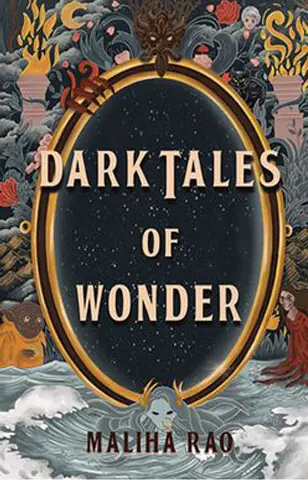
Dark Tales of Wonder
By Maliha Rao
Liberty Publishing
ISBN: 978-627-7626-62-4
177pp.
The thought of reading Dark Tales of Wonder did not entice me.
It purported to be “Rooted in Pakistani myths and folklore”, which immediately made me think of the stories old servants used to tell in my childhood. In those days, they held my attention but, looking back, they just seemed to be bundles of nonsense. Now to have to read a whole book of similar stories was not going to be easy. As it turned out, I was wrong.
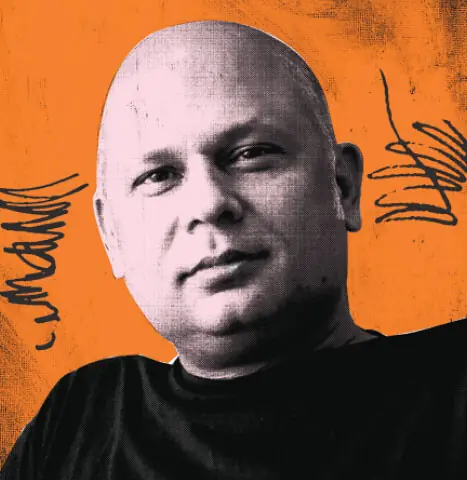
Maliha Rao, the author of Dark Tales of Wonder, is based in Karachi. She is a digital communications expert with two decades of experience in copywriting and brand storytelling. Some of her stories have been published in other anthologies. She has made horror her genre of choice and is a member of a thriving community of fantasy, horror and science fiction writers. Dark Tales of Wonder is made up of eight stories. The tales are short, concise and full of suspense. Almost from the first sentence, the reader knows something unacceptable and unexplainable is about to happen.
Interestingly, when supernatural activity is suspected, Rao’s characters turn towards Allah, but in oblique ways. The help of maulvis [clergymen] is sought, Zamzam holy water is sprinkled, tasbeehs [rosary beads] are rotated and the recitation of the Quran is listened to on phones. Rao states: “The world is full of impossible things.” This seems to be the common denominator of all the stories she writes. But even sceptical readers are hooked by the themes she explores and want to find out what transpires next.
A debut collection blends Pakistani folklore, supernatural beings and psychological dread into engrossing and suspenseful horror stories
In most cases, the demon, jinn or the otherworldly creature that is invading the mind and life of its prey is either huge in size or very small, like a dwarf. But all are frighteningly ugly and sometimes even emit a foul smell. The endings of the tales are also consistently the same. If it were not so, much greater tension could have been generated.
The first story, ‘The Rice Paddy’, features a man who has a genuine gift of engaging with the supernatural but, every time he exorcises an evil spirit, he feels depleted. His life is lonely and itinerant but he finally finds fulfilment when he helps a supernatural being wreak revenge.
In ‘Crumbs and Creatures’ we meet both a huge monster and a child-sized one, who both love eating biscuits. Before much harm is done, they are appeased and it is impressed upon the reader that every preternatural being is not malevolent. ‘The Wrath of the Boyo’ has only short-statured demons but they also love sugary stuff. When two preteen boys get into trouble with the boyo, it is a good spirit who saves them from harm and leaves her mark on one of them.
Small monsters who are lovers of sweets also make an appearance in ‘The Haunting of Taj.’ Here, the protagonist just wants to make sure that the hotel he has inherited remains financially viable. He neglects all warnings of supernatural presence in his single-minded endeavour to make the hotel regain its past glory. Only when he actually sees his daughter threatened by runty, dessert-gobbling demons does he become a believer. Again, in this story, it is two good spirits who help to save the young human girl.
Family dynamics come into play in the stories ‘It Lingers’ and ‘Unholy Ties.’ In the former, a family moves into a house with a dubious past and is confronted with strange happenings. Things disappear, lights dim of their own accord, and residents are attacked during sleep. Finally, a seer is brought into the picture to deal with the miasma invading their home. ‘Unholy Ties’ spins a really good yarn about a family which has gone through familial trauma and public censure. The daughter becomes possessed by an evil spirit that is egged on by a resentful relative. The final scene is satisfyingly gory.
These initial stories have minor errors in the syntax and in the narratives. Yet, the stories themselves are gripping and their plots are well-constructed.
The last two stories of the collection are written with a sure hand and flow smoothly from the author’s pen.
The first of the two, ‘Fear and Loathing in Karachi’, is centred round a young woman, Rania, who has been crippled psychologically because of a frightening experience in her adolescence. Ten years later she is still in treatment. Her two best friends manage to coax her to face her own demons and also the gigantic monster who threatens to annihilate all that she loves. Rao develops the character of Rania expertly and with a great deal of insight. The ending is ambiguous. Did Rania really kill the monster or did she slay the demons in her own mind and so find herself again?
The last story of the anthology is perhaps the best. It is beautifully conceptualised and executed. The plot is eminently believable and the characters are delineated unerringly. The hero, Aazer, could be someone we have known or, at least, met. His aspirations and his weaknesses are familiar to the reader and understandable, given the circumstances.
When he inadvertently becomes a victim of a female spirit, his family rallies round to assist him. The personage of the pir [holy man] whose help is sought to rid Aazer of the spirit is quite unique. Rao dispenses with the stock type of exorcist and introduces instead a character at once distinctive and interesting. The whiff of romance that begins to perfume the air at the end of the story just adds to the mastery of the writing.
Even unbelievers of the supernatural can enjoy this anthology. Every anecdote features the paranormal, but Rao makes sure to infuse each one with the right ingredients for a satisfying read. It is clear that she has taken pains over writing them and that the genre is close to her heart.
The author is to be congratulated for producing such an engrossing debut collection of stories.
The reviewer is a freelance writer, author of the novel The Tea Trolley and the translator of Toofan Se Pehlay: Safar-i-Europe Ki Diary
Published in Dawn, Books & Authors, May 24th, 2026