0
0

TOBA TEK SINGH: Experts from Pakistan and abroad on Friday underscored the need to preserve agricultural heritage and make agricultural advancement with innovation, academic collaboration and community engagement.
They said the first agriculture museum of Pakistan, being established at the University of Agriculture Faisalabad (UAF), would prove a millstone in this regard.
They were addressing the opening day of the two-day international symposium titled “From Legacy to Innovation: Preserving Agricultural Heritage for the Future” held at UAF and jointly organised by Institute of Agriculture Extension Education and Rural Development and UAF Department of Plant Breeding and Genetics.
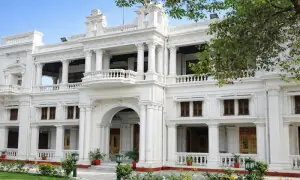
Punjab Higher Education Commission Chairperson Dr Iqrar Ahmad Khan emphasised the need for modernising agricultural research and enhancing bilateral technological collaborations to ensure long-term food security and institutional growth. He said the Punjab Agricultural College & Research Institute, Lyallpur, now the UAF, was the first ever agriculture institution in the subcontinent set up on the recommendation of the Famine Commission and UAF’s old campus was designed by renowned Bhai Ram Singh.
Highlighting the historic and ongoing partnership between the UAF and Washington State University (WSU) -- a foundational relationship that dates back to 1961 when UAF was established as a university under the auspices of USAID and WSU, he said that in the 1950s, the Harvard Advisory Group (HAG) played a foundational role in shaping Pakistan’s agricultural and economic policies. He said the HAG was instrumental in 1961 by upgrading the Punjab Agricultural College into the UAF and 100 foreign scholarships were provided.
Reflecting on the deeper heritage of this partnership, Dr Iqrar made special mention of the “American Colony at UAF” -- the residential hub established on campus during the 1960s to house 13 American scientists and professors who stayed here for 10 years. He noted that the colony stands as a living historical monument to the Pak-US academic integration, symbolising an era where international experts lived alongside local faculty to co-create Pakistan’s modern agricultural framework.
UAF Vice Chancellor Dr Zulfiqar Ali said that preserving agricultural heritage was vital for ensuring sustainable food systems and connecting future generations with traditional farming wisdom. “It will be the first agriculture museum of its kind in Pakistan with an indoor display area of 55,000 square feet and an outdoor area of 32,000 square feet,” he added. He said the visitors would walk through the 30 plus indoor galleries and a Hall of Fame, exploring everything from traditional farming tools and indigenous seeds to modern innovations like hydroponic and greenhouse models.
WSU International Programme Vice President Dr Paul Whitney stressed the importance of academic collaborations in building resilient farming communities and promoting innovation.
Prof Pervaiz Vandal shed light on Bhai Ram Singh who left significant mark on the architectural heritage having designed some famous buildings such as the Mayo School of Art (now the National College of Arts), Lahore Museum, Aitchison College, Punjab University, Albert Victor Hospital, Islamia College Peshawar, Khalsa College Amritsar, Governor House of Simla and world famous Darbar room in Osborne House, Queen Victoria’s summer home on the Isle of Wight in the UK.
WSU former international programmes vice president Dr Asif, Muhammad Ejaz Qureshi of the Australian National University, Prof Dr Kulvinder S Gill of WSU and Museum Consultant Sadia Zainab also spoke.
Published in Dawn, May 23rd, 2026