Journalists’ convention wants review of media laws contrary to Article 19
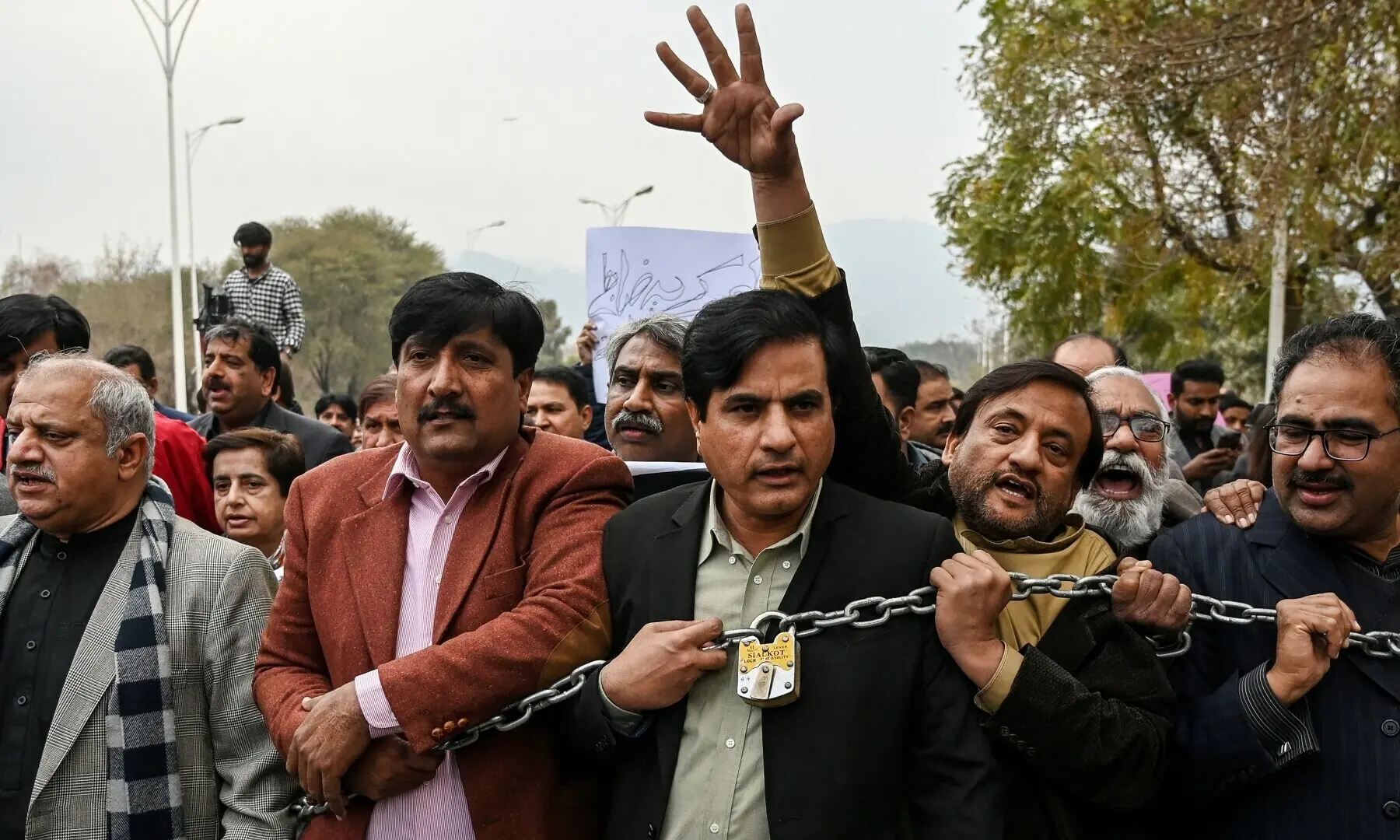
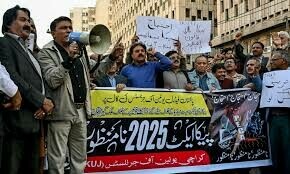
ISLAMABAD: The journalists from all over the country on Friday formally rejected the recent amendments to the Prevention of Electronic Crimes Act (Peca) 2016, terming them as a “draconian black law, specifically engineered to facilitate the arm-twisting of journalists and the suppression of Pakistan’s media landscape.”
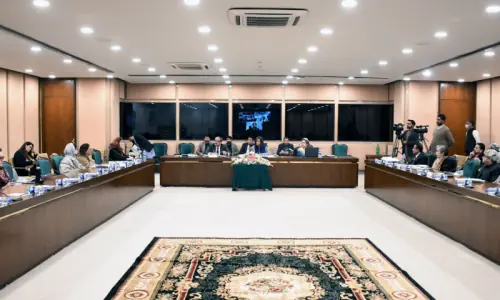
“We demand the Parliament to review all media laws that are contrary to Article 19 of the Constitution,” reads a declaration issued at the conclusion of National Journalists Convention on “Media Laws, Regulations, and Ethics” organised by the Pakistan Federal Union of Journalists (PFUJ) and the Rawalpindi-Islamabad Union of Journalists (RIUJ).
Article 19 of the Constitution grants right to freedom of speech to every citizen, including journalists.
Through the declaration, known as “Islamabad Declaration”, the journalists “denounced the violation of the government’s solemn promise that these laws would never be weaponised against the press.”
Participants formally reject Peca amendments, terming them ‘draconian’
The convention was attended by more than 600 journalists and media workers, including a large number of women.
“We observed that the authorities have instead escalated a campaign of judicial harassment, including the arbitrary offloading of journalists from flights and the restriction of professional travel abroad, creating a pervasive environment of fear and intimidation,” says the declaration.
The Convention expressed grave concern over “continued retrenchments and the deliberate job insecurity created by media owners, particularly in the electronic media sector, where layoffs are taking place without justification, leaving hundreds of professionals jobless amid record-high inflation.”
“We declare these mass firings a systematic design to bring the media under the control of government institutions. We further condemn the introduction of third-party hiring as a tactic to bypass the wage board and national labour laws, and to serve the interests of the Seth Mafia,” says the declaration.
Through the declaration, the participants of the convention “strongly condemned” the denial of basic employment rights to journalists and media workers, including health insurance, gratuity, and EOBI registration and benefits, adding: “Such denial is not merely an administrative failure but a deliberate violation of workers’ dignity, security, and lawful entitlements.”
The declaration called for an employment structure for electronic media through a parliamentary act for the safety and security of the jobs of media workers and technicians working within electronic and digital media.
“The Convention expresses serious concern over government’s policy of using public advertisements as a tool of financial pressure to dictate editorial content and enforce censorship through informal press advice. Daily Dawn, in particular, is a victim of this policy; it is being denied not only public-sector advertisements but is also facing a situation in which the private corporate sector is being persuaded to withhold advertising,” says the declaration.
Moreover, the Convention “specifically denounced the government’s role in forcing media-house managements to terminate the services of specific journalists and media workers as a prerequisite for releasing advertisement funds or providing patronage.”
Through the Declaration, they demanded immediate and unconditional withdrawal of all cases against journalists under Peca and “called for a transparent review of the legal framework to ensure that it is no longer used for political victimisation.”
The participants of the convention also demanded initiation of the process for the 9th Wage Board Award, which should cover print, electronic, and digital media.
The Convention further demanded that all media houses provide health insurance, gratuity, and EOBI registration and benefits to journalists and media workers without discrimination or delay.
“We urge the media owners to respect human dignity and prioritise the rights of the lowest-paid staff instead of resorting to ruthless retrenchments while continuing to accommodate highly paid anchors.
On this occasion, a resolution was also passed by the participants “noting with deep concern that despite the enactment of the Protection of Journalists and Media Professionals Act, 2021 by the Parliament, journalists continue to face violence, intimidation, and harassment without adequate legal recourse.”
The resolution calls upon all four provincial assemblies to immediately enact the similar legislation to ensure journalists’ protection.
Published in Dawn, May 23rd, 2026