Parliamentary caucus warns against using fuel levy as revenue measure
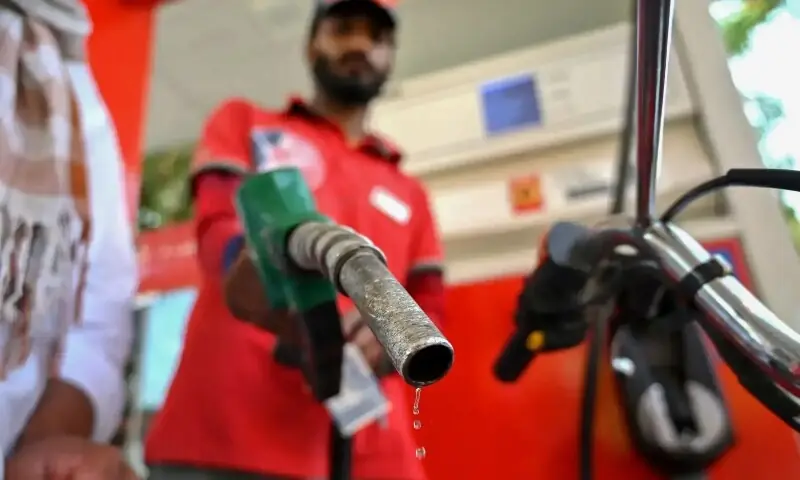
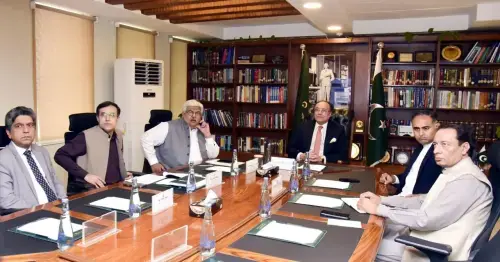
ISLAMABAD: The Parliamentary Forum on Energy and Economy warned that steep increases in the Petroleum Development Levy (PDL) in the wake of the war in Iran have significantly fuelled inflation, disproportionately burdened low-income households, and exposed deep structural failures in Pakistan’s energy and fiscal governance.
Speaking at a high-level policy briefing, the forum said that the petroleum levy should not be used as a revenue measure under any circumstances. They noted that Pakistan’s heavy reliance on imported fossil fuels has left the economy vulnerable to external shocks, adding that the Hormuz blockade underscored this fragility, with Pakistan dependent on the Gulf for nearly 70 per cent of its oil supplies and lacking meaningful strategic reserves.
MNA Dr Nafisa Shah, who is also the co-convener of the Parliamentary Forum on Energy and Economy, said the current crisis was not merely an external shock but the cumulative result of decades of policy failures. “This moment demands a clear choice between drifting from one fossil-fuel emergency to the next, or committing to an energy transition built on sovereignty, resilience, and justice,” she said, adding that Pakistan must stop relying on temporary fixes. “Building a just, resilient, and sovereign energy system is now a national imperative.”
Barrister Danyal Chaudhry, parliamentary secretary for information and broadcasting, stressed the importance of public trust. “Citizens deserve clear and honest communication about fuel prices, reforms, and IMF commitments. Opacity during economic stress only deepens anxiety and erodes confidence in institutions.”
MNA says building a just and sovereign energy system ‘national imperative’
MNA Sher Ali Arbab, also co-convener, said a comprehensive report would be sent to the government, adding that the government’s approach risked weakening the economic recovery. “Energy price increases should have tracked global prices. Instead, the crisis is being used to raise revenue through the PDL at a time when the economy can least absorb the shock,” he said, warning that reduced fuel consumption and slowing growth would ultimately defeat revenue objectives.
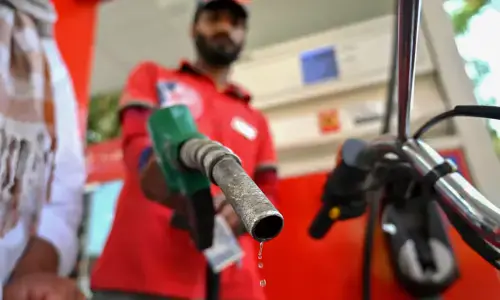
The briefing highlighted that domestic fuel prices had risen by more than 50 per cent from the pre-crisis levels, crossing Rs458 per litre at one point. Experts noted that while global oil price volatility played a role, the sharp escalation was driven primarily by repeated increases in the PDL, which has climbed to approximately Rs117.41 per litre. Panellists stressed that the PDL was increasingly being used as a fiscal instrument to manage the budget deficit.
Economist Asad Saeed stated that unlike the general sales tax (GST), whose proceeds are shared with provinces under the National Finance Commission Award, the PDL is classified as non-tax revenue, allowing the federal government to retain 100 per cent of the collections. This, experts argued, undermines fiscal federalism and deprives provinces of critical resources.
Muhammad Badar Alam, CEO of the Policy Research Institute for Equitable Development, described the levy as “inherently regressive”. “The PDL is applied uniformly regardless of income, meaning low?income households bear a far heavier burden than high-income consumers. It also allows the federal government to bypass principles of fiscal sharing with the federating units.”
PPP MNA Khursheed Junejo spoke about the overwhelming impact of oil and diesel prices on agriculture, particularly fertiliser prices.
Experts also highlighted long-term structural weaknesses, including declining domestic oil production over the past decade, underutilised energy infrastructure, mounting circular debt exceeding Rs3.2 trillion, and rising import bills despite domestic resource potential. Oil and gas consultant Sikandar Memon emphasised that Pakistan must build a resilient and diversified energy mix and an architecture for protection against volatile pricing.
Dr Khaqan Hassan Najeeb, former adviser to the finance ministry, said that energy insecurity has become macroeconomic insecurity. The country must move away from an imported-energy survival model towards indigenous, integrated, and resilient energy solutions, he added.
Published in Dawn, May 22nd, 2026