0
0

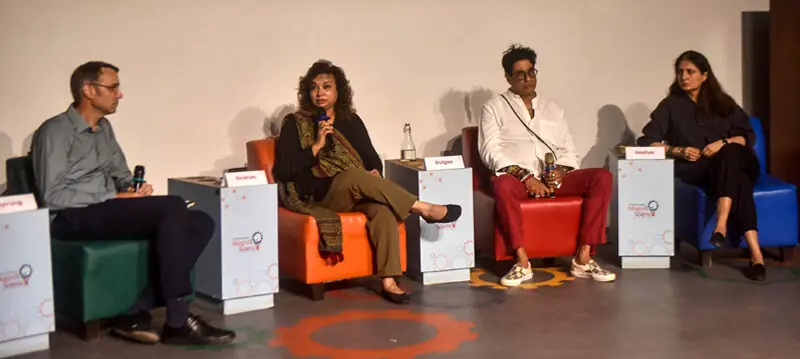
KARACHI: ‘Who are museums for? Public memory, access and innovation’ was the topic to ponder upon on the occasion of International Museum Day organised by The Dawood Foundation (TDF) at its MagnifiScience Centre on Monday.
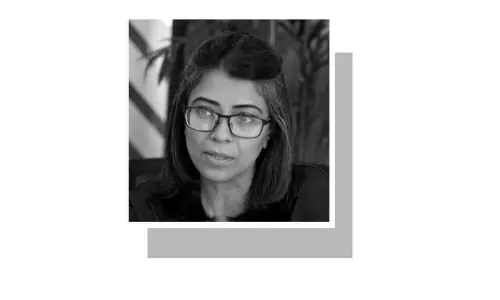
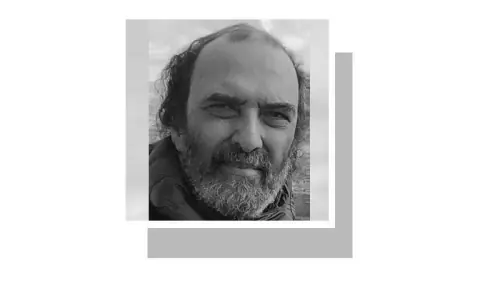
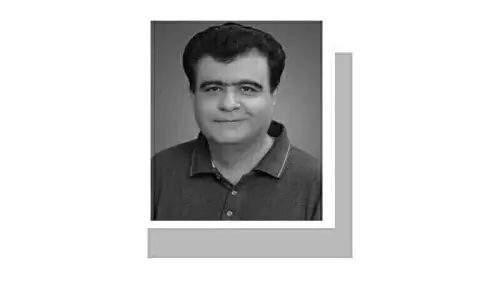
Access, relevance and the role of museums in Pakistan were some of the things discussed by the expert panellists, namely, archaeologist and museologist Dr Asma Ibrahim, artist and curator Amin Gulgee and architect and researcher Marvi Mazhar.
Christoph S. Sprung of TDF, who was moderating the session, touched a nerve when he asked the panellists how many people here visit museums.
Dr Asma Ibrahim said that the people here are aware of the importance of museums. “That is also why we are celebrating the International Day of Museums in a befitting way at so many places today,” she pointed out. She also said that people are working for the uplift of museums here. “There should be a cause to visit museums. So if you make an effort in that direction, such as holding different exhibitions, shows and conferences, the people will come,” she said.
Call for ‘Karachi Museum’ to tell children about history of their city
As the curator of the State Bank Museum, Dr Ibrahim also focused on making the younger generation interested in history by holding frequent programmes, including summer camps, for them. “I believe in getting children involved. Interest grows. It cannot grow from the college or university age,” she said.
Amin Gulgee stressed on the importance of having more contemporary or modern art museums that are accessible to people. “I have created an art museum as a personal effort in memory of my father Ismail Gulgee. I hold many events there which lots of people attend. So it depends on how you draw people to museums,” he said, adding that there are so many other artists, too, such as Sadequain and V.M, just to name a few, who deserve their work getting opened to the public instead of lying in private collections.
Marvi Mazhar said that museums need to be integrated into planning systems. “We convince people to come to visit museums but it should be the other way around,” she said. “In a city like Karachi, which has a population of 21 or 22 million people, we are divided into five districts with each district having its own importance, its own historical significance. The city is also expanding but it is also important to understand that the nexus is its old area, the core. From the core of the city we are moving outwards.
“We are also stabilising ourselves in food streets, malls, etc. So we are kind of creating a culture which is very centric to commercial capitalism and constant consumerism. But we are not focusing on the development of the cultural nexus, which has led to a lot of problems. Where do younger people spend their evenings? It can’t just be eating out or visiting malls.
“But we have only two places that are largely doing cultural programming, which are the Arts Council of Pakistan and the National Academy of Performing Arts. But how many people do you find going there from Hyderi or any other faraway part of the city? Therefore, every district should have its own council and its own art district. There is so much content. There are so many heirlooms being passed down by generations, which they’d rather donate to a museum so that everyone, instead of just the family, gets to see and admire them. But we don’t have a repository for such things. We need to set up such repositories where the trust factor is developed. The trust was lost when we heard of theft in museums,” Ms Mazhar said.
Artist, teacher and writer Durriya Kazi, sitting in the audience, asked how to define a museum and its function. “Is it a safe-keeping house, is it a place for evoking nostalgia or is it a place to understand identities?” She asked.
She also mentioned the Faizy Rameen collection lying in an old building next to the Arts Council, which deserves to be turned into a museum.
Educator, author and artist Rumana Husain was also there and shared how it gladdens her heart to see so many school children visiting the MagnifiScience Centre, which is a museum of science.
“But we need a ‘Karachi Museum’ to tell children about the history of their city. For instance, they can see a tram there. Or we can set up a repository for children to learn about so many things that were used in our homes, our kitchens, that are no longer common such as the sill batta. There are so many other things to be seen and so many types of museums that can be set up here for children,” she pointed out.
Sindh Culture Secretary Khair Muhammad Kalwar: “In Sindh alone, we have some 22 museums,” he said, adding that the people of this part of the world belong to the Indus Valley Civilisation, which gives them an identity and a sense of pride.
Earlier, CEO of the Dawood Foundation Favad Soomro also spoke.
Published in Dawn, May 19th, 2026