Heavy rain, hailstorm lash Lahore, inundating low-lying areas
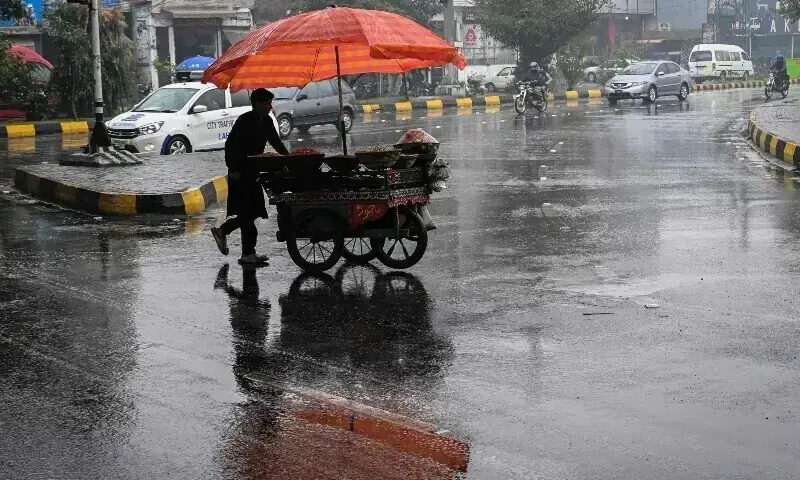

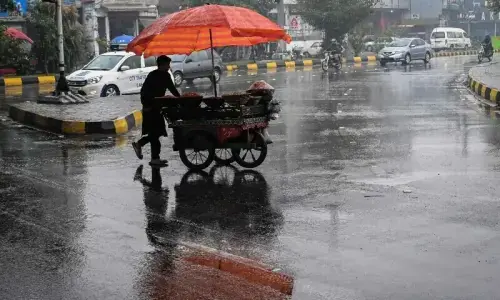
LAHORE: Heavy rain and hailstorms lashed several parts of the provincial capital on Wednesday, inundating low-lying areas and disrupting the flow of traffic on major thoroughfares.
On Sunday, the Pakistan Meteorological Department predicted rain in the upper parts of the country, including Lahore, from May 10 to May 12.
According to Lahore Water and Sanitation Agency (WASA) data recorded at 6:35pm, Lakshmi Chowk received the highest rainfall in the city, with 95 millimetres.
It was followed by Pani Wala Talab (79mm), Saggian (53.2mm), Gulshan-e-Ravi (45.8mm), Jail Road (44mm), Tajpura (41.2mm), Chowk Nakhuda (40.2mm), Samanabad (37.4mm), WASA Head Office, Gulberg (34.4mm), Airport (33.9mm), Iqbal Town (25.6mm), Upper Mall (26mm), Farrukhabad (20mm), Shadi Pura (11.2mm), Johar Town (8.4mm), Mughalpura (7mm), and Nishter Town (5.8mm).
The average rainfall recorded across the Lahore region was 34mm, while rain had stopped in all reported areas at the time of reporting.
The Provincial Disaster Management Authority (PDMA) advised citizens to take precautionary measures and urged them to stay away from electric poles and wires.
“Citizens should avoid unnecessary travel and remain cautious during the ongoing rain spell,” a PDMA spokesperson said.
Meanwhile, PDMA Director General Omar Javed directed the district administration to ensure efficient drainage of rainwater from affected areas.
“All relevant institutions, including Rescue 1122 and the WASA, will remain deployed in the field,” he added.
Talking to the media, WASA Managing Director Ghufran Ahmed said that emergency teams would remain deployed across the city to clear blocked drains and facilitate the drainage.
He also visited several parts of the city, including Lakshmi Chowk, to monitor drainage operations, along with WASA Director General Tayyab Fareed and Punjab Housing, Urban Development & Public Health Engineering Minister Bilal Yasin.
Moreover, WASA Vice Chairman Chaudhry Shahabaz Ahmed visited the monsoon control room at the WASA office.
He directed that all disposal stations should be kept fully operational and that field teams ensure immediate drainage of rainwater from low-lying areas.
Ahmed said citizens should be provided with adequate drainage facilities, directing all officers and staff to remain present in the field during the monsoon.
He also issued instructions for special monitoring of Lakshmi Chowk, Garhi Shahu, Mall Road, and other low-lying areas.