SBP says it has received $1.3bn tranche from IMF
The State Bank of Pakistan (SBP) said on Wednesday that it had recieved $1.3 billion from the International Monetary Fund (IMF).
“The IMF Executive Board completed the third review under the Extended Fund Facility (EFF) in its meeting held on May 8 and approved the disbursement of SDR 760 million for Pakistan. Furthermore, the IMF Executive Board has also approved the disbursement of the second tranche of SDR 154 million under the Resilience and Sustainability Facility (RSF),” the central bank said on the social media platform X.
“Accordingly, SBP has received SDR 914 million (equivalent to about US$ 1.3 billion) under the EFF and RSF in value May 12 from the IMF,” it said.
It said that the amount would be reflected in the country’s foreign exchange reserves for the week ending on May 15.
Last week, the international money lender had approved the latest review of Pakistan’s reform programme. The decision paved the way for disbursements of about $1.1bn from the EFF and $220m from the RSF, bringing total payouts under the two arrangements to roughly $4.8bn.
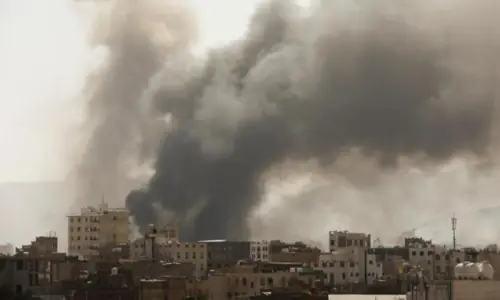
While the funding provides crucial short-term support, the IMF’s statement emphasised an evolving and uncertain outlook, cautioning that Pakistan’s recent gains are exposed to heightened global volatility, particularly spillovers from the conflict in the Middle East.
“The authorities’ strong implementation, despite the Middle East war, has maintained economic stability and improved financing and external conditions,” the Fund noted in its statement.
However, it cautioned that the shocks emanating from the Middle East war underlined the continued importance of maintaining strong policies to continue building resilience and of moving ahead with structural reforms to achieve sustainable long-term growth.
IMF Deputy Managing Director and Acting Chair Nigel Clarke reinforced this cautionary tone, stressing the need for both discipline and accelerated reforms.
“Amid a more challenging and highly uncertain external environment since the onset of the war in the Middle East, Pakistan needs to maintain strong macroeconomic policies while accelerating reform efforts, which are critical to managing further shocks and fostering higher sustainable medium-term growth,” he said.
Meanwhile, the central bank on Tuesday said that while macroeconomic stability had improved in the first half of fiscal year 2026, the war in the Middle East posed risks to the economic outlook amid heightened uncertainty.
In its half-year report, the bank said supply chain disruptions were likely to affect the inflation trajectory, external trade and remittance flows and the country’s economic activity.