Pakistan, China ink $13bn deals
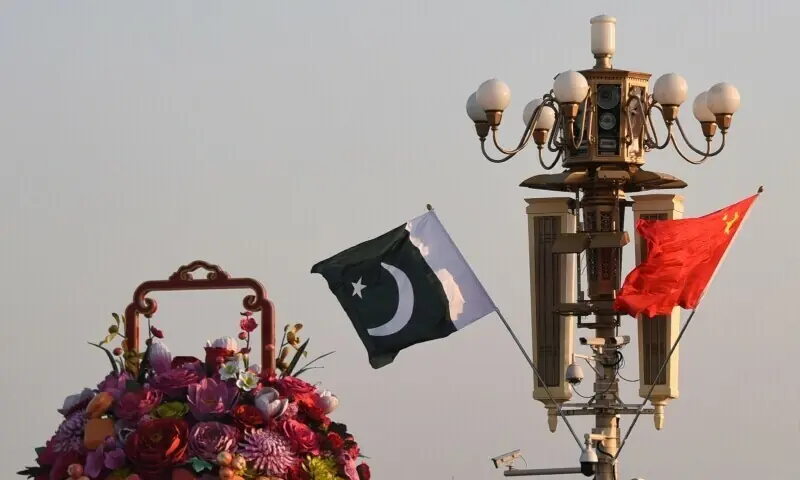


KARACHI: Pakistan’s Ambassador to China, Khalil Hashmi, said on Monday that Pakistan and China had signed more than 300 memorandums of understanding (MoUs) and over three dozen joint venture agreements (JVAs) during the last two years, with a cumulative value exceeding $13 billion.
Speaking at a meeting during the visit of a 70-member delegation from China’s IBI Group to the Karachi Chamber of Commerce and Industry (KCCI), he said the government had established a comprehensive mechanism to ensure the effective implementation of MoUs and their conversion into practical business agreements.
He said Pakistan’s conversion rate from MoUs to formal contracts and agreements had reached nearly 30 per cent, reflecting the effectiveness of the government’s follow-up and execution framework.
According to a KCCI press release, Mr Hashmi said Pakistan was engaged in discussions with CATL, one of the world’s largest battery manufacturers specialising in lithium-ion and sodium-based battery technologies.
Over 300 MoUs, 36 joint ventures signed in two years
He said Pakistan was encouraging the company to establish investment and cooperation initiatives in the country and expressed optimism that progress could be made during the prime minister’s forthcoming visit to China. The ambassador said the global market was gradually shifting from lithium-ion to sodium-based battery technologies, adding that Pakistan possessed abundant raw materials required for such industries.
He also said Pakistan planned to organise an export promotion exhibition in China featuring more than 18 sectors representing key areas of the Pakistani economy and export potential.
Liu Junzhai, director of IBI Group, said Karachi had the potential to emerge as a regional hub for digital trade and smart industrial transformation due to its strategic maritime position, industrial ecosystem and strong business community.
She said Karachi represented not only Pakistan’s present but also its future, adding that IBI Group valued the opportunity to establish a long-term strategic partnership with the chamber.
Chairman of the Businessmen Group, Zubair Motiwala, said the MoU between KCCI and IBI Group would promote institutional connectivity, investment partnerships, trade promotion, technology transfer and industrial collaboration between the business communities of both countries.
The Chinese delegation also visited the Federation of Pakistan Chambers of Commerce and Industry (FPCCI).
Published in Dawn, May 12th, 2026