• Over 300 local, Chinese firms attend investment summit
• PM says agriculture can be transformed ‘within months’ with Beijing’s support
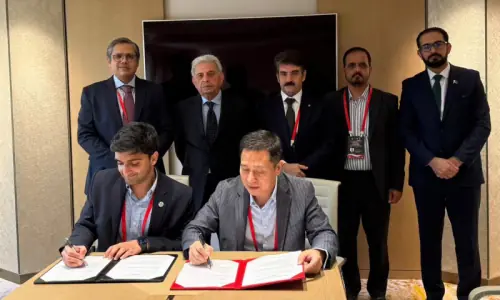
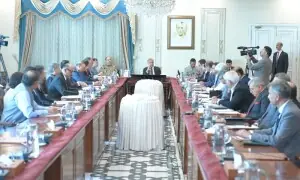
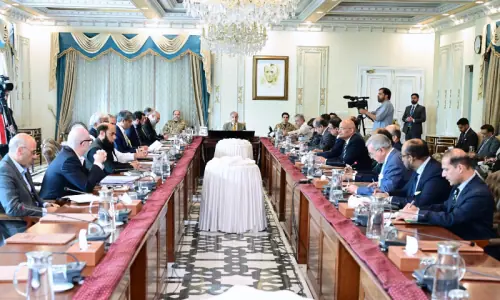
ISLAMABAD: Pakistan and China are set to sign multiple memorandums of understanding (MoUs) for private-sector joint venture investments worth millions of dollars across 10 key sectors of agriculture, it emerged from the Pakistan-China Agricultural Investment Conference held in Islamabad on Monday.
The sectors in which agreements are expected to be signed include agriculture, food processing, livestock, fisheries, agri-inputs, farm machinery, renewable energy, logistics, technology and value-added exports.
The conference drew strong participation from the private sectors of both countries, with 119 companies from China and 191 companies from Pakistan in attendance, reflecting growing bilateral commercial interest.
Agriculture has been officially elevated as a priority area of cooperation under the second phase of the China-Pakistan Economic Corridor (CPEC).
The 10 priority sub-sectors identified for investment include agro-chemicals and inputs, agricultural machinery and solutions, food processing and value addition, meat and poultry, dairy inputs and processed products, fruits and vegetables, animal feed and related value chains, fisheries and aquaculture, cold chain systems and agricultural produce logistics, and food-grade packaging materials and equipment.
Making a comprehensive presentation on Pakistan’s agriculture sector, the Ministry of National Food Security and Research stated that it plans to sign more than 25 sanitary and phytosanitary (SPS) and export protocols with key trading partners, including China, in 2026.
Pakistan’s agricultural landscape reflects a challenging paradox: despite fertile land, low labour costs and a large domestic market, the country faces an estimated productivity gap of $95 billion due to low technology penetration and inadequate infrastructure.
Addressing the conference, Minister for National Food Security and Research Rana Tanveer Hussain said the ministry was fully committed to supporting Chinese investors, from facilitating regulatory processes to ensuring seamless coordination with all relevant government departments and institutions.
He said the government’s objective was not merely to attract investment, but to make Pakistan a destination where Chinese enterprises could grow, innovate and succeed alongside Pakistani partners.
Addressing the conference, Prime Minister Shehbaz Sharif said Pakistan, being an agrarian economy, held immense and largely untapped potential in agriculture and could transform the sector not in years, but in months, by adopting modern technologies, improving productivity and strengthening cooperation with China.
He underlined the importance of deciding what to grow and export, developing value chains, cold storage and warehousing, and promoting value addition to make Pakistani produce globally competitive. The PM praised China’s achievements in agriculture, information technology, artificial intelligence, manufacturing efficiency and export competitiveness. He said Pakistan must aim to generate an agricultural trade surplus through higher yields, competitive costs and superior quality, with support from Chinese experts.
Published in Dawn, January 20th, 2026