A BRIEF HISTORY OF THE MOTHER OF KARACHI


 1
1
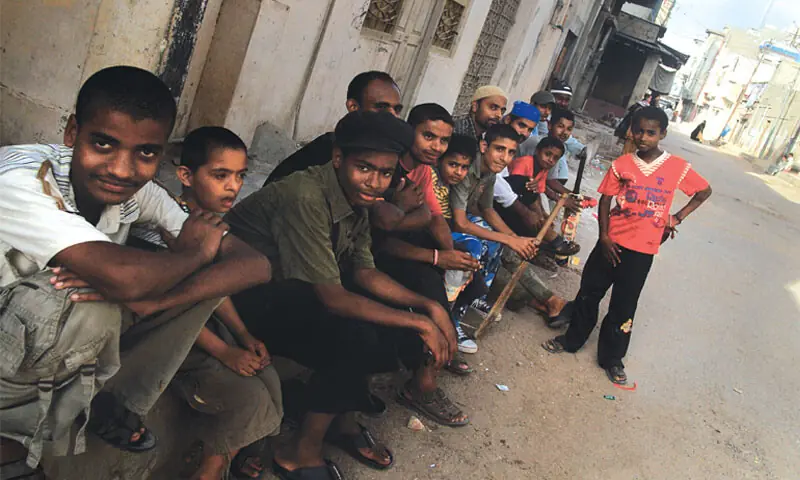

Lyari sits in a place that feels almost too symbolic to be accidental.
It lies wedged between the port, industry and the city centre, occupying Karachi’s south-western quarter, like a hinge between movement and settlement. To the south-west is the largest port in Pakistan; to the north-west, the Port Industrial Area and the Sindh Industrial and Trading Estate (SITE); abutting SITE is the Shershah Recycled Material Market; to the south lie the grain markets, wholesale zones, and the central business district.
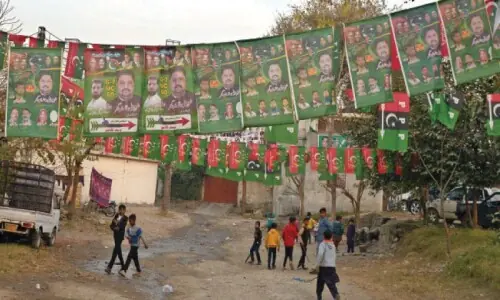
The Lyari River cuts through it, flanked by highways that funnel goods and people toward the port and outwards toward Balochistan and the Afghan border. Lyari Town, administratively part of Karachi’s District South, is divided into eleven union councils and straddles multiple provincial and national constituencies, placing it perpetually at the intersection of political claims and shifting boundaries. It is represented by different political parties that share and contest these borders, a spatial fragmentation that mirrors Lyari’s social complexity.
Residents often refer to Lyari as ‘Karachi ki maa’ – the Mother of Karachi – a phrase that carries both pride and quiet grievance. It suggests origin, endurance and sacrifice, but also neglect.
Karachi’s old city settlement of Lyari occupies a distinct place in the Pakistani (and now in the Indian) imagination, coloured by politics, ethnicity, violence, sports and music. Despite being the oldest urban area in Pakistan’s largest metropolis, Lyari has no culture or history in common with the rural areas of Pakistan. What led to Lyari developing such a distinct social and cultural fabric, how has it evolved over centuries, and how does that history inform its situation today?
EARLY HISTORY
The settlement history of Lyari predates Karachi itself. The first known residents were Sindhi fishermen and Baloch nomads, Pawanda from Makran, Lasbela and Kalat, who arrived around 1725, fleeing drought and tribal feuds, four years before Karachi Port is supposed to have been formally established in 1729.
The name “Lyari” is said to derive from lyar, a tree believed to bloom in graveyards, a strangely fitting etymology for a place where memory, loss and survival coexist so visibly.
Local legend situates Lyari at the heart of Karachi’s mythic origins. It is here, according to oral supposition, that Mai Kolachi, the fisherwoman after whom Karachi is supposed to be named, lived with her seven sons. Six of them were killed by a giant crocodile, or a shark — depending on the version — until the last, Mororo, who was physically challenged, defeated the beast.
Today, the tombs of the six brothers sit quietly at a nondescript roundabout near a flyover in Gulbai, on the other side of the Lyari River, collecting dust amid traffic and infrastructural indifference. Mororo’s tomb lies in Masroor Air Base in Mauripur, Karachi, and the public has limited access to it.
By 1886, Lyari had already emerged as the largest of Karachi’s 24 districts, with a population of 24,600, and the only district with a population exceeding 8,000 at the time. It was one of the most densely populated Muslim areas in a city otherwise dominated demographically and economically by non-Muslims.
Yet this density did not translate into investment. As early as 1885, colonial records referred to the “Lyaree Quarter” as “a poor district of the city”, establishing a pattern of recognition without redress. Lyari is often described as an older human settlement than Dharavi in Bombay (now Mumbai), a comparison that underscores both its historical depth and its marginalisation.
The original settlement of Lyari by Baloch communities may have occurred under the patronage of the Rifa’iyya Sufi order. This affiliation continues to shape the religious and social landscape of the area. Before Partition, Pakhtun neighbourhoods existed in Lyari as well. Following the creation of Pakistan in 1947, Lyari witnessed further demographic layering with the arrival of more Pakhtuns, Sindhis and Mohajirs — including Memons. After the 1960s, Karachi’s rapid industrialisation drew Pakhtun migrants from Pakistan’s north-west into construction, textile and transport work and, over the last three decades, working-class Afghans, Bengalis and Burmese migrants. Migration here is not a singular event but a recurring condition.
Today, Lyari is often nicknamed “Little Africa” due to its significant Sheedi (mixed local and African ethnicity) population. Folk beliefs and healing practices rooted in Baloch and Sheedi traditions persist, with herbal medicines widely used and even imported from Iran. Livelihoods remain closely tied to physical labour: many residents work as daily wage earners, manual labourers, or construction workers, while others are returnees visiting from overseas employment in the Middle East.
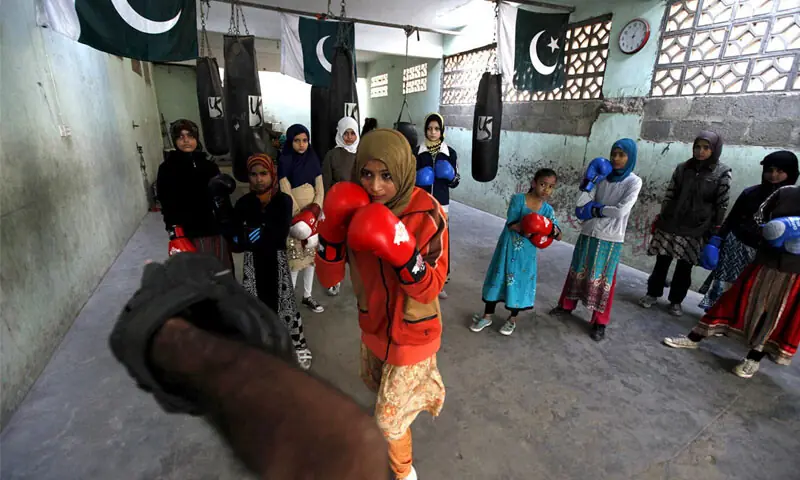
Amid economic precarity, Lyari’s youth has gained a reputation for athletic excellence — especially football — and for the unlikely yet powerful presence of female boxing clubs. But before turning fully to sports and culture, it is necessary to understand Lyari’s largest historical constituency: the Baloch.
THE BALOCH AND LYARI’S SOCIAL FABRIC
The Baloch presence in Lyari is layered, transregional, and internally diverse.
Baloch communities in Sindh and Punjab are understood as extensions of the Sulaimani Baloch, spread through conquest and colonisation, while those of Sistan are more closely aligned with the Mekrani tribes. The Iranian-Baloch, in particular, have long been associated with trade networks linking Lyari to Iran. For over a century, they have exported clothes, bed sheets, mangoes, rice, and goat meat to Iran, while importing wax, oil, fruit and other edible goods — activities concentrated in Lyari’s Chakiwara Market and Khajoor Bazaar at nearby Mithadar.
This migration intensified after 1928, following the subjugation of the Persian part of Balochistan by Iranian forces. Iranian Baloch migrants were generally better off economically than the Lassis from Lasbela or the Katchis from Katch in Balochistan. By the late 1990s, Baloch of Iranian descent constituted the largest share of Lyari’s Baloch population, with estimates placing Baloch residents at 40-50 percent of the total population at that time.
Employment patterns reflected Lyari’s geography show that many Baloch men work at the nearby port as stevedores, boatmen, donkey-cart pushers and date-palm packers, while others find work in Karachi’s earliest tanneries, oil-pressing mills and wool-washing factories. Women contribute through home-based labour, selling embroidery door-to-door or fashioning packaging from date-palm leaves; dates and palm leaves themselves are imported from Muscat and traded through Lyari’s Lea Market.
The Baloch and Makrani workforce at the port was among the first in Karachi to organise. Shortly after, railway workers and stevedores formed the Karachi Port Workers Union during a series of strikes in 1930, embedding labour politics into Lyari’s social fabric. Religiously, most Baloch settlers were Sunni Hanafis though, by the end of the 1990s, Lyari was also home to an estimated 50,000 Zikris.
Anthropologically, the Baloch are divided into two major groups: the Sulaimani Baloch and the Mekrani Baloch, separated geographically by Brahui tribes around Kalat. The Brahui — classified as Jahlawans (lowlanders) and Sarawans — speak the Brahui or Kirdgall language, while both Sulaimani and Mekrani Baloch speak mutually intelligible dialects of Balochi.
Iranian-Baloch traders dominate certain commercial spaces in Lyari, particularly in shops bearing surnames such as Sheerani, Askani, Hussainzai, Barakzai, Sarbazi, Mubaraki, Baranzai and Lashari. According to wholesaler Muzamil Yusuf, Iranian products are overwhelmingly stocked in these stores. Many Iranian-Baloch residents maintain close familial ties across the border, celebrate Iranian national events, and hold dual Pakistani and Iranian passports, moving fluidly between the two states.
The Rifa’iyya order remains symbiotically linked with this community, sustaining cross-border religious and social life. Iranian-Baloch traders are locally respected and known for their humility; Iranian female hawkers, in particular, are recognised, remembered and warmly received by shopkeepers in Khajoor Bazaar, where they receive attentive service and are extended trust.
Lyari’s political consciousness also has deep roots. Workers’ unions among stevedores emerged as early as the 1930s, while Lyari later became known as the birthplace of Baloch nationalism. One of the earliest nationalist organisations, the Baloch League, was founded here in the 1920s around figures such as Allah Bakhsh Gabol (1885-1972), grandfather of the former member of national assembly (MNA) Nabeel Gabol.
Postcolonial organisations, such as the Baloch Students Organisation (BSO), were also founded in Lyari, focusing on education and political awareness. Even Lyari’s dacoits historically maintained cordial relationships with Baloch nationalist leaders; Dadal, a prominent figure, was reportedly a close friend of Baloch politician Ataullah Mengal.
Yet, Lyari’s political history is inseparable from violence. Early criminal gangs emerged in the 1960s and were initially considered relatively harmless to residents. The 1980s marked a turning point. The Afghan War increased the flow of heroin and weapons into Karachi, transforming knife fights into gun battles and entrenching drug use and gang warfare in Karachi’s everyday life, and Lyari could not remain unaffected by it. During this period, Lyari earned the grim nickname “the Colombia of Karachi.”
Despite this, Lyari’s identity cannot be reduced to crime or poverty. Informal economies, cultural production, religious practice, and political memory coexist in ways that resist singular narratives. Even everyday spaces such as the JhatPatt market (see box) in Chakiwara, which has operated from 10am to 3pm since the late 19th century, function as social institutions rather than mere marketplaces.
A HISTORICAL MELTING POT
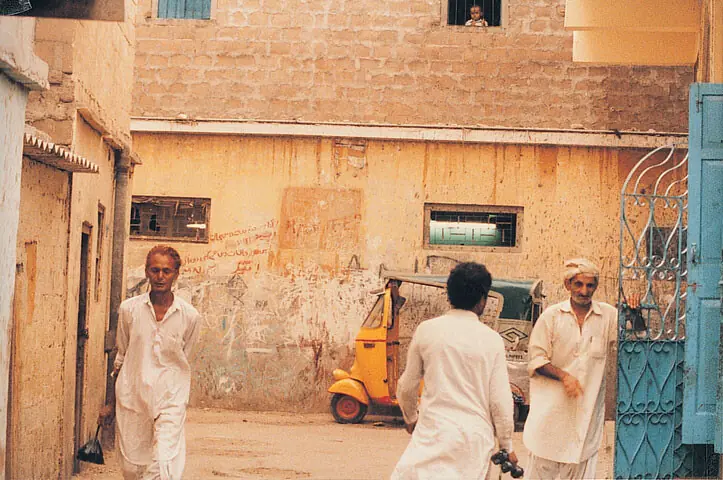
In Lyari, history is not sealed in archives. It lives in labour, migration, ritual and resistance, carried forward by communities who have learned to survive in poverty. If Lyari’s Baloch history anchors it to labour and politics, then its Sheedi presence pulls the neighbourhood into a much longer, darker and more global history — one shaped by slavery, oceanic routes, ritual survival and the reworking of African identity in South Asia.
The Sheedi (also referred to as Siddi or Sidi) community has been part of the social fabric of present-day Pakistan and India for more than six centuries. Archival records from Zanzibar show that, between 1860 and 1861, 237 Indian “slave” owners in Zanzibar held a total of 1,863 bonded individuals. By the mid-19th century, Indian merchants in Zanzibar had established clove plantations that required intensive labour, leading them to participate directly in systems of coerced servitude.
While Arab traders conducted raids into the African interior and forcibly transported people to coastal markets, many Indian financiers were involved economically in this trade, and some brought individuals of African origin to South Asia, where they worked primarily in domestic spaces.
African presence in Sindh predates European colonialism. When the first Muslim Arab army arrived in Sindh in 711 CE, it arrived with African soldiers. Under the Talpurs, according to the British explorer and writer Richard Burton, 600-700 Africans were imported from Africa into Sindh, with distinctions made between those born into households and those imported from Muscat — the former were often treated as family inmates. During the Abbasid period, enslaved peoples were also drawn from Central Asia, particularly Turks recruited as mercenaries, while East Africa remained a major source through routes passing Socotra and Aden.
By the 13th century, Siddis were being imported in large numbers by Indian nawabs and sultans. The most significant influx occurred between the 17th and 19th centuries, when Portuguese traders transported Africans to India. Karachi became a major depot: between 600 and 700 Africans were imported annually, three-quarters of them young girls, sold for 60 to 100 rupees. In 1837 alone, Commander Charles reported that no fewer than 1,500 Africans arrived in Karachi from Muscat and the African coast.
The Omani bonded labour economy tied Zanzibar — where 10,000 to 20,000 bonded people were traded annually in the mid-19th century — to Muscat, and from there to Karachi. Some African slaves (along with slaves of other ethnicities) reached Sindh through transactions along the Makran coast. Many Sheedis today trace origins to Oman or other Middle Eastern regions, while others locate ancestry in Ethiopia, Mozambique, Zanzibar, Mombasa or broader Bantu and Malawali lineages.
Bantu philosophy, as understood locally, emphasises adopting the identity of the land one inhabits rather than clinging to a past self. This ethos resonates deeply in Lyari, where Sheedis often identify simultaneously as African, Baloch, Makrani and Karachiite. Some trace spiritual ancestry to Hazrat Bilal Habshi (RA), the Ethiopian companion of the Prophet Muhammad (SAW) and Islam’s first muezzin [caller to prayer].
Others hold positions as khalifas, spiritual successors within Sufi traditions. Saints — Shah Abdul Latif, Saman Sarkar and Lal Shahbaz Qalandar — are seen as intermediaries between God and the Sheedi community. Ritual recitations (kalaams) invoking Lal Shahbaz Qalandar and Ghous Pak remain central to séances.
A prominent Urdu poet from Lyari, Noon Meem Danish, publicly identifies as the great-great-grandchild of an African from Zanzibar, remarking that centuries of cultural amalgamation have led Sheedis to proudly call themselves Baloch or Makrani. Genetic research supports these histories: population geneticist Lluis Quintana-Murci found that over 40 percent of the maternal gene pool of Makranis is of African origin.
Today, the Sheedi identity in Lyari is visibly political. Many celebrate Black Pride Month and align themselves with the Black Lives Matter (BLM) movement. Murals across Lyari reference African heritage, anti-racist solidarity and global Black resistance. One street is even named “Mombasa”, anchoring memory in place.
CULTURAL MEMORIES
Ritual life among the Sheedis remains rich and embodied. The Sheedi Mela at the shrine of Hazrat Manghopir is a week-long festival where men and women dance to the fierce beats of African call-drums known as mugarman, derived from the East African ngoma. Songs are sung in Swahili mixed with local languages, and ritual meat offerings are made to crocodiles at the sulphur lakes. If the crocodile accepts the offering, the year is believed to be auspicious.
This practice is shared by Hindu devotees as well. Afro-Arab dance forms, such as gowaati, lewa and dhamaal, persist, accompanied by Omani-style drums such as shindo, jabwah and jasser. The local Baloch actively participate, blending Baloch musical forms into Sheedi rites.
The lewa (or laywa) ritual occupies a special place in Lyari’s cultural geography. Found among communities that had contact with Tanzania, lewa is a complex polyrhythmic ceremonial dance performed with a double-reed oboe (surnay), multiple drums and a long bongo (mogholman). The dance takes place in the open air from evening until dawn and is sometimes described as an “African jungle dance.” Though often recreational today, especially at weddings, it can still induce trance states. Similar performances exist in coastal Oman, reflecting shared Afro-Baloch histories.
Closely related are guati and dhamali rites, animistic and Islamic healing rituals involving possession, trance and reconciliation with spirits. Guati rites range from light, liberating trances to heavy, week-long ceremonies (tobbok), while dhamali rites emphasise Muslim djinn and saintly invocation. Instruments such as the sarod, donali and tanburagaccompany these rituals. Though not formally part of Sufi orders, officiants (khalifay) often overlap with Zikri or Qadri traditions. Urs ceremonies at saints’ tombs, including Datar in Karachi, further extend these practices. Zar rituals, meanwhile, are found only in Iran’s Chahbahar and Karachi.
Lyari’s religious landscape is plural. Poor Hindu communities of Rajasthani and Marwari descent live in Narayanpura in Lyari. Temples such as Radha Gokul Anand Temple, Shri Ramdevji Pir Mandir and Bhagnari Shiv Temple mark this presence. Yet, erasure is ongoing. The historic Pamwal Das Shiv Mandir in Baghdadi was illegally converted into a Muslim shrine and cow slaughterhouse, following attacks on Hindu families.
Approximately 135,000 acres of temple land now fall under the Evacuee Trust Property Board. The Hanuman Temple in Lyari, demolished in 2020, was not protected as a heritage building — once Hindu residents relocated and property registration changed hands, idols were destroyed, and the structure was razed.
Kutchi communities also form part of Lyari’s social fabric. They migrated from their homeland of Kutch, bordering the Rann of Kutch, which is shared by India and Pakistan, to Sindh. The porters of Karachi are mostly of Kutchi origin and migrated to Karachi during the Great Famine of 1876- 1878.
CULTURE, SPORTS AND BEYOND
Music, like ritual, has always been central to Lyari. Between the late 1970s and 1990s, Lyari developed its own genre: Lyari Disco. It was one of the first non-elite areas of Karachi to embrace American and European disco music.
Small recording studios proliferated, where young Makranis fused disco beats with Baloch and African rhythms. Though initially circulated locally, a breakout hit by Sindhi singer Shazia Khushk brought Lyari Disco into national consciousness.
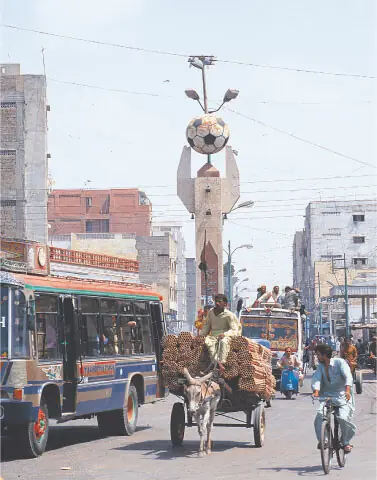
Sports offer another lens into Lyari’s resilience. Football is not just a game here; it is a social language. The Karachi United football club recruits many of its top players from Lyari and, according to CEO Imran Ali, young girls from Lyari camps show professional potential. Lyari houses the People’s Football Stadium, one of Pakistan’s largest, and boasts 98 registered football clubs, 11 grounds and two stadiums. Streets in Muhammad Ali Mohalla are divided by football flags; murals honour local heroes.
Filmmaker Ahsan Shah famously called Lyari “our little Brazil.” Football fosters cross-gender, cross-class interaction and offers pathways into education, corporate-sponsored teams, and stable income. Aftab, captain of Pakistan’s under-16 team in 2011, earned a monthly salary from the National Bank of Pakistan (NBP).
Boxing, particularly women’s boxing, is equally transformative. Girls in Lyari describe boxing as essential for survival in a volatile environment. The first female boxing club, Pak Shaheen, was established in 2015 by Coach Younus; within a few years, girls had already won three championships. Former boxer Shah Jahan trains girls, including his daughter, while encouraging academic education, even as he earns a living pulling a donkey cart. Girls as young as seven train with Olympic aspirations.
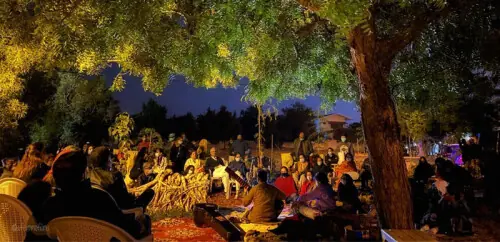
Art and performance continue this ethos. Lyari’s murals reflect local pride and global solidarities. Drum circles animate public spaces, while the MAD School in Karachi offers Lyari’s youth training in singing, theatre and performance, allowing participation in local plays.
ECONOMIC DECLINE
Economically, Lyari’s decline is visible in spaces such as Lea Market (Purani Sabzi Mandi). It was constructed in 1927 in Napier Quarters by the municipality. Historically, it was a pre-British trading hub. The market building was named after Measham Lea, a Karachi municipal engineer.
The market was divided into four two-storey buildings around a central courtyard, crowned by a clock tower that locals relied on for telling time. Separate sections housed dairy, vegetables, meat, fresh fish and dried marine products. Originally, three buildings; a fourth was added during Gen Ayub Khan’s era, carefully designed to match the original architecture.
Today, only 12 of the original 72 meat shops remain. There has been no electricity for 10 years. Traders blame the derelict condition for declining business, despite Lea Market once attracting customers from across Karachi. Over 60 hotels in the surrounding areas once hosted traders, travellers and patients from Balochistan, Khyber Pakhtunkhwa, Iran and Afghanistan, especially before Ramazan. Beautifully designed troughs of the colonial era were utilised for watering animals, and now are used as podiums for informal khokhas [small shops], repurposing colonial infrastructure for survival.
Lyari cannot be understood through singular frames, crime, poverty, culture or resilience alone. It is a palimpsest of forced migration and chosen belonging, of drums and footballs, of shrines and stadiums, of markets that once fed a city and streets that still produce artists, athletes and political consciousness.
To walk through Lyari is to walk through Karachi’s buried origins and its unfinished future.
THE JHATPATT MARKET
Local markets and sellers were very far off, especially in Lea market. The women in Lyari found it a bit difficult to travel all the way to Lea Market and sell their goods; hence, the Jhatpatt [literally: Quick] market was established. It was like the usual markets. The items for merchandise were laid out from 9am-10am and, within the span of an hour, people would “quickly” buy whatever was essential for them.
Note: This article was first put together in March 2023. Conditions in Lyari have changed since then for the better, but density has increased, further congesting an already congested area.
Arif Hasan is an architect and urban planner.
He can be reached at arifhasan37@gmail.com and through the website www.arifhasan.org
Khadija Imran is a researcher whose work revolves around social and cultural anthropology
Hamna Syed is a researcher whose work centres on cultural critique and social realities
Published in Dawn, EOS, May 10th, 2026