0
0

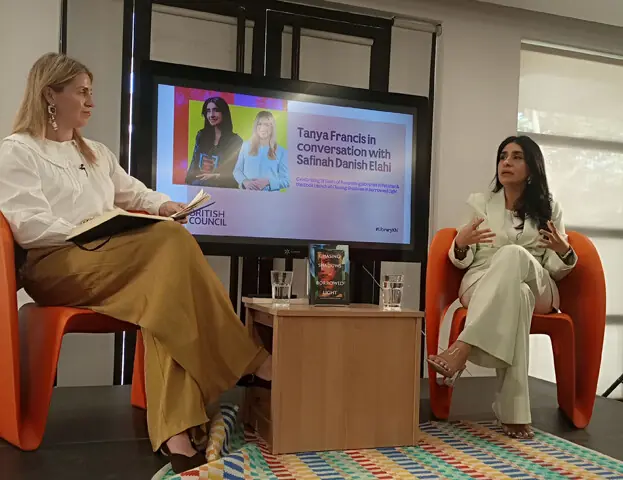
KARACHI: The launch of Safinah Danish Elahi’s fourth book and third novel Chasing Shadows in Borrowed Light, published by Liberty Publishing in Pakistan, drove home the important message that everyone is not an open book.
Many times what you see is not always what you get. There may be a lot more than what meets the eye as far as people are concerned. “You should know that there are so many parts and complexities to a person,” said Safinah during a conversation about her story characters with British journalist Tanya Francis at the British Council library here on Saturday.
“It is important to note that everyone is going through something. A friend can be going through a difficult time or trauma. If you are able to give him or her space and time, then please do make the effort. But if you can’t, then forgive yourself as well. Give your friend a break and give yourself a break, too,” said the author, whose third novel came to her while attending a residency programme for writers in Iowa, USA.
“I was working on a book then but could not think of a satisfying ending for it. This was also a time when a dear friend of mine was suffering from loneliness. The idea for this novel came from what my friend was experiencing and I was able to build a story around it with four characters, who are childhood friends. I was able to take their story, about friendship, forgiveness, trust and a terrible secret to completion,” she said.
Writer speaks about characters, her inspiration in a talk at British Council library
“We all have experienced friendships; we have all also gone through grief. Maybe some of us have also been through a dark time but cannot talk about it,” she added.
The four friends in the book attended the same school in Karachi but then they settled down in different places in the world such as New Jersey, New York and Melbourne while one remained in Karachi. “Your own experiences affect your writing. I had jotted notes about the environment in New Jersey and New York to add sensory details for the two living in these cities in my story out of my own experiences there. A writer in my writing programme was from Melbourne so learning from the writer how life was there I gave that city to my third character,” Safinah explained.
“You feel love and nostalgia for a place where you used to live. But you are also glad that you left,” she said, adding that in the book, Karachi gave all her four characters a lot but it also took from them.
She said earlier she used to worry that her characters won’t sit well with her readership. “But I realise that it is okay to write about characters who may be too bold or too dramatic,” she added.
When asked by Tanya how it felt writing about serious things and dark places as she has done in her new novel and then getting up from her writing desk to go back to routine life with her family, Safinah laughed. “That’s another hat I wear. You are into deep thoughts while writing and you are also out of it as you are able to disconnect though the story remains with you as you think about what is to happen next in your story. It is like that during the first draft. But during rewrites you are quite used to it,” the author explained.
Asked then about censorship and how she writes sensitive scenes, Safinah just gestured towards her father sitting in the audience at the book launch. “When I think about my dad also reading my book, I just know how to write such scenes appropriately,” she said as everyone in the room burst out laughing.
The book launch also coincided with the 10-year anniversary celebrations of the re-opening of the British Council libraries in Pakistan.
Published in Dawn, May 10th, 2026