US awaits Iran reply even as navies clash in Hormuz


 0
0

• Tehran says two of its ships targeted, Qeshm Island, coastal areas hit by air strikes
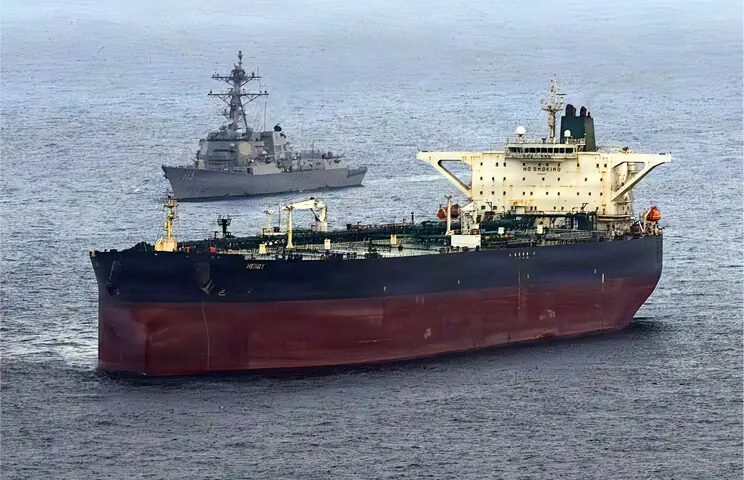
• Claims attacking US vessels east of the strait; US says it fired in response to Iranian provocation
• Trump maintains ceasefire still in effect; Araghchi rues American ‘military adventures’ whenever diplomatic solution is on the table
• Iranian official likens control over strait to ‘atomic bomb’; Qatari PM meets VP Vance in DC
WASHINGTON / TEHRAN: Despite exchanging fire in the Strait of Hormuz — in what was seen as the most serious test yet of their month-long ceasefire — both Iran and the United States stopped short of escalating further as the latter awaited Tehran’s response to its peace proposal.
Iranian media reported “sporadic clashes” with US naval forces on Friday, after its military said that two ships entering the Strait of Hormuz were targeted, and also accused the US of carrying out strikes on Iranian territory. The US military claimed, meanwhile, that it had fired in response to Iranian attacks.
But US President Donald Trump maintained that the ceasefire was still in effect and sought to play down the exchange.
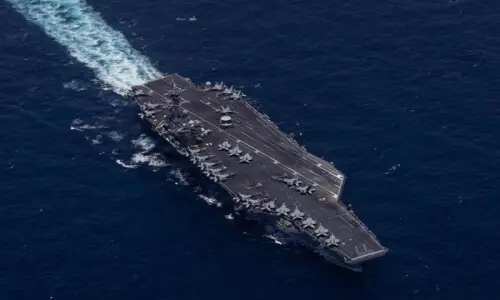
Trump said three US Navy destroyers were attacked as they moved through the strait, and the US military fired back. “They trifled with us today. We blew them away,” Trump said, while inspecting renovations to the Lincoln Memorial’s reflecting pool in Washington.
Meanwhile, Iran’s top joint military command accused the US of violating the ceasefire by targeting an Iranian oil tanker and another ship, and of carrying out air attacks on civilian areas on Qeshm Island in the Strait of Hormuz and the nearby coastal areas of Bandar Khamir and Sirik on the mainland.
The military said it responded by attacking US military vessels east of the strait and south of the port of Chabahar.
A spokesperson for Iran’s Khatam al-Anbiya Central Headquarters said the Iranian strikes inflicted “significant damage”, but US Central Command said none of its assets were hit.
The US said Iran had used missiles, drones and small boats in the attack, which targeted three Navy destroyers. The US said it targeted missile and drone sites and other locations in response.
“Centcom does not seek escalation but remains positioned and ready to protect American forces,” it said in a statement.
Iran also said it would respond if attacked. “[The] US and its allies must know that Iran will respond forcefully and without the slightest hesitation to any act of aggression or attack,” the military spokesperson said, according to state television.
Iran’s Mehr news agency reported that one crew member was killed, 10 wounded and four missing after a US Navy attack on an Iranian commercial ship late on Thursday near the strait.
The confrontation extended beyond the waterway. The United Arab Emirates said its air defences engaged with two ballistic missiles and three drones from Iran on Friday, with three people sustaining moderate injuries.
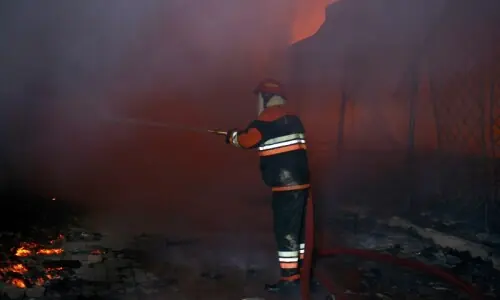
Iran’s Press TV later reported that, following several hours of fire, “the situation on Iranian islands and coastal cities by the Strait of Hormuz is back to normal now”.
An adviser to Iran’s supreme leader compared control over the Strait of Hormuz to having an “atomic bomb” on Friday, and vowed not to relinquish it.
Adviser Mohammad Mokhber said Iran had long “neglected” its privileged position along the strait, a vital conduit for oil and gas shipments that Tehran shut early in the Middle East war, throwing markets into turmoil and stranding hundreds of vessels.
“The Strait of Hormuz represents an opportunity as precious as an atomic bomb,” he said in a video published by the Mehr news agency.
“Indeed, having in one’s hands a position that allows you to influence the global economy with a single decision is a major opportunity.” Pledging not to “forfeit the gains of this war”, he went on to say Iran would “change the [legal] regime of this strait”, through international law if possible, and unilaterally if not.
Mokhber did not specifically mention charging vessels to use the waterway, but the shipping journal Lloyd’s List reported on Friday that Iran had created an authority to approve transit through the strait and to collect tolls.
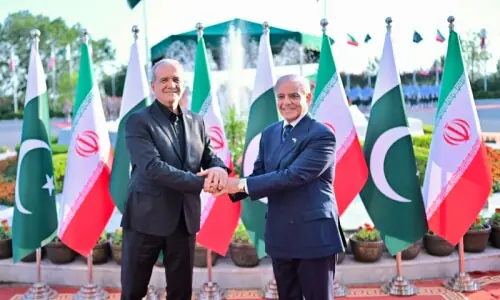
The military showdown in Hormuz came as Washington awaits Tehran’s response to its peace proposal, conveyed through Pakistan.
“We should know something today,” US Secretary of State Marco Rubio told reporters in Rome. “We’re expecting a response from them… The hope is it’s something that can put us into a serious process of negotiation.”
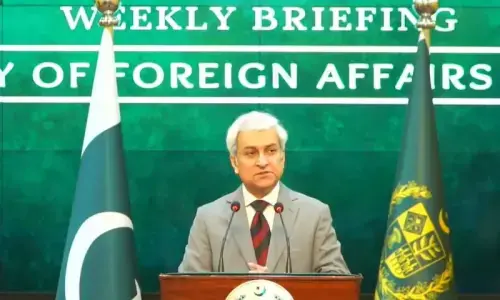
Iran’s foreign ministry spokesperson said Tehran was still weighing its response. “Every time a diplomatic solution is on the table, the US opts for a reckless military adventure,” Foreign Minister Abbas Araghchi said on Friday.
The latest US proposal would formally end the conflict first, before addressing Washington’s core demands, including curbing Iran’s nuclear programme and reopening the strait. Tehran, which made a similar proposal last week, said it had not yet reached a decision on the plan.
Trump said Tehran had acknowledged his demand that it should never have a nuclear weapon, a prohibition he said was implicit in the US proposal.
“There’s zero chance. And they know that, and they’ve agreed to that. Let’s see if they are willing to sign it,” Trump said.
Iran has always said its nuclear programme is peaceful and it is not pursuing a weapon.
Asked when a deal might be reached, Trump said: “It might not happen, but it could happen any day.”
Meanwhile, US Vice President JD Vance met the prime minister of Qatar in Washington to discuss the negotiations with Iran, among other topics.
Vance’s talks with Sheikh Mohammed bin Abdulrahman al-Thani will cover US-Qatar relations and the situation in Iran, with a focus on LNG markets and regional stability, Reuters reported.
Published in Dawn, May 9th, 2026