0
0

 KARACHI, July 3: In a belated explanation for almost a month-long power crisis, the electricity managers on Monday claimed that it was all due to the sabotage activity being carried out by some elements within the Karachi Electricity Supply Corporation in connivance with some external elements.
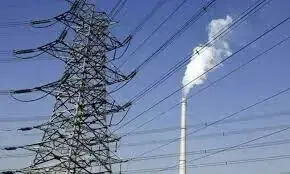
Without divulging the identity of the ‘elements’, Chief Executive Officer of the KESC Frank Scherschmidt told a news conference here that these very saboteurs were responsible for a regular snapping/cutting of extra-high tension cables.
He claimed that some internal elements had been working against the interest of the KESC as they did not like the changes being brought about following its privatisation. “We are probing into this matter to identity these elements,” he added.
According to him, this is not the sole factor responsible for the fast deterioration of the already fragile transmission and distribution system. There are many other factors contributing to the sufferings of power consumers.
An increased supply from Wapda is not likely to bring much relief to the consumers and what the CEO quite clearly conveyed was that consumers would have to live with this problem for months to come.
Explaining the other factors, he said: “We have problems at the moment such as deteriorated power generation systems, power shortage of 1,000 megawatts in Karachi, insufficient operations and maintenance procedures, overloaded transmission system leading to energy losses, absence of modern control systems for transmission and distribution, lack of preventive maintenance over the years, lack of capacitors to stabilise power supply, network sabotage and conductor theft, lack of breakdown reporting system, as well as the street protests by dissatisfied consumers.”
Mr Frank was accompanied by Sohail Wajahat, Managing Director of the Siemens, the firm responsible for the operation and management of the KESC. Mr Frank did not agree with some experts who have been accusing the firm of being a cause of discord. Some other senior KESC officials were also present at the press conference.
About a smooth power supply to all KESC consumers, he said: “We have prepared plans and placed orders accordingly for equipment to be installed over the next nine months. After the installations of the new equipment, the power supply situation will improve, hopefully by the end of next year.”
He thanked the president, prime minister and Sindh governor for arranging an additional 100 megawatts from Wapda. “This will reduce our misery at least by half,” he added.
However, sources in the KESC said that the KESC did receive the 610 megawatt power from Wapda on Monday but the additional 100 megawatts was still awaited. They said that one of the two circuits from Jamshoro to KDA was lying closed after the same was switched off by Wapda in May for maintenance. The KESC would be able to receive the addition power supply only when the circuit was made operational, they explained. In this regard, the KESC has made a formal request to Wapda on Saturday.
Mr Frank maintained that the power crisis in Karachi was not an unprecedented development as the KESC had been facing a similar situation in the previous years as well. The present situation is more serious because this year, the load demand has increased by 200 to 300 megawatts. The city’s power demand during this summer has been assessed at 2,200 to 2,300 megawatts with highest power consumption being 2,250 megawatts at the end of June, according to him.
“We are not in a position to bring a ‘magical’ change at the moment, but we will continue to work on correcting the situation whenever our weak network breaks down. For any major upgradation of the system, we have a short term plan ready under which work would commence at the outset of September this year and continue till April 2007.”
He claimed that power consumption in Karachi was increasing at a rate of 7-10 per cent per year. “We have also evaluated a 10-year plan for improvement in the city’s power supply system. In the year 2015, we will be doubling the whole KESC in terms of power generation, transmission, distribution and human resource.
"We are emphasising on human resource training & development and a customer-oriented service culture. KESC call centres will soon be fully operational and the customer service centres will be renovated. With a customer-focused staff, we will be able to serve Karachiites with better supply and service,” he concluded.
Mr Sohail Wajahat told journalists that no structural change had taken place nor was any employee laid off in the KESC. "When we entered the KESC, summer had already started. We devised some plans to revamp the electrical system but we did not find time as shutdowns cannot be applied in summer. We are trying hard to supply an uninterrupted power supply to consumers, and hope that the things will improve.”
He said that in the expected rainfall, the response time to an power-related eventuality would be reduced. The number of telephone lines at the centralised call centre for complaints was being increased so that people could lodge complaints more easily and their complaints were entertained promptly.
Admitting that the number of breakdowns this appeared to be much more than the same was recorded in the previous years, Mr Wajahat said that the power demand this year had increased by 400 megawatts and putting additional load on the existing weak distribution system had caused an increased number of faults and breakdowns. He said that steps were being taken to improve the system and investment was being made to bring in new equipment.
"It will take at least three years to normalise the power supply situation,” he asserted.
Mr Wajahat maintained that the new KESC management had changed three major transformers of 40mva at different grid stations, APP adds.
All grid stations which had burnt out because of overloaded system were repaired without wasting a moment, he said, adding that the future plans to improve the network system included network analysis and planning using Siemens Network Calculation software, planning of 132kv and 220kv grid stations, future generation stations, planning and rehabilitation of 11kv distribution network.