‘Govt must put people, evidence at heart of water management’
• Experts stress need to refrain from short-term policies; call for nature-based approaches
• Minister warns Indus Delta is shrinking, water policy no longer optional
ISLAMABAD: Speakers at a session highlighting the impacts of climate change on the Indus Delta urged the government to refrain from reliance on ad-hoc policies and instead adopt evidence-based and people-centric approaches to strengthen water governance, as extreme heat melts glaciers at a rapid pace in the northern part of the country.
In his address at the Breathe Pakistan climate conference, Water Resources Minister Mian Muhammad Moeen Wattoo said water management was no longer optional but a necessity, as the behaviour of glaciers, which feed the Indus River, was no longer predictable.
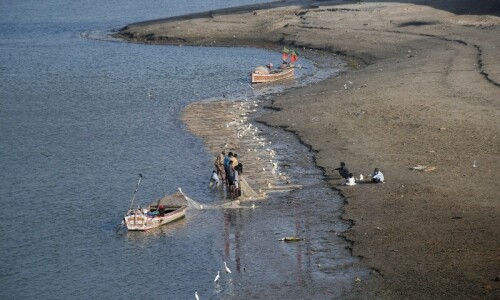
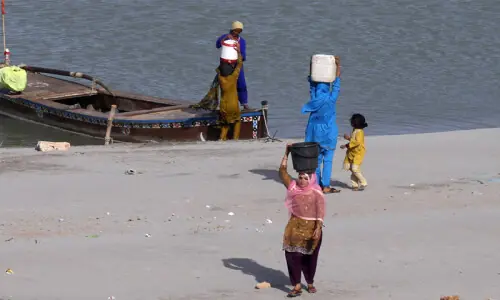
“Downstream, the Indus delta is shrinking, sea intrusion is advancing, communities that once thrived are now at risk,” Wattoo said, linking the issue to food security.
The agriculture sector consumed the largest share of the country’s water, he said, adding that the ministry was focusing on efficient use. “Water must be an area of discipline, not dispute,” he said, adding that a consistent policy was needed for sustaining the delta. “Above all, we must keep the people at the centre, the farmers, the villagers, the communities,” he said during a session titled ‘From Glacial Melt to Delta Discharge.’
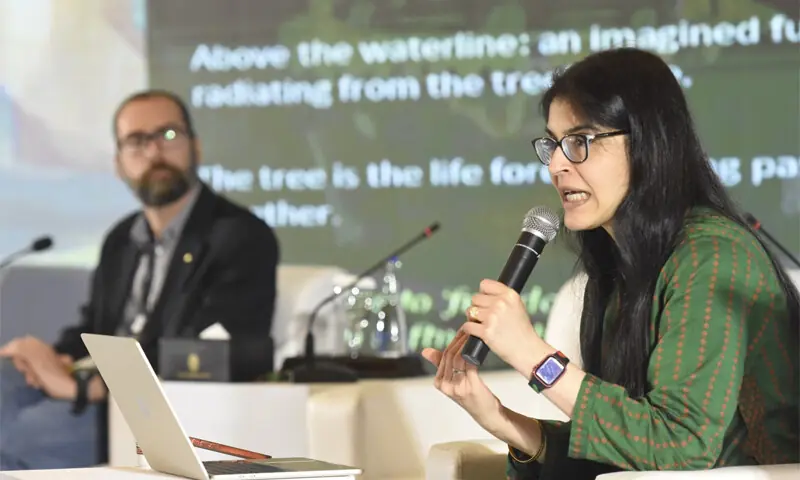
Dr Erum Sattar, a water law and policy expert, also highlighted the impact of climate change on the Indus Basin. In her presentation, Dr Sattar noted Indus was being squeezed “by climate change from above, from north by glacial disruption, from east by an extremely revisionist neighbour and from within a governance system that is designed for a much more stable world”. She highlighted the need for action to ensure the conservation of the Indus Delta.
“The Indus River has sustained civilisations for thousands of years, and what happens next will be determined by the choices Pakistan makes today,” she said.
Dr Davide Fugazza, a glaciologist and a faculty member at the University of Milan, said small glaciers, which comprise over 80 per cent of Pakistan’s total glaciers, were more vulnerable to climate change. Only 32 out of almost 13,000 glaciers are larger than 50km².
The minister’s speech and the two separate presentations on the Indus Delta and the glaciers were followed by a panel discussion titled ‘The Indus Basin: Sustainable Governance or Ad Hoc Response’, moderated by the United Nations Environment Programme’s adaptation head Mirey Atallah.
In response to a question by the moderator, Simi Kamal of the Hisaar Foundation pointed out the institutional disconnect in policies regarding the Indus River. She said there was a need for a national perspective on this river, but “national did not mean federal”.
She suggested the government should avoid building heavy infrastructure (mega dams) and instead focus on nature-based indigenous solutions to frame its policy. Local government was necessary to lead this adaptation push, she added.
International Water Management Institute’s Dr Mohsin Hafeez warned against working on “ad hoc policies” and pointed out the need for “greater planning” or developing relevant tools. He called for moving beyond short-term planning and steering policy towards “scientific approaches or evidence-based approaches”.
In his closing address, Asian Infrastructure Investment Bank’s (AIIB) Dr Murtaza Syed stressed that it was necessary to invest in soft infrastructure to ensure a robust water cycle.
The event also saw the screening of a video excerpt from Melting Away, a film by Nyal Mueenuddin, produced by the United Nations and the Aga Khan Foundation.
Published in Dawn, May 7th, 2026