‘Rising temperatures turn disasters into persistent structural challenges’


 0
0
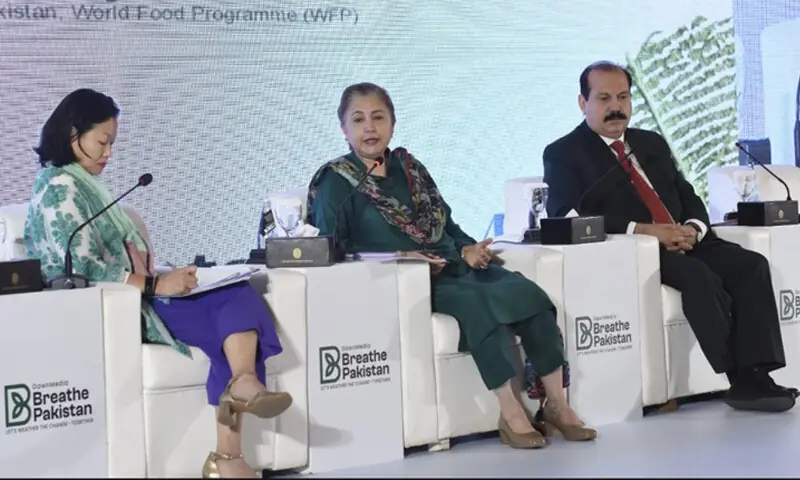

ISLAMABAD: Global warming was transforming disasters from emergencies to long-term developmental challenges, Coco Ushiyama, Country Representative for the World Food Programme in Pakistan, said on Wednesday.
She was speaking during the second session of the Breathe Pakistan Climate Conference, titled “Synergies Between Adaptation and Disaster Risk Reduction”, which highlighted the need to better align policies and actions to address growing climate threats in Pakistan.
Coco Ushiyama stressed that adaptation and disaster-risk reduction (DRR) must work together in practice, not just in theory. It was pointed out that much of the current climate finance remained reactive, often mobilised only after disasters occurred, rather than being used for preventive measures. The second Breathe Pakistan International Climate Change Conference called for urgent, coordinated action to address the country’s growing climate crisis.
The two-day conference brings together policymakers, experts, and stakeholders from across sectors to examine intersecting challenges and chart a path forward.
Government officials emphasised the importance of strong governance and improved coordination among ministries to ensure effective implementation.

Secretary of the Ministry of Climate Change, Aisha Humera Chaudhry, said the country had often been forced to treat adaptation and DRR as separate priorities.
She noted that Pakistan’s adaptation framework included more than 170 actions and that the government was actively working with provinces to implement them.
She highlighted district-level adaptation plans as key building blocks, explaining that these included hazard mapping, which plays a crucial role in reducing disaster risks. She also said the prime minister was closely monitoring progress, reflecting the leadership’s commitment to climate action.
Idrees Mahsud of the National Disaster Management Authority (NDMA) said adaptation and DRR were closely linked, particularly in dealing with climate-related hazards such as floods and extreme weather. However, he added that DRR had a broader scope. He noted that provincial disaster management authorities were now playing a more active role, but suggested the need for dedicated departments at the district level to strengthen implementation.
Idrees Mahsud said the NDMA had been working on various initiatives since 2007, including multi-hazard risk assessments, to improve mitigation strategies. He added that building resilient infrastructure and communities remained a top priority to reduce the impact of future disasters.
Published in Dawn, May 7th, 2026