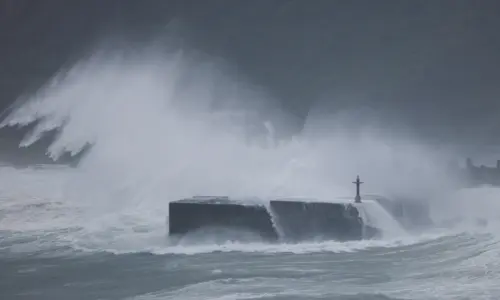
THATTA: A severe shortage of freshwater in the Indus Delta has triggered a worsening humanitarian and environmental crisis, as advancing seawater from the Arabian Sea continues to devastate coastal communities.
Residents and local leaders warn that nearly 85 per cent of groundwater has turned saline, making it unsafe for human consumption and pushing the region towards an existential threat.
The worst-affected areas include tail-end distributaries such as Khanani, Garho, Malirri, Bun Jhalo, Ghorabari, Darsi, Indo Khanani and Gaarho, which have remained deprived of freshwater for prolonged periods. What began as an agricultural crisis has now escalated into a struggle for survival, with acute shortages of drinking water for both humans and livestock, forcing communities to rely on unsafe sources.
The Indus Delta, once sustained by an annual freshwater flow of over 100 million acre-feet (MAF), is now receiving less than 10 MAF downstream of Kotri in many years, far below the ecological requirement of at least 27 MAF.
Experts estimate that more than 2.2 million acres of fertile land has already been lost to sea intrusion over the past decades, while the coastline has receded by several kilometres. Nearly 1.5 million people in the coastal districts of Thatta, Sujawal and Badin are directly affected, facing severe drinking water shortages and loss of livelihoods.
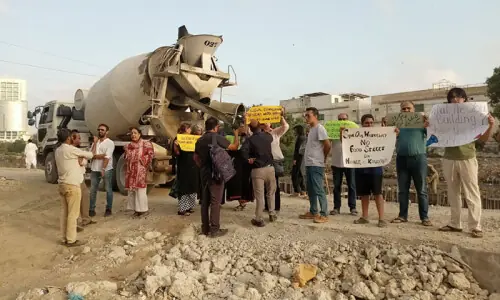
Local leaders, including Aziz Lashari, Allah Bux Margher, Faiz Sindhi, Manzoor Arifani and Muhammad Usman Baloch, said the persistent lack of downstream flow has permitted seawater to encroach further inland, rapidly degrading fertile lands. They warned that without sustained freshwater discharge, the delta’s remaining cultivable land would soon become barren.
The shortage has also triggered serious health concerns, as residents are forced to consume contaminated or brackish water. Cases of hepatitis C are reportedly rising, while gastric infections and skin diseases have become widespread, particularly among women and children.
The crisis has been further exacerbated by the near-total absence of functional healthcare facilities across remote coastal regions.
In the face of these deteriorating conditions, a large-scale displacement has commenced; families are being forced to abandon their ancestral lands as the agricultural sector collapses and access to potable water entirely vanishes.
Residents describe the situation as desperate, warning that continued neglect could render the region uninhabitable and force mass migration on an unprecedented scale.
Local stakeholders have urged the Sindh government and the Sindh irrigation department to take immediate action, including the release of freshwater to the tail-end areas, measures to halt sea intrusion and the deployment of mobile health units.
They cautioned that failure to respond on an emergency footing could lead to a humanitarian disaster of historic proportions.
Published in Dawn, May 4th, 2026