The near-term future of a strong grassroots democracy remains uncertain despite escalating pressure for it in an intensifying national debate, with the country’s ruling parties apparently unwilling or unable to uphold principles underlying the empowerment of the third tier of government.
The views vary among and within political parties, with political leaders often divided between those who stand for some sort of ‘limited empowerment’ of the local government (LG) system and those who seek devolution of political, administrative and financial responsibility to the elected local representatives as provided under Article 140-A of the Constitution.
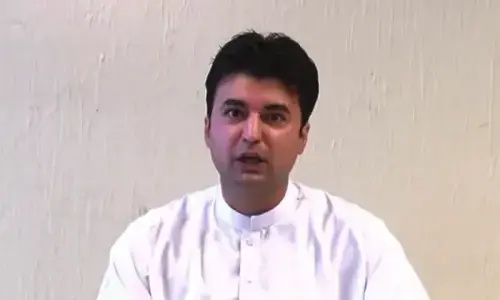
Addressing a seminar he organised in Hyderabad on April 25, former PTI leader Asad Umar stressed that, “It was the right time to seriously discuss the LG issue threadbare before finding a solution.” He noted that LGs were constitutionally the third tier of government, but without constitutional protection.
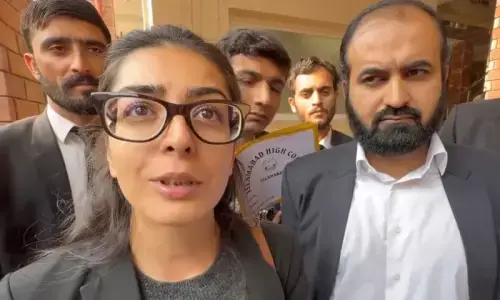
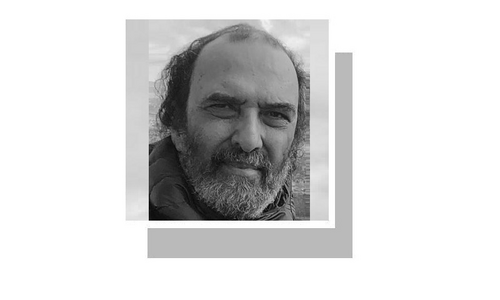
“Establishing empowered local governments with fiscal and decision-making authority is a constitutional duty, not a policy option,” says analyst, lawyer and social activist Nadeem Khurshid.
‘Cities perform when authority lies with elected local leaders, and citizens are treated as participants, not spectators’
In his article titled ‘Ceremonial local governments’ published in The Express Tribune, he argues that, “Even in developed countries, empowered local governments wield immense economic power and fiscal authority.” He notes New York City manages a budget exceeding $100 billion across transport, housing, sanitation, policing, and public health.
Asad Umar pointed out that, “Conditions in southern Punjab were different in central Punjab, and the same goes for some districts of Khyber Pakhtunkhwa and Sindh. We don’t want exclusion of provinces while empowering LG.” He, however, clarified that the new province could only be created if the concerned assembly passes a resolution for it.
Speaking on the occasion, Sindh United Party President Syed Zain Shah said the limited empowerment of the LG system could be discussed, but not at the cost of ‘identity’ and ‘resources’ of Sindh that, he added, seems to be on the agenda of some elements. He described it as an attempt to roll back the 18th Amendment.
Khurshed differs. He points out, “Cities perform when authority lies with elected local leaders, fiscal autonomy is ensured through strong own-resource revenues and predictable transfers, and citizens are treated as participants, not spectators.”
As long as the politicians fail to provide more details in the Constitution regarding the devolution of powers to the grassroots level, says an earlier Dawn editorial, Pakistan will remain without an effective third tier of government.
In Punjab, the Election Commission of Pakistan has issued a schedule, for the delimitation of union councils
The Khyber Pakhtunkhwa (KP) government is now working on a proposal to restore the district tier of the province’s local government system, which was abolished in 2019, according to relevant officials.
They say that the local government department had proposed amendments to the KP Local Government Act 2013 for the restoration of the district tier. The amendments are being vetted by the law department, and a summary in this respect is with LG minister Meena Khan Afridi for approval. After the minister’s approval, the summary will be sent to KP Chief Minister Sohail Afridi for consent.
However, it was not yet decided what departments would be in the domain of the district tier that were devolved to the tehsil tier or retained by the provincial government prior to the abolition of the district tier.
Before that, the provincial government was legally bound to give 30pc of the funds of its Annual Development Programme to LGs, which was later reduced to 20pc. The 30pc allocation should be restored, says Local Council Association president Himayatullah Mayar. In violation of the Constitution, he points out, the proposal shows that the government plans to restore the district tier with the power of only monitoring and supervision.
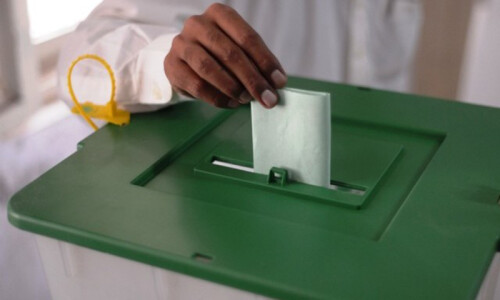
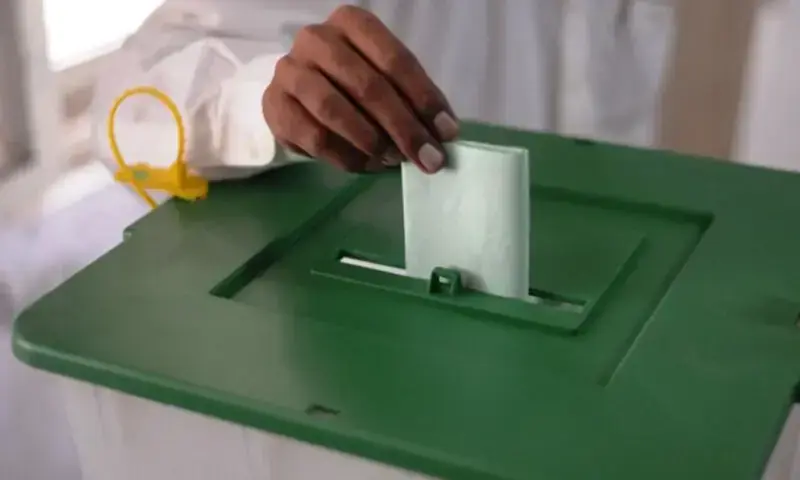
In a significant step towards the conduct of long-overdue local government elections in Punjab, the Election Commission of Pakistan (ECP) has issued a schedule, now underway, for the delimitation of union councils in the province.
Final decisions will be communicated to the delimitation committees by August 4 , with the final list of constituencies set for publication on August 10. In a related development, the ECP has ordered an immediate freeze on all alterations in administrative boundaries in Punjab until the delimitation process for union councils is completed. Since late April 2022 , elections could not be held as the provincial government kept amending the LG law from time to time.
Meanwhile, senior officials from the defence ministry, military lands and cantonments have assured the ECP of their full cooperation for the timely conduct of elections in cantonments. The ECP had issued a schedule of delimitation of wards in the 42 cantonment boards across the country on Jan 16. Under the relevant laws, ECP says, it is necessary to hold elections of the cantonment boards by Aug 8.
Published in Dawn, The Business and Finance Weekly, May 4th, 2026