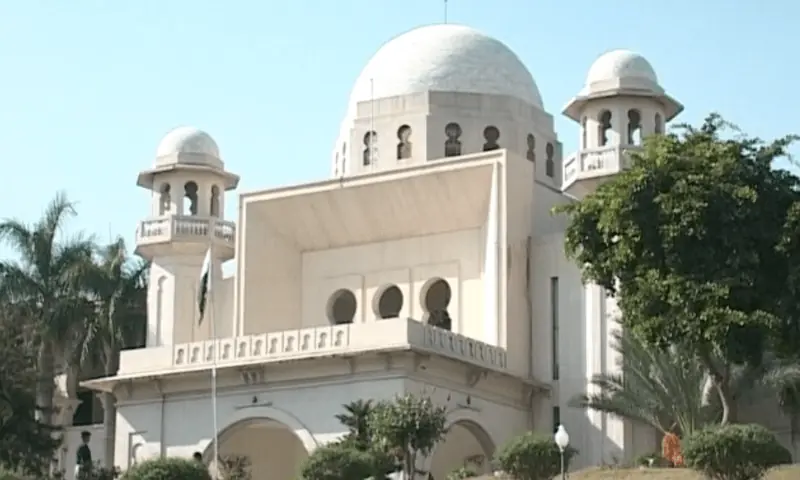
RAWALPINDI: The Rawalpindi Bench of the Lahore High Court (LHC) has dismissed a writ petition challenging the Murree-based housing project “Commoners Sky Garden”, ruling that the plea was not maintainable under Article 199 of the Constitution.
Justice Jawad Hassan announced the reserved verdict on a petition filed by Syed Nauman Shah, who had sought to restrain authorities from proceeding with the project, alleging environmental violations and non-compliance with Supreme Court judgments.
The petitioner contended that the project, spread over land in Mauza Mangal and Kathar, was being developed without mandatory environmental approvals and in violation of restrictions imposed by the apex court in earlier rulings. He also alleged encroachment on forest and shamlat land, along with large-scale deforestation affecting the ecological balance of the Murree region.
However, the respondents, including government authorities and the Federal Government Employees Housing Authority (FGEHA), opposed the petition, arguing that all required approvals and no-objection certificates (NOCs) had been obtained from relevant departments, including the Environmental Protection Agency (EPA) and the Rawalpindi Development Authority (RDA). They further maintained that a special implementation bench of the Supreme Court was already seized of the matter, making the present petition inadmissible.
In its detailed judgment, the court observed that the petitioner had failed to approach the appropriate forums at the relevant time when approvals were granted and could not invoke constitutional jurisdiction at a belated stage involving disputed facts.
The court also noted that thousands of allottees had acquired vested rights in the project, which had reached an advanced stage after substantial investment by the authorities. Interference at this point, it held, could cause irreparable loss and disrupt economic activity.
Addressing the request for implementation of Supreme Court judgments, Justice Hassan ruled that such enforcement falls within the domain of the apex court, particularly when a dedicated implementation bench has already been constituted.
Entertaining parallel proceedings before the high court, the judgment noted, would undermine the constitutional scheme and lead to multiplicity of litigation.
The court further held that the petition contained vague and multiple prayers, which are not permissible under Article 199(1-A), recently introduced through the 26th Constitutional Amendment.
Dismissing the petition, the court allowed the petitioner to seek remedy before the relevant forum, in accordance with the law.
Published in Dawn, May 2nd, 2026