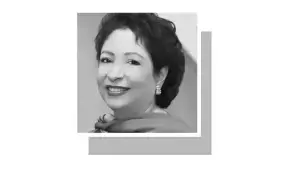
LAHORE: Singer Meesha Shafi on Wednesday filed an appeal in the Lahore High Court challenging a civil decree, which ordered her to pay Rs5 million in damages to fellow singer-cum-actor Ali Zafar deciding a defamation suit related to sexual harassment allegations.
The appeal filed through Advocate Saqib Jilani argues that the trial court erred both in law and on facts while adjudicating the dispute.
A main contention raised in the appeal is that the trial court proceeded to decide the defamation suit despite the underlying sexual harassment allegations remaining unresolved on merits.
The appellant pointed out that her complaint was still pending before the Supreme Court, which had granted leave in January 2021. She maintained that earlier proceedings before the ombudsperson, the governor and the high court were dismissed on jurisdictional grounds, not on factual determination.
The appeal further argues that her complaint constituted a lawful exercise of legal recourse and was protected under the doctrine of qualified privilege, thereby negating liability for defamation.
It contends that the trial court failed to properly evaluate evidence and overlooked the standard of “preponderance of probabilities”, which, according to the appellant, supported the credibility of her allegations.
Challenging the interpretation of law, the appeal asserted that the respondent (Ali Zafar) had failed to meet the threshold under Section 3 of the Defamation Ordinance 2002, which requires proof that the impugned statements were false.
The appeal argues that an “unproven” allegation cannot automatically be treated as “false,” citing established jurisprudence.
The appeal also criticised the trial court for disregarding settled legal principles regarding testimony in sexual harassment cases, including the recognition that a victim’s statement can be sufficient if found credible.
It argues that the trial court relied on stereotypical assumptions about how a victim is expected to behave, thereby misreading the evidence.
Additionally, the appeal disputes the inference drawn from continued social and professional interactions between the parties, arguing that such a conduct does not negate the possibility of harassment, particularly in cases involving subtle or discreet behaviour.
An additional district and sessions judge on March 31, 2026, issued the impugned decree in favour of Ali Zafar, declaring that Meesha Shafi failed to produce sufficient, reliable and independent evidence to prove allegations of harassment.
Meesha took to X in 2018, alleging that Zafar had sexually harassed her.
In the same year, Zafar filed a defamation suit, contending that the allegations had seriously damaged his public reputation and caused distress to his family.
He requested the court to pass a decree in his favour and sought damages of Rs1 billion.
Published in Dawn, April 30th, 2026