Structural reforms set Pakistan’s economic direction right: finance minister
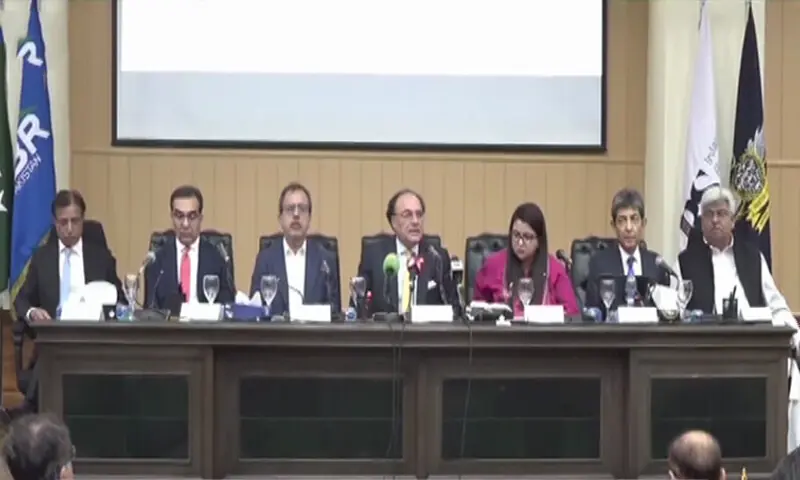

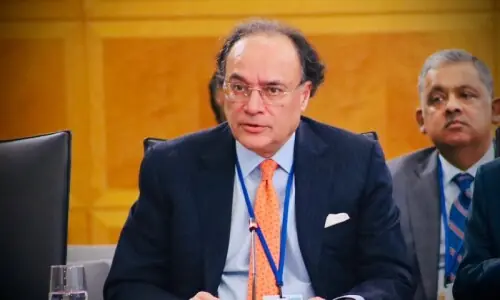
Finance Minister Muhammad Aurangzeb on Monday said that Pakistan’s economic direction had been set right through a series of structural reforms, which were now being operationalised to ensure sustainable and inclusive growth.
“I believe there is a broad consensus that we have made significant inroads and achieved considerable progress in terms of macroeconomic stability,” he said while addressing a joint news conference on economic reforms.
He was accompanied by Power Minister Awais Leghari, Information Technology Minister Shaza Fatima Khawaja, Federal Board of Revenue (FBR) Chairman Rashid Mahmood Langrial and Adviser to the Prime Minister on Privatisation Muhammad Ali.
Aurangzeb said the government had achieved macroeconomic stability, as evidenced by external validation: three leading international rating agencies upgraded Pakistan after a gap of three years. “These agencies are now aligned not only on where we stand but also on our positive outlook,” he added.
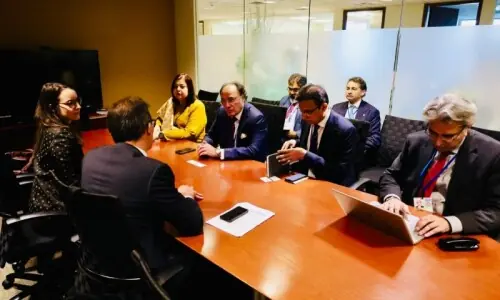
He said the successful completion of the second International Monetary Fund (IMF) review and the subsequent staff-level agreement in Washington reaffirmed that the country’s economic trajectory was on the right path.
“When the exchange rate stabilises, foreign exchange reserves rise, inflation declines, and the policy rate comes down, the benefits are evident for industries,” the minister remarked, adding that investors had repatriated more than $4 million in profits and dividends.
Aurangzeb said investor confidence was crucial for attracting new foreign direct investment (FDI). “Until our existing investors are satisfied, we cannot talk about further FDI,” he said, adding that the government had moved in the right direction toward stability.
Highlighting the next phase of economic management, the finance minister said Pakistan must now focus on avoiding historical boom-and-bust cycles and move toward sustained and inclusive growth.
“Pakistan today stands at a unique confluence of economic stability and favourable geopolitical tailwinds,” he said, pointing to stronger trade and investment opportunities with China, the United States and Gulf Cooperation Council countries.
He stressed that structural reforms were indispensable for achieving sustainable growth.
The minister said the government’s reform agenda covered key areas, including taxation, energy, restructuring of state-owned enterprises, privatisation, rightsizing of the federal government, digital transformation, debt management and pension reforms.
These are the areas consistently highlighted by analysts, think tanks, and our bilateral and multilateral partners, he added.
Increase in tax collection
Meanwhile, FBR Chairman Langrial said the tax-to-gross domestic product (GDP) ratio increased over the last year by 1.49 per cent, crediting effective measures by the government for the collections.
“The rate of submission of individual tax returns has increased,” he said. “FBR is implementing the tax measures approved in the budget; it has the support of all institutions.”
Power Minister Leghari, while giving an update on the reforms in the power division, said that electricity prices have been reduced by Rs10.50 over the last 18 months. He said the reduction for the industrial units has been to the tune of Rs16 per unit.
“We are also set to operationalise the Competitive Trading Bilateral Contract Market (CTBCM) in January or February next year to facilitate the electricity trading market,” he said.
Describing the move as the biggest reform in the power sector, he said, “This will free the government from the business of purchasing power and the consumers will get better prices of electricity in future.“
Leghari said the government has also reduced the circular debt, with a plan to clear the circular debt of Rs1.2 trillion without putting extra burden on the consumers in the next six years.
Highlighting the importance of digitisation, IT Minister Shaza Fatima said digitisation will provide convenience to people, ensure transparency, and save time. “People will no longer have to stand in queues for payment and transfer of the nation,” Fatima said, adding that people will not be able to hide their transactions
She detailed that digitisation was related to increasing the tax net and has an important role in increasing revenues.
Privatisation adviser Muhammad Ali detailed the progress made for the privatisation of different state-owned enterprises. He highlighted the privatisation of the First Women Bank, adding that the target is to privatise Pakistan International Airlines by the end of the year. He said several top groups of Pakistan are interested in the national flag carrier.
Pakistan faced a prolonged economic crisis over the last few years, marked by critically low foreign exchange reserves, an acute balance-of-payment crisis, and the looming risk of default in 2023. The crisis was averted after the IMF released a crucial loan tranche, while support from friendly countries, including China, the United Arab Emirates, and Saudi Arabia, also played a key role.
After averting default, Pakistan has undertaken tough IMF-prescribed reforms to stabilise its economy and bolster macroeconomic indicators. This year, global credit rating agencies like Fitch, Moody’s, and S&P Global raised Pakistan’s sovereign credit rating.